News
The Holy Week for Catholics …a loving reminder

- /home/u249204778/domains/spectator.com.gh/public_html/wp-content/plugins/mvp-social-buttons/mvp-social-buttons.php on line 27
https://spectator.com.gh/wp-content/uploads/2023/03/Fr.-Benny-Tuazon.jpg&description=The Holy Week for Catholics …a loving reminder', 'pinterestShare', 'width=750,height=350'); return false;" title="Pin This Post">
- Share
- Tweet /home/u249204778/domains/spectator.com.gh/public_html/wp-content/plugins/mvp-social-buttons/mvp-social-buttons.php on line 72
https://spectator.com.gh/wp-content/uploads/2023/03/Fr.-Benny-Tuazon.jpg&description=The Holy Week for Catholics …a loving reminder', 'pinterestShare', 'width=750,height=350'); return false;" title="Pin This Post">
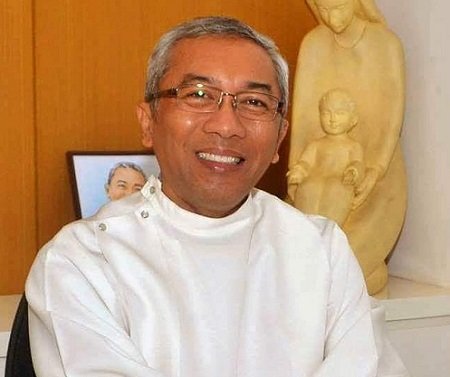
• Fr. Benny Tuazon
Holy Week is the week of all weeks for Catholic worship. It is so important that the most meaningful and essential celebrations are placed in the week. It culminates with the celebration of the Triduum of Holy Thursday of the Lord’s Supper, Good Friday of the Lord’s Passion, and Vigil of the Lord’s Resurrection (Easter).
In those days, we remember, at the same time, experience God’s salvation.
It is so important that our government had made those days as holidays. Government respects all religions. Government recognises the value of one’s belief. Government, therefore, expects the faithful to spend those days in worship and celebration of their faith.
Thus, it is but right and proper that those days be spent as days of prayer, reflection, and participation in celebrations. Specially the three days of Holy Thursday, Good Friday and the Easter Vigil (Saturday evening). It has been designed as ONE PRAYER spread over a period of three days.
They are very much connected with each other that the sign of the cross is made first at the beginning of the Holy Thursday liturgy and will again be done to close the Triduum at the end of the Easter Vigil. It follows that we should attend ALL three celebrations. Missing even one renders our worship incomplete, and maybe, useless.
It is unfortunate that there are some Catholics who either do not know this or blatantly disrespect these days. There is an appropriate time for leisure and pleasure. These days are not those days. They may have so many reasons for practicing their faith and still claim to belong to the Catholic Faith, but being absent these three vital days is untenable.
It is like the Eid ul-Fitr for Islam, Diwali for the Hindus, Magha Puja for the Buddhists, to name a few. They may even fall in comparison to our Easter. The point is, our faith is our life and our life is our faith. Celebration of the faith is not optional.
I, therefore, encourage everyone, especially parents to be good examples to their children. The ways and traditions we leave to them should be in accordance to what is right and proper, especially with faith. Wherever you are during this Holy Week, see to it that you will spend them in church participating in those celebrations.
Lastly, please preserve the solemnity and sacredness of all activities during this week.
May we all have a fruitful and meaningful Holy Week!
God bless you
By Fr. Benny Tuazon


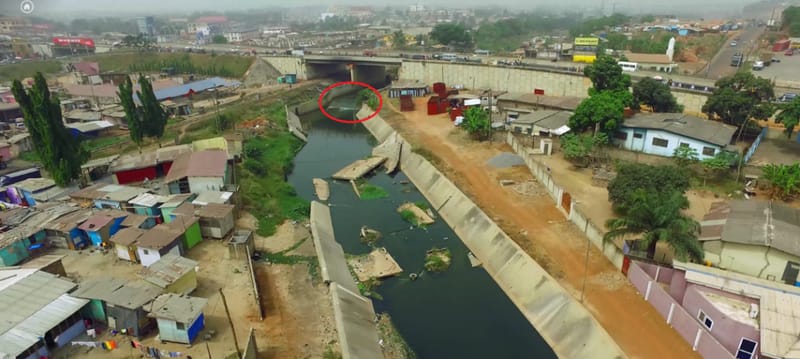
Construction of a major underground stormwater drain along the Dr. Busia Highway within the Kaneshie enclave will commence on September 7, 2026.
The Project Coordinator for the Greater Accra Resilient and Integrated Development (GARID) Project, Dr. Kwadwo Ohene Sarfo, announced this at a special media briefing on Wednesday.
According to him, the works will involve the construction of a double-cell underground rectangular drain measuring approximately 10 metres wide and 1.95 kilometres long, stretching from Pamprom Junction to First Light Junction.
The new drain will replace the existing two 1.2-metre diameter pipes, which are inadequate to carry the volume of stormwater in the area.
Dr. Sarfo said the drain will connect at one end to the recently completed section within the Accra Academy campus and at the other end to the existing drain at Pamprom Junction.
He said the construction is expected to run from September 2026 to October 2027.
The project forms part of government’s broader flood prevention and mitigation programme aimed at addressing perennial flooding in Accra.
By Edem Mensah-Tsotorme
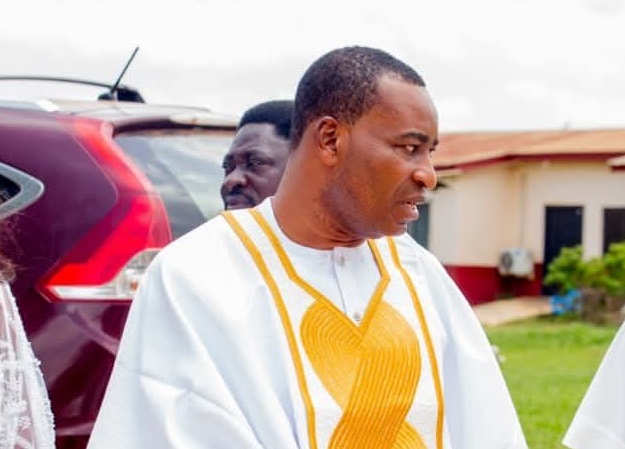
The former Ashanti Regional Chairman of the New Patriotic Party (NPP), Bernard Antwi Boasiako, popularly known as Chairman Wontumi, has withdrawn from the party’s National Chairmanship race.
In a statement issued yesterday, Chairman Wontumi who is currently serving a 20-year jail term said his decision was driven by his love for the party and his unwillingness to let his personal circumstances distract the NPP from its rebuilding efforts.
“There are moments in the life of a man when the heart wants to continue, but duty demands sacrifice. Moments when one must quietly set aside personal ambition, not because the dream has died, but because the family he loves must not be made to carry his burden. Today, I find myself at such a painful moment,” he wrote.
He disclosed that after many nights of prayer, sober reflection and consultations with his family, legal team, party elders, campaign team and trusted supporters, he concluded that his present situation must not become an additional burden on the NPP.
“This is not the decision my heart desired, but sometimes, true love requires us to release what we deeply want in order to protect what we love even more,” he added.
Recounting his years of service, Chairman Wontumi said he had served the party with everything within him, walking through heat and rain, travelling to remote communities and standing with the grassroots in both victory and defeat.
“For many years, I have served the NPP with everything within me… The NPP is not merely a political party to me. It is my family. It is my home. It is a cause to which I have dedicated a significant part of my life,” he stated.
He explained that the party, already carrying the pain of electoral defeat and the huge responsibility of preparing for the future, should not be made to carry his personal weight.
“That is why I cannot allow my present situation or personal ambition to distract the party from the difficult work of rebuilding. I cannot ask the party to carry my weight when it is already carrying the pain of defeat and the enormous responsibility of preparing for the battle ahead. I would rather carry this pain quietly than allow the party I love to suffer because of me,” he said.
He further sympathized with his supporters across the 16 regions, acknowledging that the decision would be painful for many who had sacrificed for his campaign.
“To my teeming supporters across all sixteen regions, I know this message will hurt. I know many of you will read it with tears in your eyes because I understand the sacrifices you have made for this journey,” he said.
By Edem Mensah-Tsotorme