Features
Managing excruciating pain during ovulation and menstruation

- /home/u249204778/domains/spectator.com.gh/public_html/wp-content/plugins/mvp-social-buttons/mvp-social-buttons.php on line 27
Warning: Trying to access array offset on false in /home/u249204778/domains/spectator.com.gh/public_html/wp-content/plugins/mvp-social-buttons/mvp-social-buttons.php on line 27
&description=Managing excruciating pain during ovulation and menstruation', 'pinterestShare', 'width=750,height=350'); return false;" title="Pin This Post">
- Share
- Tweet /home/u249204778/domains/spectator.com.gh/public_html/wp-content/plugins/mvp-social-buttons/mvp-social-buttons.php on line 72
Warning: Trying to access array offset on false in /home/u249204778/domains/spectator.com.gh/public_html/wp-content/plugins/mvp-social-buttons/mvp-social-buttons.php on line 72
&description=Managing excruciating pain during ovulation and menstruation', 'pinterestShare', 'width=750,height=350'); return false;" title="Pin This Post">
This is a subject area I am not well vexed in because I am not a gynaecologist, neither am I a medical expert or a trained nurse who deals in issues related to women’s health. I am only a simple and common journalist, but with curious and inquisitive mindset who always wants to probe into issues involving all spheres of national life. It can be politics, education, agriculture, sports, corruption, graft, family planning, mining, forestry, oil and gas extraction among other subject areas of the economy, that need to be highlighted for the benefit of the entire citizenry. Therefore, the medical experts, should pardon me if I am not able to delve deep into the subject area, I have chosen to write on.
RESEARCH INTO
UNFAMILIAR AREAS
Many of my readers and patrons will ask me this vital question; You have admitted that you are not familiar with the subject area you have chosen to write on, why then, do you have to waste your time and energy to thread on that path? They, may be rightly so in asking me that question, but as a trained journalist, you have to muddy through the waters and research into unfamiliar areas and present the facts as they should in your write-ups.
My interest in this very topic, “Pains during ovulation and menstruation” was premised on the ground that I recently visited a male friend of mine, (the location of which I will not disclose in this article) whose wife was experiencing severe and excruciating pain in the abdomen at the time of my visit. Realising the condition of the woman and being so inquisitive, I decided to engage my friend (her husband) in a short conversation about what was going on with regards to pain by the lady. It was in our conversation that he told me point blank that, it was a regular monthly feature for her during her ovulation and menstruation. I felt bad for both of them. I lost my wife so many years back and even when she was alive, I did not witness such a situation from her.
BAD AND PAINFUL EXPERIENCE
The bad experience I witnessed from my friend wife’s condition, compelled me to delve into that subject area by doing a bit of research work to establish the causes of pains during ovulation and menstruation among women and probably the antidote.
To the lay man or woman on the street, menstruation or what is commonly referred to as period, is the bleeding that occurs after ovulation, if you don’t get pregnant. During menstruation, blood mucus and tissue flow out of the cervix and vagina each month. Ovulation, on the other hand is when the egg is released from your ovaries to be fertilized. In an average, 28-day menstrual cycle, ovulation typically occurs about 14 days before the start of next menstrual period.
LUTEAL PHASE OF MENSTRUATION
The luteal phase of the menstrual cycle starts when the eggs have been released during ovulation, so around 14 days before your period starts, the eggs leaves behind its shell which starts to produce progesterone to hold the lining of the uterus mature. In the medical world, menstruation happens when an egg that is released from your ovary is not fertilized, so the uterus sheds its lining. In view of this, you cannot technically menstruate without ovulating. However, you can still bleed and experience your period without ovulating.
Your menstrual cycle begins on the first day of your period and continues up to the first day of your next period. You are most fertile at the time of ovulation which usually occurs 12 to 14 days before your next period starts. A girl can get pregnant during her period. This might happen when a girl has bleeding that she thinks is a period, but it is bleeding from ovulation. A woman’s ovulation cycles can vary so it is statistically possible, she can become pregnant while on her period. While pregnancy is less likely in the earlier days of her period, the chances increase in the later days.
ONE-SIDED PAIN IN LOWER ABDOMEN
Some women get one-sided pain in their lower abdomen when they ovulate. It happens about 14 days before your period, when an ovary releases an egg as part of the menstrual cycle. Once ovulation occurs, your eggs travel through your fallopian tube and it is in your tube that your eggs meet the sperm for fertilization. If conception occurs, the fertilized egg travels down your uterus.
During your menstrual period, your uterus contracts to help expel the lining. Hormone-like substances (prostaglandins) involved in pain and inflammation trigger the uterine muscle contractions. Higher levels of prostaglandins are associated with more severe menstrual cramps. Having painful period is a condition called dysmenorrhea. It is the most commonly reported menstrual disorder.
More than half of menstruating women report pain. While painful periods themselves may not be linked to fertility issues, some of the causes behind the pain are associated with infertility. Some of these conditions can get worse over time which is why getting diagnosed and treated early is important.
CONDITIONS THAT
CAUSE PAIN
Conditions that cause abdominal pain during menstruation and also impact negatively on fertility include endometriosis, fibroids, ovarian cysts and pelvic inflammatory diseases. It appears that not all women experience pain during menstrual periods, some may have theirs easy and smooth sailing while that of others can be unbearable.
Like I stated earlier, I am not an expert in that field and therefore, I cannot say much about the subject but at least my little research on the subject will be of interest to my readers and patrons, especially women, more importantly the adolescent girls who may not understand the causes of this painful menstruation.
TEACHING OF HEALTH SCIENCE IN BASIC SCHOOLS
I will advocate the infusion of this particular subject area in the curricula from the Junior to Senior high schools, so that the female child is kept abreast of issues relating to the emergence of pregnancy from infancy to adulthood in order to avoid lifestyles that will inhibit their future and progression.
We need to intensify the teaching of health-related issues in our educational institutions especially at the lower level as it is done in the case of health and applied science in our tertiary institutions because children in their formative years, can pick up easily on what they are taught as they progress to the higher level in their education.
We have to use textbooks or open discussions to create awareness about menarche. Social support includes, providing moral support to girls and spreading knowledge to other sectors of the population so that menstruating girls are not treated as outcasts. Giving the multiple challenges women and adolescent girls face, it is evident that promoting menstrual hygiene management is not only a sanitation matter. It is also an important step towards safeguarding the dignity, bodily integrity and overall life opportunities of women and girls.
MENSTRUAL HEALTH MANAGEMENT
Menstrual health management is a critical component of reproductive health and an important entry point for adolescent sexual reproductive health programming. Factual information on mental health management and puberty is part of the school curriculum and the capacities of teachers are built to teach these issues with comfort.
There is the need for us as a country to intensify and highlight the importance of good menstrual hygiene on May 28 each year, a day designated as Menstrual Hygiene Day which is celebrated across the world.
Contact email/WhatsApp of author:
ataani2000@yahoo.com 0277753946/0248933366
By Charles Neequaye


We are raised on a foundational myth: that sacrifice is a currency, and time is a bank that honors it. From youth, we are fed the romantic notion that self-denial is an investment.
We are told that if we starve our own ambitions to feed the collective, if we endure silent strains, postpone our vitality, and mortgage our peace for the security of others or the demands of an unrelenting system, the ledger will eventually balance.
We are led to believe that old age is a benevolent auditor-a quiet season where the universe presents a receipt for our endurance and hands back comfort, reverence, and ease.
It does not.
Old age is not a rewards ceremony; it is a reckoning. And the bitterest truth of longevity is that aging does not care how much you gave up. It cares only how you are built to withstand the descent.
The myth of deferred living
To sacrifice is to treat the present as a disposable bridge to a destination that rarely resembles the brochure. In the architecture of a lifetime, the human body and mind operate under strict biological and emotional laws.
Every time you override your limits, swallow your voice, or defer your joy for a hypothetical tomorrow, you are not saving credit-you are accumulating debt in tissue, joint, and spirit.
When people reach advanced age, the societal narrative expects them to bask in a golden twilight of quiet dignity earned through decades of self-effacement. But look closer at the reality of unrewarded sacrifice.
The worn-out joints do not ache with the romantic resonance of a noble history; they ache simply because they were overspent on things that ultimately did not require or appreciate the cost.
The silence kept to keep the peace turns into an isolation that no one bothers to breach.
Time does not compound the value of a sacrificed life. It merely exposes the vacancy left behind.
The biological and psychological toll
From a systemic standpoint, chronic self-denial is a high-stress pathology. The nervous system remembers every time you ignored its signals in favor of duty.
Structural Breakdown: Chronic tension-whether physical or emotional-alters posture, compresses the spine, and locks the body into defensive, braced patterns that harden over decades.
The Emotional Ledger: Emotional suppression leaves a residue that compounds into bitterness or detachment. When the external roles that demanded your sacrifice (the relentless career, the draining obligation, the unreciprocated loyalty) finally fall away, what remains is not a triumphant hero, but a depleted vessel wondering where the trade-off went.
The universe has no sentimental attachment to your martyrdom. Biology does not check your resume to see how many weekends you surrendered. It responds strictly to mechanics, alignment, and nourishment. If you spent your life running on empty to fuel everyone else’s engine, your own chassis simply wears out sooner, leaving you stranded on the roadside of your own history.
Reclaiming sovereignty before the audit
If old age refuses to honor sacrifice, then the only intelligent response is to stop offering it. Sovereignty cannot be postponed until retirement; it must be practiced in the present tense.
Sovereign living requires a radical shift in how we value our energy:
Cease the silent ledger: Stop keeping a mental tally of what you endure for others, expecting a delayed payout. If a duty requires your self-destruction, it is a bad investment. Cut the losses now.
Honor the vessel first: No system, institution, or relationship is worth the structural integrity of your body and mind. Alignment and self-preservation are not selfish; they are the baseline requirements for a functional existence.
Redefine legacy: True legacy is not built on how much you endured, but on how fully you inhabited your own autonomy. People are remembered not for how quietly they suffered, but for the distinct, uncompromised shape of their truth.
The years will pass whether you spend them as a perpetual offering or as an autonomous agent. The calendar does not pity the martyr. Strip away the romanticism of endless endurance, reclaim your boundaries, and demand that your life pay dividends now-because the future owes nothing to those who spent it all on a receipt that nobody is going to cash.
By Robert Ekow Grimmond-Thompson

WITH the advent of multi-party democracy, press freedom was born again. And soon after, Ghanaian journalists started speaking in tongues. Small groups of people, infected with the idea of a free press, got together and sought finance to produce newspapers.
The newspaper craze was also contagious and overnight, the newsstands became laden with newspapers of various sizes, colours, shades, emotions and, of course, notoriety.
Readers of newspapers became confused. With purchasing power constraints to consider, they didn’t know which papers to buy. Moreover, it was difficult to know immediately which papers were worth reading and which were mere garbage.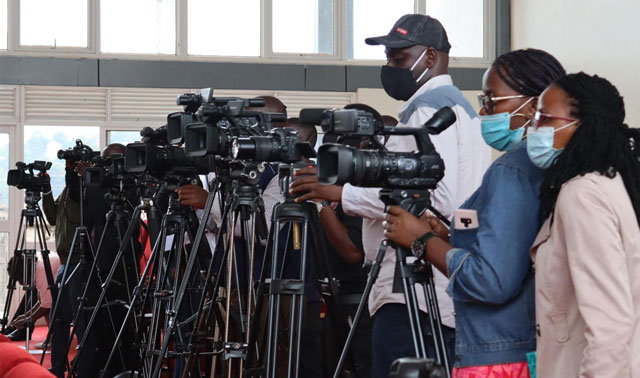
Soon, the sheep were separated from the goats. Some papers which got no saleable news and survived on lies and speculations were eventually boycotted. When they couldn’t break even, they quietly left the stands. Others were hopelessly sub-standard in content, language and layout. For some time, they survived on artificial respiration but lapsed into coma. Others simply disappeared after paying damages for libel.
Today, the fittest have survived, notable among them the Ghanaian Chronicle, Independent, Free Press, Ghana Palaver, Democrat, Public Agenda, Statesman, P & P and Insight. They are slugging it out on the stands and only time will tell which of them would survive the beginning of the next millennium.
On the electronic front, radio stations have come operating Frequency Modulation (FM) units. Short Wave (SW) being too expensive to venture into, the result is JOY 99.7 FM, GOLD, ATLANTIC, CHOICE FM and other private regional, town and cottage FM stations that dot various parts of the country.
These have brought about variety and jobs. So have the television stations. Ghana Television (GTV) is facing competition from TV3 and Metro TV. Competition brings about in efficiency, and for once we can all see that GTV is performing better after being divested of the monopoly it enjoyed.
Journalists who man the newspapers, radio and television stations together form the Ghana Journalists Association (GJA), an association which, until recent years, existed only in name. It is now feverishly preparing to celebrate its Golden Jubilee, an occasion I believe will give more meaning to the Association and anchor it firmly for good as a closely-knit union of Ghanaian media practitioners.
PRINT MEDIA
Print journalism has really come a long way, plodding on like the proverbial snail, hoping to achieve the ultimate. It has had to contend with vicissitudes of fortunes as one political era succeeded another.
Of interest is also the fact that from the cut-and-paste method, press outfits now employ desktop publishing techniques with PageMaker components, making the job easy and speedy. From for four-page newspapers we can now boast of are 30 pages and more, radio stations are on air 24 hours a day.
The development of the media is one thing people have taken note of, and in years to come, the fourth estate of the realm will be well-equipped to collect and dispense information more efficiently, more accurately, and more speedily.
There is another side to it. The media is likely to develop into a monster, the way it has developed to harass Lady Diana, the Princess of Wales, to her death; the way it has made Bill Clinton very uncomfortable by making a showpiece of his private sex life, and hundreds of others.
Indeed, until her death, the Princess had no privacy. She couldn’t sneeze without it being reported somewhere in a newspaper, complete with pictures in colour. At one stage, she lamented being a celebrity and asked the press to leave her alone to lead her life without world attention. She died while speeding away from pressmen who were furiously chasing her (and her boyfriend) on motorcycles.
If the press develops in Sikaman to the extent that it can in future drive someone to his or her death, cause heart attacks, and destroy families and leaders, can be tolerated as it has been in the United States and Europe?
Some of us think that becoming copycats of alien values and foreign systems is causing more harm than good to our society. For instance, it would be very unfortunate if the Ghanaian media developed to the negative extent that it can publish pictures nude girls as some British tabloids do.
The African culture is a decent one and should not be tainted with the wholesale acceptance of everything western. In Europe there are magazines for homosexuals and lesbians, glorifying their acts and promoting their perverted ideals.
The homosexual culture is gradually seeping into African countries, Sikaman inclusive. Should we, therefore, expect to see a homosexual magazine on our newsstands one day?
If the European and American press can harass celebrities, presidents and top shots to the point of discomfort and even death, should the African press copy same if our culture is palpably different in form and orientation, history and tradition?
What I would like to see of a future Ghanaian media is a development-oriented press system seeking to promote the ideals of societal progress, economic growth, agricultural development, political unity, social cohesion and technological advancement.
And what I’d hate to see is the kind of media that is overly interested in wanting to know what the president eats for breakfast, which women he has spoken to of late, and when he is likely to sneeze without covering his nose with a handkerchief.
What I’d also hate to see is a media that seeks to play one tribe against the other, take to pornography or pry into the private lives of people not for any other purpose than to sell newspapers that only thrive on the obscene.
I’ve heard some editors say, “If you don’t write and insult Rawlings your paper won’t sell.” What kind of mentality is that?
The African press must develop, but it must do so in a positive way and not in the negative and destructive sense.
This article was first published on Saturday August 29, 1998