News
Vigrous education reduces child marriages in the Zongos – Ashiaman Zongo Chief

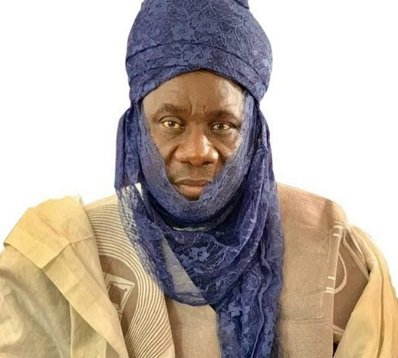
Vigorous education has led to drastic reduction of child marriages in the Zongos, Alhaji Ibrahim Salisu Sofo Yaro, Ashaiman Municipal Zongo Chief has said.
According to him, this practice was prevalent in the Muslim communities but through educational programmes, parents no longer saw the need to engage their daughters in child marriage.
Despite this feat, the zongo chief said they were not resting on their oars and would start massive education on the need to end child marriages.
He, however, said what had been a challenge to the project was financial constraint and, therefore, appealed to well-meaning people to come on board to support the initiative.
He said constant education on the subject was key because if the society wanted the best out of its women, it was about time it stopped marrying them off at a tender age.
Alhaji Yaro said people should also stop believing in the misconception that when a woman attained a higher education, she might not get a husband.
He gave the admonishment in an interview with The Spectator on Tuesday as a leader and a parent to drum home the negative impact the practice on society.
He said children should not be rushed into marriage because it placed a huge burden on them.
He questioned how a child could take care of another child and said that it resulted in both children (mother and child) being denied quality life which in the long round could affect their physical and mental health.
The Municipal Zongo Chief said what was more disheartening was that the girls were sometimes married off to men who were three times or more of their ages.
He said it was common to hear people hide behind economic issues to justify why they had to give away their girls in marriage which was unfortunate.
He said the point such parents kept missing was that if the girls were more educated they could be in better position to address the economic challenges of those parents.
He observed that when professionals from various fields were being mentioned, the Zongo Community was constrained and so there was the need to break away from that unfortunate norm.
He said it was about time people upheld the belief of Islam that early and forced marriage violated human rights and sanctity of marriage.
Alhaji Yaro said he had in his own small way educated some parents to desist from the act and successfully achieved his objective of getting more girls in school.
He said if the community got the neccessary support it could do better to nib the trend of child marriage in the bud.
From Dzifa Tetteh Tay, Ashaiman.


A new international whitepaper on democracy in Africa has placed Ghana’s Minority Leader, Alexander Afenyo-Markin, at the centre of a major research study on the role of opposition parties in strengthening democratic governance across the continent.
The study is being conducted by the African Chamber of Content Producers (ACCP) in partnership with the Universal Peace Federation (UPF) Ghana.
It uses Ghana’s 2025/2026 parliamentary session as a case study to examine how opposition parties can contribute to peace, development and democratic stability.
President of the ACCP, Nana Dwomoh-Doyen Benjamin, said the research forms part of a wider continental project aimed at identifying successful governance models in Africa.
He explained that the chamber is interested in promoting positive African stories and finding practical democratic systems that other countries can adopt.
Mr. Dwomoh-Doyen said political differences should not create division or hostility among leaders and citizens.
He stated that despite belonging to different political sides, people must work together in the interest of national development.
According to him, Ghana’s democratic journey and parliamentary system made the country an important case for the study.
The whitepaper, titled “A Strong and Responsible Opposition in Africa: A Ghanaian Case Study (2025/2026 Review)”, reviews the Minority Leader’s parliamentary activities, including his statements, motions and media engagements.
Researchers are also conducting public opinion surveys in Accra, Kumasi and Tamale as part of the study.
Head of ACCP’s Liberia branch, Dr. Murphy T. Jackson, said African countries should formally recognise and support the office of the Leader of the Opposition through legal structures and institutional resources.
He noted that such systems would help reduce the chances of unconstitutional changes of government on the continent.
Head of Research at ACCP Ghana, David Adofo, described Ghana’s opposition institution as one of the strongest in Africa.
He said although the current research focuses on Ghana, future studies would examine opposition institutions in other African countries.
Deputy Secretary General of UPF-Ghana, Tegha King, stressed the importance of a responsible opposition in national development.
Speaking on behalf of the Universal Peace Federation and the International Association of Parliamentarians for Peace (IAPP), he said opposition parties should not be seen as enemies of progress.
According to him, respectful debate, alternative policy ideas and cross-party dialogue are necessary for strong democratic institutions and national peace.
The research comes at a time when some African countries are experiencing political instability and military takeovers.
Despite these challenges, Ghana continues to be recognised as one of Africa’s stable democracies, having recorded several peaceful transfers of power since 1992.
The completed whitepaper will later be submitted to an international peer-reviewed journal, while the abstract has already been made available upon request.
By: Jacob Aggrey
News
NuGhana Expat Center to launch ‘AfroTango Platform’ to support diasporans in Ghana and Africa — Nana Kofi Opoku-Agyemang


The Executive Director of the NuGhana International Expat Center, Nana Kofi Opoku-Agyemang, has disclosed that the organisation is preparing to launch the “AfroTango Platform” to support diasporans with integration in Ghana and across Africa.
According to him, the platform is intended to help diasporans navigate African systems, which many often find difficult to understand after relocating from Western countries.
“The AfroTango Platform will provide a structured bridge, offering orientation, vetted service referrals, and a trusted community to help them integrate smoothly for business or relocation,” he said.
Mr. Opoku-Agyemang made the disclosure while speaking about a proposal submitted by the NuGhana International Expat Center to the government of President John Dramani Mahama for the establishment of a specialised multi-agency Diaspora Protection and Human Capital Task Force.
According to their statement, the proposal has been submitted to the President and shared with key institutions, including the Bureau of National Intelligence (BNI), the Ministry of the Interior, the Office of National Security, the Ghana Immigration Service (GIS), the Ministry of Foreign Affairs, the Office of Diaspora Affairs, and the Black Star Experience Secretariat.
Mr. Opoku-Agyemang explained that the proposed task force would help protect diasporans and foreign nationals from organised fraud and exploitation while also helping the country benefit from their expertise, investments, and professional skills.
He noted that many diasporans relocating to Ghana often face challenges such as land disputes, business fraud, and difficulties finding trusted people to guide them through local systems.
President of the African Chamber of Content Producers (ACCP), Nana Dwomoh-Doyen Benjamin, who endorsed the proposal, described the initiative as timely and necessary.
According to him, the leadership of NuGhana understands the realities and expectations of diasporans because of their experience living in Western countries.
He appealed to the government to consider the proposal seriously, stating that it could help protect lives and investments while encouraging more diasporans to contribute to national development.
The statement identified key challenges facing diasporans, including organised land and business scams, the absence of a unified system to engage skilled professionals entering the country, and fears over investment security.
Some diasporans who spoke on condition of anonymity also welcomed the initiative and said a state-backed protection system would give them more confidence to relocate and invest in Ghana.
NuGhana said it has already built a human capital and risk database over the past four years to catalogue diasporans and foreign nationals according to their professions, skills, investment interests, and reported incidents.
The organisation added that it is ready to engage the President’s designated team to demonstrate its database and begin a pilot phase of the proposed framework.
By: Jacob Aggrey