News
2024 Polls: EC announces date to receive nominations for election of president and MPs

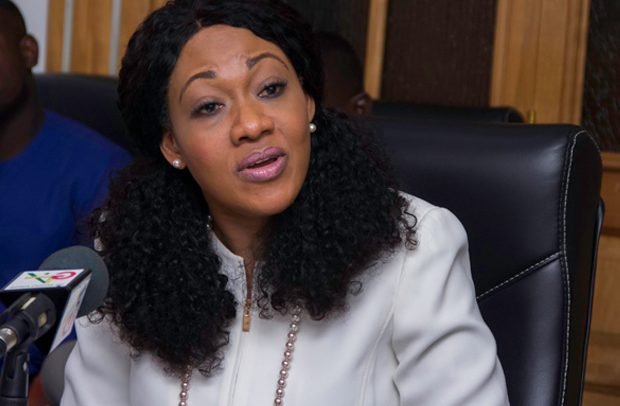
The Electoral Commission has announced date to receive nominations for the 2024 Presidential and Parliamentary Elections.
“The Electoral Commission wishes to announce for the information of the General Public that pursuant to Regulations 6, 7, and 8 of the Public Elections Regulations, 2020 (C.I. 127), the Commission will receive Nominations for the Elections of President and Members- of Parliament from Monday, 9th September, to Friday, 13th September, 2024,” the Commission stated.
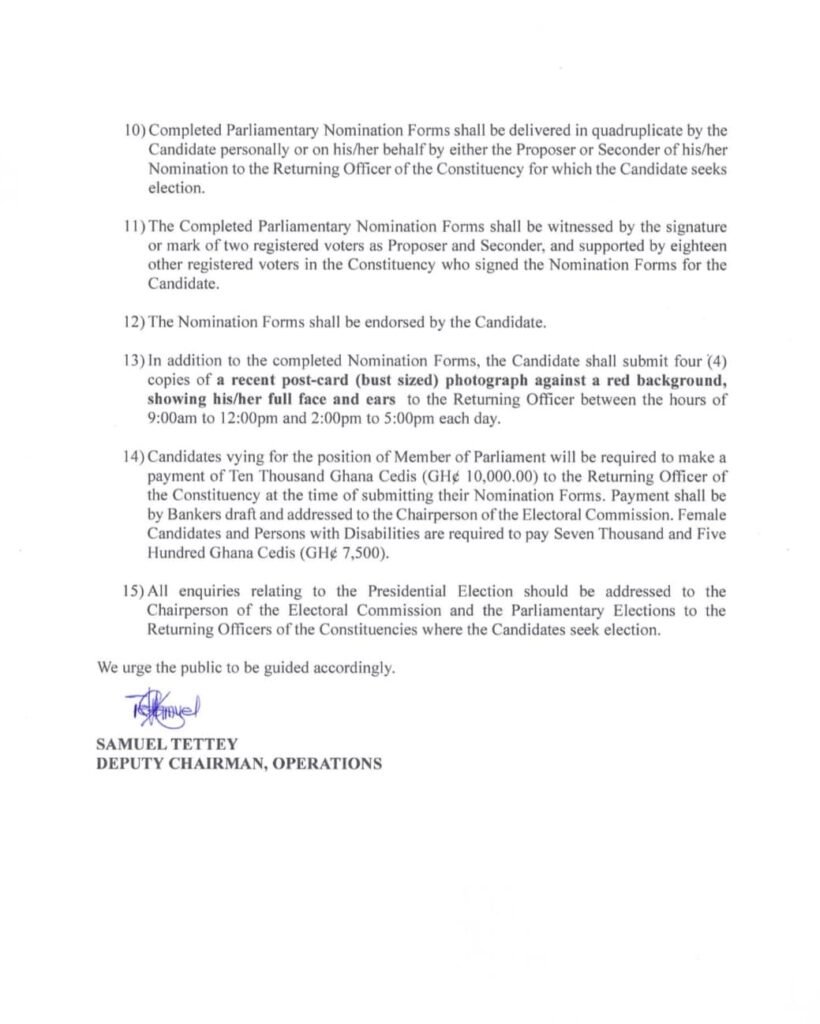
Read the statement below
The Electoral Commission wishes to announce for the information of the General Public that pursuant to Regulations 6, 7, and 8 of the Public Elections Regulations, 2020 (C.I. 127), the Commission will receive Nominations for the Elections of President and Members- of
Parliament from Monday, 9th September to Friday, 13th September, 2024.
1) Interested Candidates are required to download the Nomination Forms from the Commission’s website (https://ec.gov.gh/forms/) from Friday, 2nd August, 2024.
2) A Candidate for Election as President shall be nominated on the official Nomination Forms of the Commission.
3) Completed Presidential Nomination Forms for each candidate for President shall be signed by: a)The Candidate
b) Not less than two persons who are registered voters of each District Assembly.
4 The completed Nomination Forms shall designate the person to serve as Vice President.
5) The Nomination Forms shall be in quadruplicate and shall be delivered personally by the Presidential Candidate or any two of the registered voters who signed the Nomination Forms for the Candidate.
6) In addition to the completed Nomination Forms, the Candidate shall submit four (4) copies of a recent post-card (bust sized) photograph against a red background showing the full face and ears of the Candidate to the Returning Officer.
7) Completed Presidential Nomination Forms shall be delivered at the Head Office of the Commission between the hours of 9:00am to 12:00pm and 2:00pm to 5:00pm each day.
8) Candidates vying for the position of President will be required to make a payment of One Hundred Thousand Ghana Cedis (GHC100,000.00) at the time of submitting their Nomination Forms. Payment shall be by Banker’s draft and addressed to the Chairperson of the Electoral Commission. Female Candidates and Persons with
Disabilities are required to pay Seventy-Five Thousand Ghana Cedis (GHC 75,000).
9) A Candidate for Election to Parliament shall be nominated on the official Nomination Forms of the Commission.
10) Completed Parliamentary Nomination Forms shall be delivered in quadruplicate by the Candidate personally or on his/her behalf by either the Proposer or Seconder of his/her
Nomination to the Returning Officer of the Constituency for which the Candidate seeks election.
11) The Completed Parliamentary Nomination Forms shall be witnessed by the signature or mark of two registered voters as Proposer and Seconder, and supported by eighteen other registered voters in the Constituency who signed the Nomination Forms for the Candidate.
12)The Nomination Forms shall be endorsed by the Candidate.
13) In addition to the completed Nomination Forms, the Candidate shall submit four (4) copies of a recent post-card (bust sized) photograph against a red background, showing his/her full face and ears to the Returning Officer between the hours of 9:00am to 12:00pm and 2:00pm to 5:00pm each day.
14) Candidates vying for the position of Member of Parliament will be required to make a payment of ‘Ten Thousand Ghana Cedis (GHC10,000.00) to the Returning Officer of the Constituency at the time of submitting their Nomination Forms. Payment shall be
by Bankers draft and addressed to the Chairperson of the Electoral Commission. Female Candidates and Persons with Disabilities are required to pay Seven ‘Thousand and Five Hundred Ghana Cedis (GHC 7,500).
15)All enquiries relating_to the Presidential Election should be addressed to theChairperson of the Electoral Commission and the Parliamentary Elections to the Returning Officers of ‘the Constituencies where the Candidates seek election. We urge the public to be guided accordingly.










A member of the National Democratic Congress (NDC), Dr. Sammy Ayeh has picked up nomination forms to contest for the position of Deputy National Communications Officer position.
Announcing his intention, Dr. Ayeh said he is offering himself to help communicate the party’s vision clearly and connect its message with the aspirations of Ghanaians.
He expressed deep gratitude to the party’s National Communications Officer, Lawyer Sammy Gyamfi, describing him as an able leader on whose shoulders he has risen.
“His exceptional leadership, mentorship and confidence in me have shaped my journey and strengthened my resolve to serve,” Dr. Ayeh stated.
He said if elected, he will seek to build on that foundation by strengthening research-driven communication, empowering grassroots communicators, and enhancing strategic media engagement.
Dr. Ayeh humbly appealed to party members and supporters for their support.
By Edem Mensah-Tsotorme

The Data Protection Commission has called on the Minority Caucus in Parliament, the Ministry of Foreign Affairs, JoyNews and other media houses to protect the personal information of 1,964 Ghanaians evacuated from South Africa.
In a press release issued on Tuesday, October 20, 2026, the Commission expressed concern over the public disclosure of the evacuees’ personal details, including their names, signatures and records of financial assistance received.
It warned that making such information public could expose the affected individuals to identity theft, fraud and other forms of harm, especially given the threats to their safety that some of them may have faced.
The Commission explained that the 1992 Constitution protects the dignity and privacy of every individual. It also cited the Data Protection Act, 2012 (Act 843), which sets out rules for the lawful collection, use and disclosure of personal information.
While acknowledging the importance of transparency, parliamentary oversight, the right to information and press freedom, the Commission stressed that these principles do not automatically justify the unrestricted publication of personal details.
It said the disclosure of the records by the Minority Caucus, the Ministry of Foreign Affairs, JoyNews and other media organisations must be assessed based on the law, the purpose of the disclosure and the privacy rights of the individuals involved.
The Commission further noted that although the Ministry of Foreign Affairs and Parliament are registered data controllers in good standing, their registration does not exempt them from their legal responsibilities under the Data Protection Act.
It has therefore urged all the parties involved to take appropriate steps to protect the affected individuals, including immediately restricting access to or removing personal details from publicly available records where their continued disclosure is not legally justified.
The Commission announced plans to conduct a regulatory review to determine whether the disclosures had a lawful basis, what safeguards were applied and whether the privacy rights of the evacuees had been adequately protected.
It said it would engage the relevant parties as part of the review and take appropriate regulatory action if any breach of the law is established.
The Commission reiterated that protecting personal information and respecting human dignity must remain central to efforts to promote public accountability.
By: Jacob Aggrey