Hot!
200 to 300 Ghanaians have been recruited by terrorists – Security analyst

- /home/u249204778/domains/spectator.com.gh/public_html/wp-content/plugins/mvp-social-buttons/mvp-social-buttons.php on line 27
https://spectator.com.gh/wp-content/uploads/2022/07/o0hk9kpTURBXy9kMTYzZGE4ZmE2NGVhZDRkODRjZDIyZmE5ZWYxNGFhMS5qcGeSlQMAAM0D0M0CJZMFzQMWzQGugaEwBQ.webp&description=200 to 300 Ghanaians have been recruited by terrorists – Security analyst', 'pinterestShare', 'width=750,height=350'); return false;" title="Pin This Post">
- Share
- Tweet /home/u249204778/domains/spectator.com.gh/public_html/wp-content/plugins/mvp-social-buttons/mvp-social-buttons.php on line 72
https://spectator.com.gh/wp-content/uploads/2022/07/o0hk9kpTURBXy9kMTYzZGE4ZmE2NGVhZDRkODRjZDIyZmE5ZWYxNGFhMS5qcGeSlQMAAM0D0M0CJZMFzQMWzQGugaEwBQ.webp&description=200 to 300 Ghanaians have been recruited by terrorists – Security analyst', 'pinterestShare', 'width=750,height=350'); return false;" title="Pin This Post">
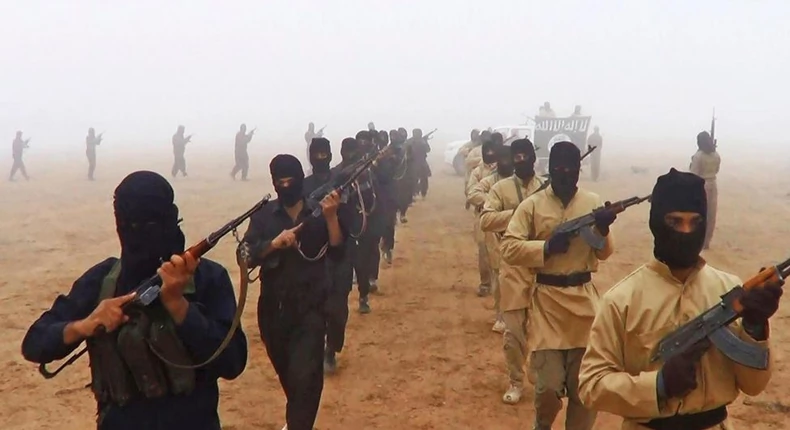
Adib Saani, a security analyst, has disclosed that about 200 to 300 young men and women have been recruited by terrorists in the northern parts of Ghana.
According to him, a series of surveys conducted showed how armed groups were operating in the country, adding that porous borders fester smuggling, arms and human trafficking.
“As part of a series of surveys and assessments of the security situation in the Gulf of Guinea countries conducted by Promediation, it has emerged that the establishment of armed groups in northern Ghana has also allowed terrorist groups to implement an active recruitment strategy.
“It is estimated that 200 to 300 young people have been integrated into the various GSIM-JNIM and EIGS katibas. After undergoing training in training camps in the Sahel, these young recruits were sent back to their villages of origin, in particular, to engage in religious proselytizing,” Adib Saani said in a statement.
He revealed that “porous borders fester smuggling, arms and human trafficking. For example, according to figures from the West Africa Network for Peacebuilding (WANEP), in 2019 there were 44 official migration entry points in Ghana.
“However, in reality, there were more than 189 unofficial entry points on the border with Burkina Faso alone. This complicates our efforts to counter the threat.”
Ghana for a long time has remained a stable country in the midst of increasing extremist violence and political instability in West Africa, a report released by the West Africa Centre for Counter-Extremism (WACCE) has said.
According to the report, the narrative may no longer remain valid soon if adequate measures are not put in place to tackle the increasing threats from the Sahel.
The threat of terrorism is increasingly descending from the Sahel toward the Coastal States.
Today, more than 53% of all ECOWAS states are experiencing insurgencies and the pervasive spillover phenomenon makes Ghana’s border regions a key area of concern.
It said “Recent attacks in Benin, Togo, and Ivory Coast highlight the determination of the terrorists to expand beyond landlocked Sahelian countries, where the insurgency has devastated thousands of lives and property in the last decade.
“Ghana has a big number of prolonged unresolved chieftaincy and ethnic conflicts and tensions, particularly in the Northern regions.”
“The inherently high exploitative capacity of extremists implies that these vulnerabilities put Ghana in danger of terrorist exploitation,” the report added.
Below is his full statement:
As part of series of surveys and assessments of the security situation in the Gulf of Guinea countries conducted by Promediation, it has emerged that the establishment of armed groups in northern Ghana has also allowed terrorist groups to implement an active recruitment strategy.
It is estimated that 200 to 300 young people have been integrated into the various GSIM-JNIM and EIGS katibas. After undergoing training in training camps in the Sahel, these young recruits were sent back to their villages of origin, in particular to engage in religious proselytizing.
Porous borders fester smuggling, arms and human trafficking. For example, according to figures from the West Africa Network for Peacebuilding (WANEP), in 2019 there were 44 official migration entry points in Ghana.
However, in reality, there were more than 189 unofficial entry points on the border with Burkina Faso alone. This complicates our efforts to counter the threat.
All of these groups operate under the command of Sam Oun (from the Katiba Macina), who is believed to be the leader of the GSIM-JNIM for the MaliBurkina Faso-Côte d’Ivoire border area.
One of the objectives of this establishment would be to establish or reinforce the units present in the Diefoula forest, located on the border between Burkina Faso and Côte d’Ivoire, in order to secure GSIM-JNIM access to Ghanaian territory.
EIGS spokesma,n Sidi Amar, and the head of Ansarul Islam’s foreign fighting unit, Saifoulah, estimate that there are 200 young Ghanaians in the ranks of the jihadist groups. The majority of them are believed to be in the ranks of GSIM-JNIM.
Source: www.pulse.com.gh


The University of Ghana Medical Centre (UGMC) has disputed claims made on social media by comedian Michael Blackson concerning the treatment given to his late mother, saying a review found that the allegations did not accurately reflect what happened during her stay at the hospital.
In a statement issued in Accra on August 5, 2026, the management of UGMC expressed condolences to Mr. Blackson and his family over the death of his 83-year-old mother, who died at the facility on July 16, 2026.
The hospital said it had taken the concerns raised by Mr. Blackson seriously and conducted a thorough review in line with its clinical and administrative procedures.
According to the statement, the facts presented by Mr. Blackson on social media contained “numerous inaccuracies” and did not accurately reflect the medical care provided to his mother.
UGMC explained that she was referred to the facility from another hospital and received treatment there from May 27 to July 16, 2026, a period of about eight weeks.
The hospital stated that it would not release details of her diagnosis, treatment, medical records or other aspects of her care because it had a duty to protect patient confidentiality, even after death.
It said the decision was intended to respect the dignity of the deceased and the privacy of her family.
UGMC further stated that all clinical decisions at the facility are made by qualified healthcare professionals based on medical judgment, established standards of care and the best interests of the patient.
The statement added that such decisions are made in consultation with authorised family representatives where necessary and that billing and financial procedures are governed by institutional policies and are separate from clinical decision-making.
The hospital noted that it values feedback from patients and their families and considers both positive and negative comments important for improving the quality of care.
Mr. Blackson had earlier used social media to criticise the care his mother received at UGMC, prompting the hospital’s response.
By: Jacob Aggrey
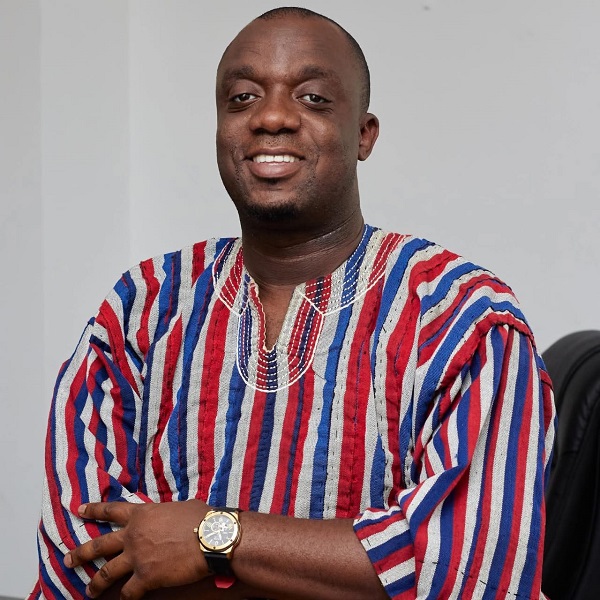
The New Patriotic Party (NPP) has directed all aspirants campaigning in the Greater Accra Region to suspend their campaign activities on August 5 and 6 and instead mobilise supporters for the party’s planned “Democracy Under Attack” demonstration.
The directive was issued by the party’s National Steering Committee in a statement signed by the NPP General Secretary, Justin Kodua Frimpong, on Tuesday.
According to the statement, the decision forms part of efforts to ensure a strong turnout for the demonstration, which is scheduled for Thursday, August 6, 2026.
The party said the protest would begin at 5:00 a.m., with participants expected to gather at the Supreme Court in Accra.
It further directed Regional, Constituency and Polling Station Executives in Greater Accra to work closely to mobilise members and supporters for the event.
“The National Steering Committee is calling on all aspirants currently campaigning across the Greater Accra Region to temporarily suspend their campaign activities on the 5th and 6th of August and join in mobilising support for the upcoming demonstration,” the statement noted.
The NPP appealed to party members and supporters to remain peaceful, disciplined and orderly throughout the protest.
The demonstration forms part of the party’s response to concerns it has raised over issues relating to Ghana’s democratic governance and the justice system.
The NPP leadership expressed confidence that party members would cooperate fully to ensure a successful and peaceful event.
By: Jacob Aggrey