Hot!
10,000 schools to benefit from $219m education improvement projects

- /home/u249204778/domains/spectator.com.gh/public_html/wp-content/plugins/mvp-social-buttons/mvp-social-buttons.php on line 27
https://spectator.com.gh/wp-content/uploads/2020/06/GALOP-President-Akufo-Addoinset-speaking-at-the-meeting-.jpg&description=10,000 schools to benefit from $219m education improvement projects', 'pinterestShare', 'width=750,height=350'); return false;" title="Pin This Post">
- Share
- Tweet /home/u249204778/domains/spectator.com.gh/public_html/wp-content/plugins/mvp-social-buttons/mvp-social-buttons.php on line 72
https://spectator.com.gh/wp-content/uploads/2020/06/GALOP-President-Akufo-Addoinset-speaking-at-the-meeting-.jpg&description=10,000 schools to benefit from $219m education improvement projects', 'pinterestShare', 'width=750,height=350'); return false;" title="Pin This Post">
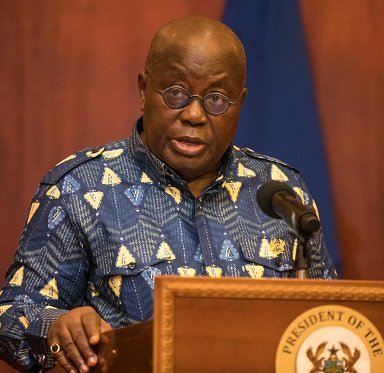
President Nana Addo Dankwa Akufo-Addo has launched the Ghana Accountability and Learning Outcomes Project (GALOP) to help improve the standards and quality of education in low-performing basic schools across the country.
The project, which was launched at the Jubilee House in Accra yesterday with the support of the World Bank, is expected to improve the quality of education in 10,000 schools across the country.
Under GALOP, government will invest US$219 million on a comprehensive set of interventions that addresses constraints from teaching to learning in basic schools.
President Akufo-Addo said the project will ensure that teachers in the early grades are given the necessary support to continue learning in line with the new curriculum introduced by the government.
In addition, he said schools will receive teaching and learning materials, heads of schools will be trained on improved school management techniques, and supervision and assessment systems will be strengthened.
“Ten thousand low-performing basic schools, across the country, have already been selected to benefit from the Project, and I am confident that the implementation of GALOP would help drive standards and quality in these schools,” he said.
President Akufo-Addo observed that in spite of the numerous steps taken by his administration over the last three and half years to improve basic education in the country, a lot more work needs to be done.
“We must address the problem of low learning outcomes that reflect in the performance of some of our children at the Early Grade Reading Assessment (EGRA), Early Grade Mathematics Assessment (EGMA), and Basic Education Certificate Examination (BECE),” he said
The President said government has implemented significant reforms to improve access, quality of education, infrastructure, teacher training and professionalisation, curriculum development, school inspection, and technical and vocational education and training.
Through the Free Senior High School (SHS) policy, President Akufo-Addo noted that 1.2 million Ghanaian children, the largest in the history of the country, are now in the country’s education ecosystem, 400,000 of whom would otherwise have been excluded.
“Over the last three and a half years, we have done a significant amount of work to boost education at the primary school level. In September 2017, we introduced a new curriculum for kindergarten to primary `school that reflects the realities of our aspirations. Under this administration, we have increased the capitation grant by 120 per cent from GH¢4.50 per child to GH¢10.00. We continue to invest in infrastructure, and in the supply of teaching and learning materials for our children,” he said.
The Minister of Education, Mathew Opoku Prempeh, said the government considers education as the shortest distance to migrate from poverty to prosperity and will be made available to all.
“As a country, we have had several challenges with quality learning outcomes reflecting in our poor performance in our early grade reading assessment, early grade mathematics assessment, programme for international students assessment and, with the West Africa Students Examinations, the results have not been very good,” he said.
The Education Minister said the government has introduced several measures to reform and improve the quality of education and indicated the GALOP will be one of the largest investments in the basic school sector to further help improve the quality of education.
Source: Ghanaian Times


General Secretary of the New Patriotic Party (NPP), Justin Kodua Frimpong, has filed his nomination to contest the position of General Secretary again as the party begins its rebuilding efforts ahead of the 2028 general elections.
He was accompanied by party stalwarts and supporters who were in high spirits, expressing confidence that he is the right person to hold the position.
Speaking after filing his nomination, Mr Kodua Frimpong assured the rank and file of the party that he would not disappoint them.
“I can assure you that the faith the rank and file of the party have had in me, I will never disappoint them,” he said.
He also pledged to run a clean campaign devoid of personal attacks.
“I can assure you that our internal campaign will be devoid of personal attacks,” he told his fellow contestants and the rank and file of the party as he seeks to retain his position.
His tenure has seen the party through the 2024 general elections, where the NPP lost power to the National Democratic Congress (NDC) after eight years in government.
The party is currently in a rebuilding phase, with internal elections scheduled to elect new national executives to lead its reorganization towards the 2028 polls.
The General Secretary position is considered one of the most influential in the party’s administrative structure, responsible for the day-to-day running of the party secretariat and implementation of party decisions.
By Edem Mensah-Tsotorme

The University of Ghana Medical Centre (UGMC) has disputed claims made on social media by comedian Michael Blackson concerning the treatment given to his late mother, saying a review found that the allegations did not accurately reflect what happened during her stay at the hospital.
In a statement issued in Accra on August 5, 2026, the management of UGMC expressed condolences to Mr. Blackson and his family over the death of his 83-year-old mother, who died at the facility on July 16, 2026.
The hospital said it had taken the concerns raised by Mr. Blackson seriously and conducted a thorough review in line with its clinical and administrative procedures.
According to the statement, the facts presented by Mr. Blackson on social media contained “numerous inaccuracies” and did not accurately reflect the medical care provided to his mother.
UGMC explained that she was referred to the facility from another hospital and received treatment there from May 27 to July 16, 2026, a period of about eight weeks.
The hospital stated that it would not release details of her diagnosis, treatment, medical records or other aspects of her care because it had a duty to protect patient confidentiality, even after death.
It said the decision was intended to respect the dignity of the deceased and the privacy of her family.
UGMC further stated that all clinical decisions at the facility are made by qualified healthcare professionals based on medical judgment, established standards of care and the best interests of the patient.
The statement added that such decisions are made in consultation with authorised family representatives where necessary and that billing and financial procedures are governed by institutional policies and are separate from clinical decision-making.
The hospital noted that it values feedback from patients and their families and considers both positive and negative comments important for improving the quality of care.
Mr. Blackson had earlier used social media to criticise the care his mother received at UGMC, prompting the hospital’s response.
By: Jacob Aggrey