News
Youth urged to play active role in local governance

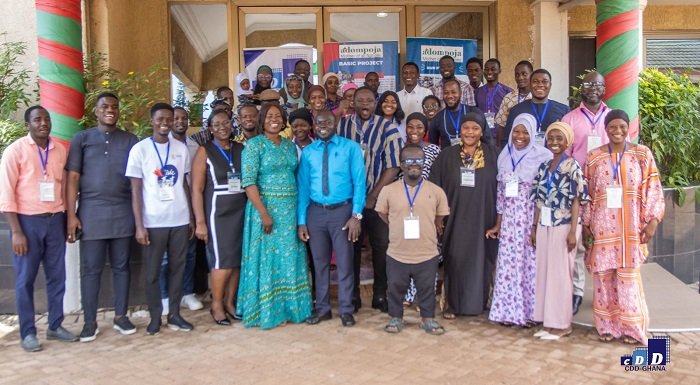
Participants at the workshop
The Executive Director of the Mother of All Nations Foundation, Mr Ishaq Abubakar Zico Newman, has called on the youth to play a more active role in local governance, stressing the importance of their participation in shaping the nation’s future.
He said “local governance is where our voice can have the most immediate impact. When we understand how our local assemblies work then we can have the power to effect change at the grassroots level.”
Mr Newman said this in Accra last Thursday at a Community-Based Civic Engagement Training.
The training was aimed at whipping the interest of the youth to influence the future of their communities and the country at large.
It was organised in collaboration with the Center for Democratic Development (CDD) Ghana and brought together youth from various communities to learn how to effectively participate in governance and influence policies.
According to Mr Newman the youth represents over 38 per cent of the population, with many of them not involved in crucial democratic processes such as voting and local governance.
Participants were encouraged to leverage social media platforms such as Twitter, Facebook, and TikTok to raise awareness on governance issues and demand accountability from local and national leaders.
He said social media serves as a powerful tool for amplifying community concerns, noting that even a single post can spark conversations and drive action on issues like education, healthcare, and infrastructure.
Mr Zico Newman stressed that “real change often starts at the grassroots level, where youth participation can have an immediate impact. Young people are the backbone of our nation’s development. When we participate in governance, we have the power to shape policies, hold leaders accountable, and demand the change we want to see.”
A Research Fellow at Local Government, Dr Charity Dzradosi, explained that local government was crucial for fostering development and ensuring democratic processes that benefit all citizens.
“Local governance brings government closer to the people and ensures that essential public services are delivered to residents in real time,” she stated.
She urged communities to support their Assembly Members rather than overburden them with issues.
“Assembly Members are vital in ensuring that development reaches every corner of our localities, but they can only succeed with the support and engagement of the people they represent,”Dr Dzradosi stressed.
A communication expert from CDD, Mr Daniel K. Selormey, on his part urged community leaders to harness the power of social media for effective local advocacy and highlighted how digital platforms can significantly enhance local governance and community engagement.
By Jemima Esinam Kuatsinu


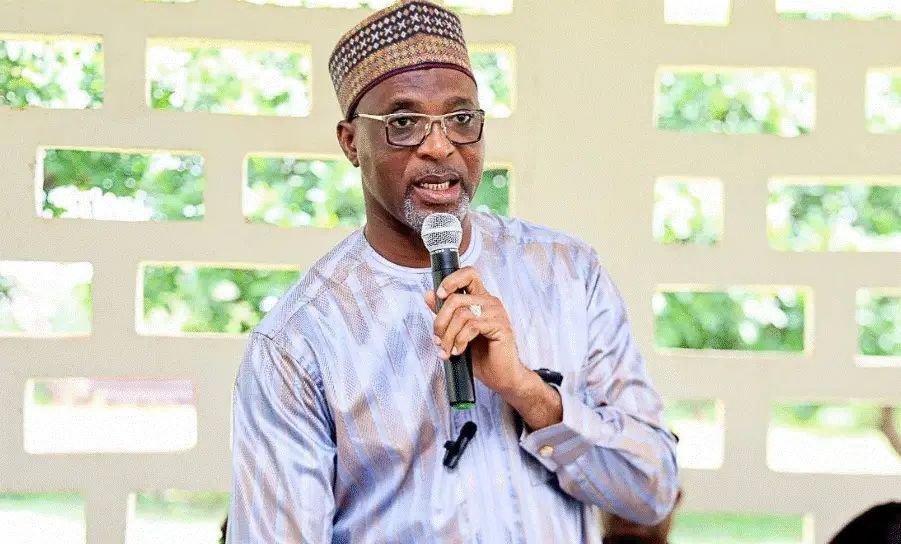
The Minister for the Interior, Muntaka Mohammed Mubarak, has accepted an apology from the Minority leader in Parliament following allegations of corruption in the recruitment process of the security services.
Speaking in Parliament yesterday, he indicated that the accusations were painful because they portrayed his actions in a way that suggested criminal wrongdoing.
“It is painful to be wrongly accused or for your actions to be misconstrued and labelled differently from your intention, especially when it is linked with criminality and serious wrongdoing,” he stated.
Mr Mubarak noted that although he was deeply hurt and worried by the allegations, he had decided to accept the apology wholeheartedly.
According to him, the issue should guide members of the House and public officials to focus on ensuring that the right things are done without attempting to destroy one another.
He assured the Minority that the Interior Ministry and the various security service commanders remain committed to transparency and accountability in their work.
The Minister added that the ministry would be ready to address any concerns raised by the Minority or other members of Parliament regarding recruitment into the security services.
He further appealed to the Speaker of Parliament, Alban Bagbin, to consider expunging from the parliamentary records the false comments.
Mr Mubarak expressed appreciation to the Speaker for handling the matter and emphasised the need for cooperation among members of Parliament to ensure fairness and proper oversight.
By: Jacob Aggrey

THE Gospel Advocates (TGA), a non-denominational evangelistic Christian organisation last Saturday donated a number of educational logistics to the Dodi Asantekrom Basic School in the Eastern region of Ghana.
The gesture was to mark the seventh anniversary of the organisation made up of professionals committed to preaching the gospel of Jesus Christ to students in senior high schools, particularly in rural communities.
TGA also seeks to inspire students towards attaining academic excellence and guiding them towards optimising the various learning opportunities and academic programmes available at the tertiary level.
Among the items donated were 100 desks, 10 cupboards, 10 desktop computers, two laptops, 10 teachers’ tables and chairs and others.
The group also held its annual outreach programme that had a significant impact in the community through initiatives such as feeding 500 children with hot meals and assorted drinks, providing free medical screening and drugs for 500 adults and youth and conducting health education and sensitisation for both children and adults.
TGA also took upon itself to restock the community clinic with essential medicines and distributed food items, plastic bowls, cups and clothing to members of the community.
The initiative, according to officials of the group, was supported by ORSAM Limited, Doctors Save Lives Foundation, Johnson Tord Foundation, El-Shaddai Mothercare, Exceed Alliance Limited, GB Foods Ghana Limited, Qualiplast Limited, Phyto-Riker (Gihoc) Pharmaceuticals Limited, Cosa Bright Ghana, Kabs Pharmacy, Tobinco Pharmaceuticals, Pill Bay Pharmacy and Bamah 3.7.7.
“We are deeply grateful for their immense support and partnership in bringing hope, relief, and practical assistance to the people of Dodi Asantekrom,” the officials said.
In a statement, the President and Chairman of The Gospel Advocates, Mr. Selom Kpikpitse, said the donation to Dodi Asantekrom forms part of TGA’s broader mission to propagate the gospel of Jesus Christ among students and youth in rural communities through teachings, music and arts.
He explained that the meals provided to over 500 pupils were in line with the organization’s annual “Feed the Kidz Project,” which demonstrates Christ’s love.
Receiving the items on behalf of the school, the Headmaster, Mr. Otumfour Newton, expressed gratitude to TGA and its sponsors, saying that “the items would significantly enhance teaching and learning while improving the overall welfare and development of the pupils.”
Mr. Newton also commended the team for the free medical screenings for adults and youth in the community, and other community engagements.
Medical supplies were also donated to the Dodi Asantekrom CHPS compound and received on behalf of the facility by Mr. Amefu, a Physician Assistant.
By Spectator Reporter
Join our WhatsApp Channel now!
https://whatsapp.com/channel/0029VbBElzjInlqHhl1aTU27