News
When desire overpower: A family guide to sexual addiction recovery

- /home/u249204778/domains/spectator.com.gh/public_html/wp-content/plugins/mvp-social-buttons/mvp-social-buttons.php on line 27
Warning: Trying to access array offset on false in /home/u249204778/domains/spectator.com.gh/public_html/wp-content/plugins/mvp-social-buttons/mvp-social-buttons.php on line 27
&description=When desire overpower: A family guide to sexual addiction recovery ', 'pinterestShare', 'width=750,height=350'); return false;" title="Pin This Post">
- Share
- Tweet /home/u249204778/domains/spectator.com.gh/public_html/wp-content/plugins/mvp-social-buttons/mvp-social-buttons.php on line 72
Warning: Trying to access array offset on false in /home/u249204778/domains/spectator.com.gh/public_html/wp-content/plugins/mvp-social-buttons/mvp-social-buttons.php on line 72
&description=When desire overpower: A family guide to sexual addiction recovery ', 'pinterestShare', 'width=750,height=350'); return false;" title="Pin This Post">
Easter is already in the air church plays, family trips to Kwahu, fish money count in Kumasi market stalls. But for some families, the season also sharpens a private pain: a teenager who hides his phone under the mattress, a wife who finds transfers to unknown numbers, a father who smells stale hotel soap on his son’s shirt. Sexual addiction does not announce itself. It steals trust slowly, then all at once.
I see it at CPAC intake rooms: mothers trembling not from anger but exhaustion, men blaming themselves for “raising him badly.” Here is what we know and what actually helps.
Research frames compulsive sexual behaviour less as moral failure and more as an intimacy disorder tied to anxiety, untreated trauma, and a dysregulated reward system (Giordano et al., 2021).
In Ghanaian homes, shame thickens the silence. Carnes (2020) found that structured family disclosure guided by a therapist raised treatment entry by 38 per cent. Grubbs et al. (2020) showed spiritual support lowers relapse risk only when paired with accountability, not preaching.
Name the behaviour without drowning the person
At our Adenta Oyarifa-Teiman office, I often ask a couple to write down one line: “I felt scared when I saw __; I need __.” Not “you are dirty,” but “I saw pornography at 2 a.m. on your laptop; I need us to meet CPAC on Thursday.” I remember Kofi (name changed), a car dealer from Spintex, sitting across me saying, “If I call him addict he will run.” We drafted a text instead: “Yaw, I love you. I saw Mastercard bills. I’ve made us an appointment. I’ll drive you.” He came.
Use Easter’s rhythm, not its sermons
The season’s power is ordinary belonging. Invite your son to peel yam for Good Friday soup; ask your husband to lead the family in a simple sunrise prayer at 6 a.m., phone left in the hall.
A Shai Hills walk, a shared taxi to church-these re-anchor a nervous system.
Invite, do not ambush. Then bind that belonging to a step: install accountability software that blocks explicit sites and sends a report to a trusted person, agree on weekly attendance at a Sex Addicts Anonymous meeting, schedule therapy session with experts from Counselor Prince & Associates Consult – CPAC. Grubbs’ finding holds: faith helps when it carries accountability.
Build containment the Ghanaian way
Few Accra families have study rooms; rural families share one chamber. Make rules fit: “No phones in bedrooms after 10 p.m. -all devices charge in the sitting room.” Keep a single MTN phone for night calls. Agree on cash, not mobile money, for daily spend. For betrayed spouses, CPAC names betrayal trauma without gossip; the relief is immediate.
Parents need their own slice: a 20-minute walk, a radio prayer, a friend who listens. Empty cups spill.
City reality versus village reality
In Accra, you may afford an expert from CPAC and monitoring software. In Bawku, you may lean on CPAC’s online service or a community nurse, a well-trained and trusted pastor or imam, and a strict routine.
Both depend on three moves: containment, treatment, connection. I have watched both work.
Sexual addiction thrives in secrecy. It withers in small, repeated honesty. One week clean, one meeting attended, one budget table opened-these are Easter’s quiet resurrection.
At CPAC we do not promise miracles; we promise a plan. Some sons make tea safely again. Some husbands show receipts. Shame shrinks when families speak early, set boundaries, and bind to help.
Source: Field notes from Counselor Prince Offei’s practice in mental health, marriage counselling, and addiction support at CPAC.
References
Carnes, P. J. (2020). Sexual addiction and compulsivity: Journal of Treatment & Prevention, 27(1), 1-12.
Giordano, A. L., et al. (2021). Family communication in sexual addiction recovery. Journal of Marital and Family Therapy, 47(2), 312-327.
Grubbs, J. B., et al. (2020). Spirituality, shame, and compulsive sexual behaviour. Archives of Sexual Behaviour, 49(5), 1665-1677.
To be continued …
Source: REV. COUNSELOR PRINCE OFFEI’s insights on sexual addiction, relationships, and mental health in Ghana. He is a leading mental health professional, lecturer, ADR Expert/Arbitrator, renowned author, and marriage counsellor at COUNSELOR PRINCE & ASSOCIATES CONSULT (CPAC COUNSELLOR TRAINING INSTITUTE)


Veteran Nigerian actor and African screen legend, Pete Edochie, has paid a courtesy call on the Chief Executive Officer of the Ghana Gold Board (GoldBod), Sammy Gyamfi, during his visit to Ghana.
Edochie is in Ghana to launch the African Legacy Project, which includes a book, documentary film and an African Youth Mentorship Initiative targeting about 500,000 young people across the continent.
Mr. Gyamfi welcomed the opportunity for GoldBod to support the mentorship initiative, noting that it aligns with the Board’s Special Intervention Programme and its focus on social impact and economic empowerment.
GoldBod’s work is also referenced in Pete Edochie’s new book, which highlights Ghana’s efforts to ensure its gold resources contribute to national development.
By Edem Mensah-Tsotorme
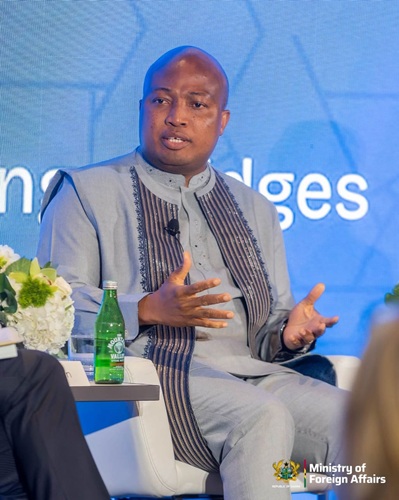
The Ministry of Foreign Affairs has warned Ghanaians seeking employment in Zambia to be cautious of fraudulent job offers that could expose them to human trafficking and forced involvement in cybercrime.
The warning follows the arrest of six Ghanaians in Lusaka, Zambia, during a joint operation by the Zambia Police Service, the Drug Enforcement Commission and the Department of Immigration on August 23, 2026.
According to the Ministry, the operation targeted a facility suspected of being involved in organised cybercrime activities and led to the arrest of 79 people, including 10 Zambians and 69 foreign nationals.
The Ministry said six of the foreign nationals arrested were Ghanaians.
It explained that reports received by the Ghana High Commission in Lusaka indicated that some of those arrested had been recruited through what appeared to be legitimate employment opportunities, including online data entry jobs.
However, the Ministry said some were allegedly forced into online scam activities after their passports were confiscated by their employers.
It warned that the situation highlights how human trafficking groups are using fake employment opportunities to lure unsuspecting job seekers into illegal activities.
The Ministry has therefore advised Ghanaians travelling to Zambia or seeking employment there to thoroughly verify job offers, recruitment agencies and prospective employers before travelling.
Ghanaians living in Zambia have also been urged to remain vigilant when responding to online job opportunities and maintain regular contact with the Ghana High Commission in Lusaka for consular assistance when necessary.
The Ministry said the government remains committed to protecting the welfare and interests of Ghanaians travelling to or living outside the country.
By: Jacob Aggrey