Hot!
We should not look down on technical education – Dr J.B. Danquah Esq.


Dr. Joseph Kwame Kyeretwie Boakye Danquah
It is unfortunate for some Ghanaians to relate technical education to the weak minds.
This notion, according to legal practitioner and Chief Executive Officer of Joevide Company Limited in Kumasi, Dr. Joseph Kwame Kyeretwie Boakye Danquah, grand-nephew of Dr. J.B. Danquah (of blessed Memory), does not hold water.
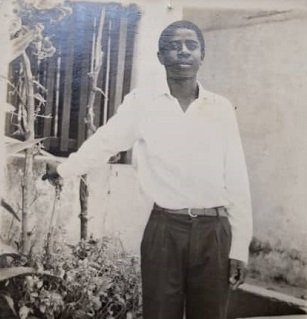
“Secondary School is not the only means through which someone can go to a university,” he stressed.
The legal practitioner who held technical education in high esteem early in his life saw it (technical education) as one of the possible paths he could take, wholeheartedly to attain his dream.
As a result, he opted for St. Paul Technical School (SPATS) at Akyem-Kukurantumi in the Eastern Region and Studied Block Laying and Concreting (BLAC).
Basic Education
Dr. Danquah ESQ attended Kyebi Presbyterian Primary as well as Kyebi L/A Experimental then to Koforidua Wisdom Preparatory and later to the Koforidua Junior High School (JHS) as the pioneer of the Experimental System.

And after JHS, his class mates went to secondary school but he stuck to his father’s pieces of advice and went to a Technical School.
“My father told us that every child of his must be able to feed himself and live meaningful life after school.
Lawyer Dr. Danquah said that his father considered technical education more important because anybody who attended a technical school in those days could easily get employment compared with secondary school leavers.
“In my father’s opinion, it was easier for a technical school leaver to get a job than a Secondary School Form Five (5) leaver,” he said.
He further stated that true to his father’s advice, he (Dr. Danquah) did not become a wayward child when his father died in 1983 because he (Dr. Danquah) was already in a technical school and spent all the holidays at construction site working to earn an income for his upkeep.
“I was always at the construction site carrying blocks and mortar for a living following the constructive advice of my father to go to a technical school,” he emphasised.
He says that “one can attain the highest educational qualification in this world through other means rather than secondary education.
Dr. Danquah said that in the course of his sterling performance at the various sites, he realised that there was a brighter chance for him to be a Supervisor or a Site Engineer one day if he could further his education to put him on a higher pedestal in this technological world.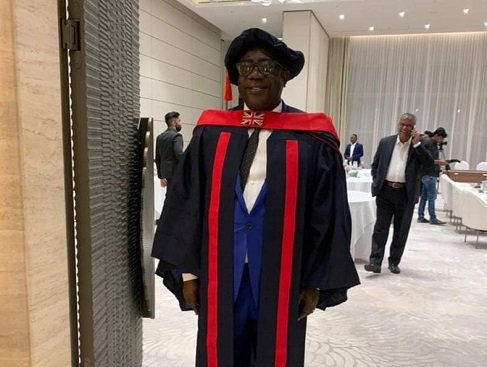
“I have never regretted in doing a technical course. Technical education is the foundation of the developed economy in the world,” he stressed.
Further Education
To enjoy the benefits of technical education, the C.E.O of Joevide Company Limited weighed the available options and entered the Takoradi Polytechnic, now Takoradi Technical University, and obtained Ordinary Technician Diploma in Building and Civil Engineering which broadened his horizon in studying Mathematices, Building Construction and Drawing, Properties of Material, Land Surveying, Workshop Practice and Technology, Structures and Design as well as Elementary Quantity Surveying.
The aforestated subjects could make Lawyer Dr. Danquah decide to work in the building industry or otherwise.
Work Experience
The hardworking C.E.O. of Joevide Company worked at Sae Sadelmi as Quantity Surveyor, Limex Bau (a German Company) and with his firm technical background, he came into contact with some quantity Surveyors and Civil Engineers from the Kwame Nkrumah University of Science and Technology (KNUST).
He said that by dint of hard work coupled with his background in technology appreciated by the Resident German Director of Limex Bau, he rose to become the Chief Engineer of the company in a matter of three years.
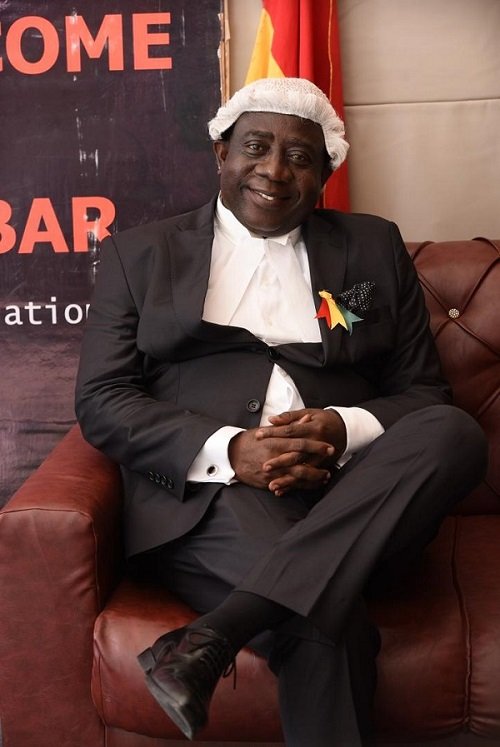
But he later resigned and established his own company by name “Joevide Company Limited” which had undertaken several road and building projects as the main contractors and sub contractors in various parts of the country.
Some of his company’s clients are Goil, Total, Consar, Getfund, some Municipal Assemblies, DANIDA, Ghana Highway Authority, Department of Feeder Roads, AGDECO (a British Company) and MSF Construction among other reputable organisations.
He joined lecturers from selected technical universities who had been granted permission to pursue their Master’s Degree at HAN University in the Netherlands after which he decided to read law ie LLB and LLM at the Kwame Nkrumah University of Science and Technology (KNUST), Kumasi.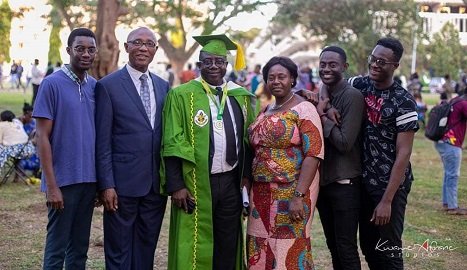
During his studies for his two Master’s degrees, his Dissertation earned him Doctor of Business Administration in Leadership and strategic Management (Honoris Causa).
Advice
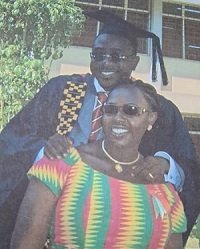
Dr. J.B Danquah Esq. advised the youth to see perseverance as the key to whatever one wants to achieve in life. He again urged the youth to heed to wise counsel as there was no short cut to success.
He is married to Mrs. Vida Danquah and they have Kojo Katakyie, Kofi Kantinka, Kwesi Kokroko, Nana Yaw Obrempong and Nhyira Mamfoah as their children.
By Castro Zangina-Tong

The professor who spends his days exploring the intricacies of African languages found himself at the centre of a different kind of lesson on Friday, October 2, 2026. 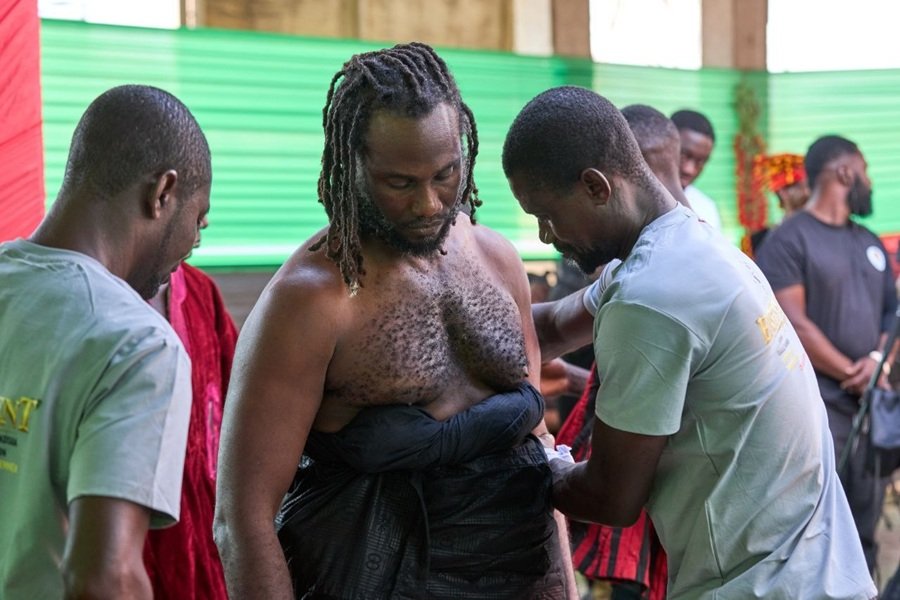
This time, there were no lecture notes, academic arguments or university classrooms. Instead, there was the weight of tradition, the rhythm of a community celebration and the solemnity of an oath at a royal palace.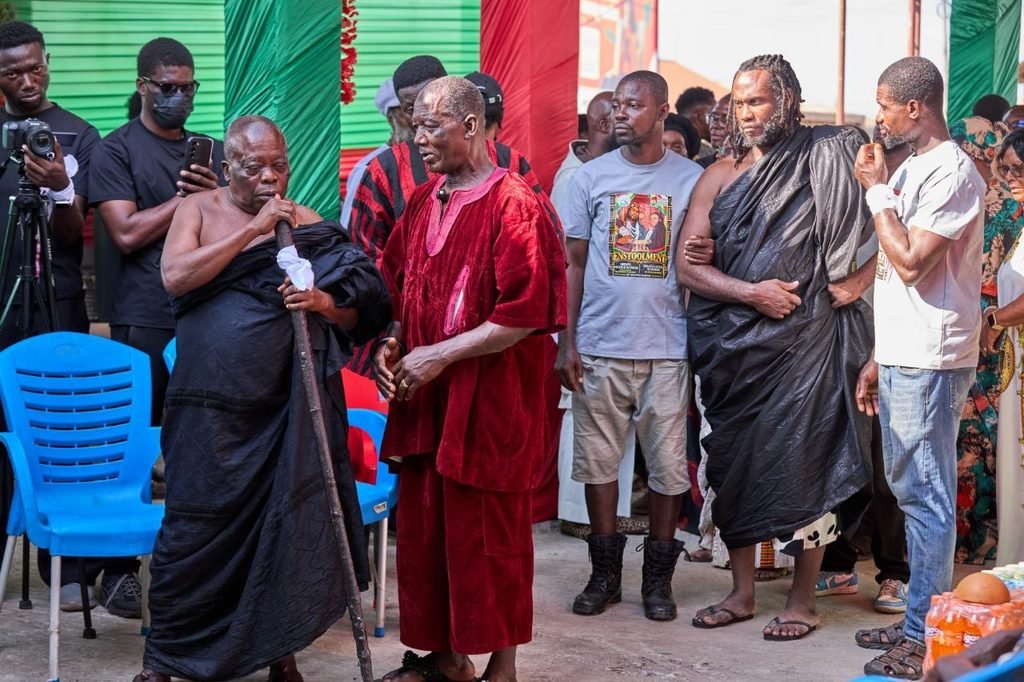
Professor Ọbádélé Kambon, a full Professor of African Linguistics at the University of Ghana, was enstooled as Apagyahene and Sunsum Ɔsahene of Akuapem Mampong in the Eastern Region in a ceremony that brought academia and traditional authority together.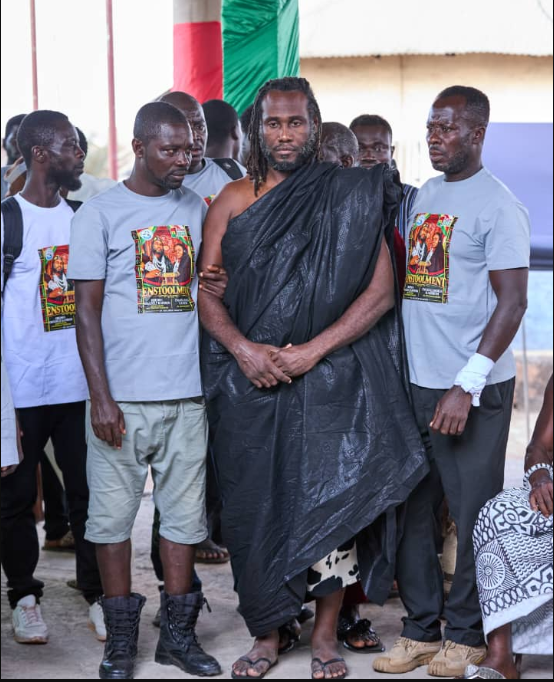
For the professor, the occasion was more than a new title. It was a moment that connected his academic interests in African languages and indigenous knowledge with the living traditions of an Akan community.
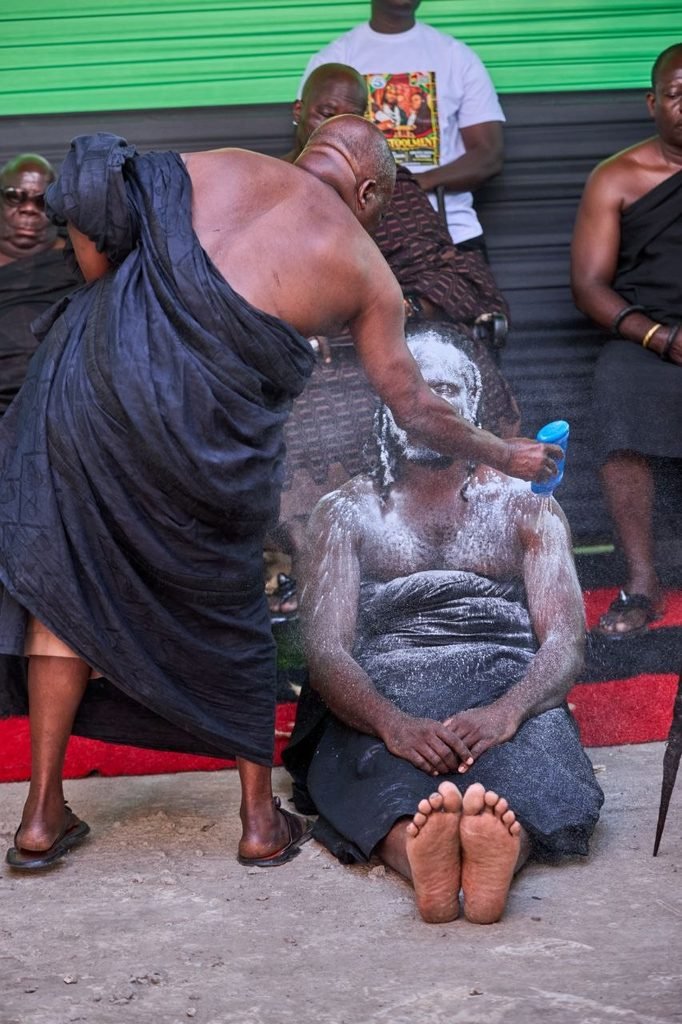
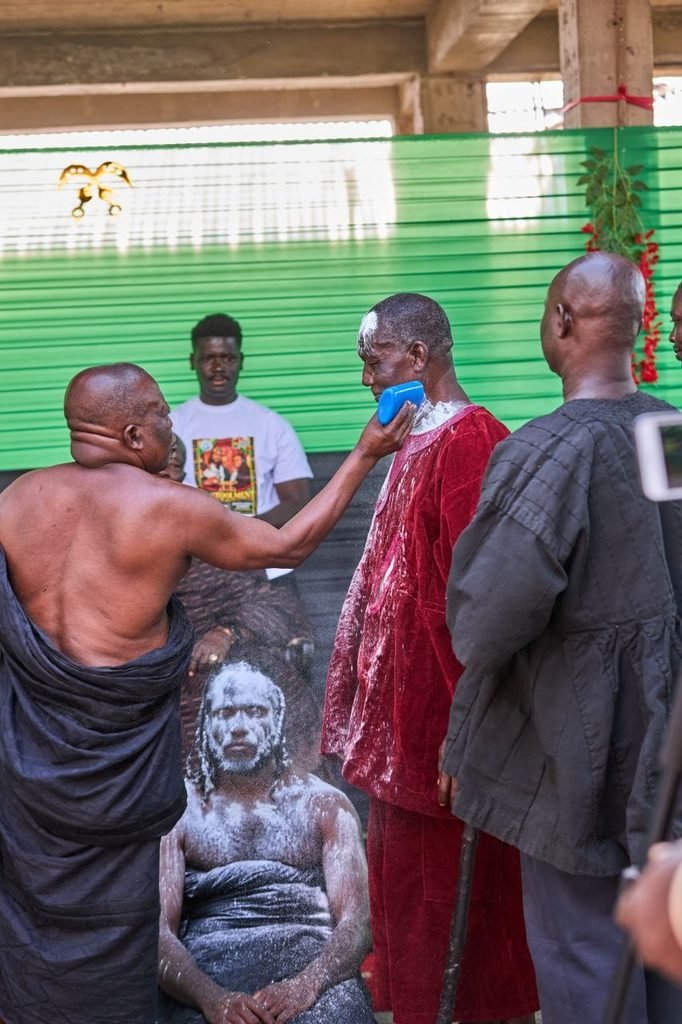
The day’s events unfolded through a series of customary observances. Kambon was first taken to the compounds of the Ɔkyeamehene and Gyasehene, where the preparations for his installation continued.
Then came the application of hyire, the white kaolin powder associated with traditional rites.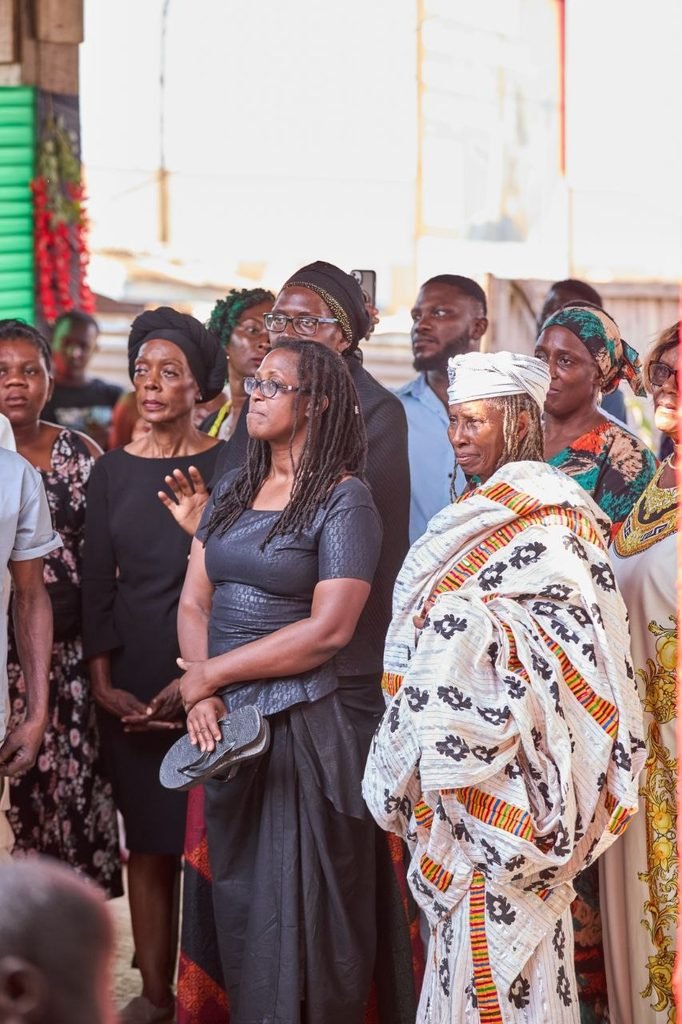
With the customary proceedings underway, the new chief was lifted onto the shoulders of celebrants and carried along the main thoroughfare of Akuapem Mampong.
The procession transformed the streets into a public stage for a ceremony rooted in the community’s traditional institutions.
There was something striking about the image, a university professor, accustomed to the measured language of academic discourse, being carried through the town in a display of traditional recognition.
Yet the celebration was not complete with the procession.
A ram was sacrificed at the Mamponghene’s compound before Kambon was taken to the palace, to swear the oath associated with his new offices.

The ceremony brought him formally into his roles as Apagyahene and Sunsum Ɔsahene.
Beyond the colourful proceedings, the titles themselves carry layers of historical meaning.
Kambon in his research explores the historical connections between Apagya and Akan political and military organisation.
Accounts cited in his work linked Apagya to an asafo, or military company, while historical writing traces an Apagya stool in Asante to the reign of Opoku Ware I in the eighteenth century.
These historical associations offer a glimpse into the institutions that have shaped Akan society over generations, although they do not automatically define the precise responsibilities of the office in Akuapem Mampong.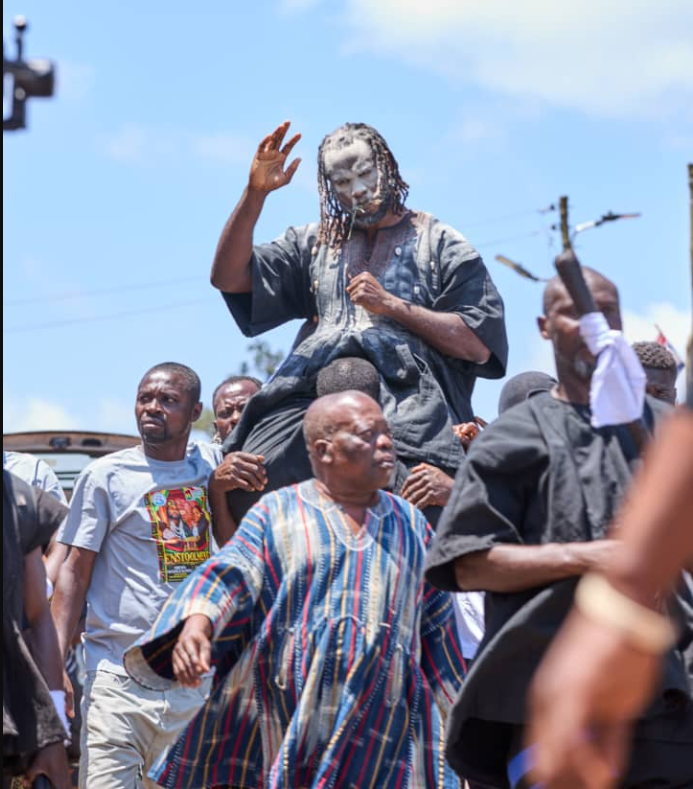
Kambon’s own professional life reflects a similar interest in preserving and examining African knowledge.
His work encompasses Akan language structure, naming practices across the Black world, proverbs and indigenous intellectual traditions.
Through Abibitumi, the platform he founded, he also promotes language learning, scholarship and cultural engagement.
But tradition was only one part of the story that day.
When the formal ceremony gave way to a reception, the occasion expanded into a celebration of three milestones: Kambon’s enstoolment, his promotion to full professor and his daughter Ama’s admission to the University of Ghana.
The gathering therefore carried a personal significance that went beyond the honours bestowed on one man. 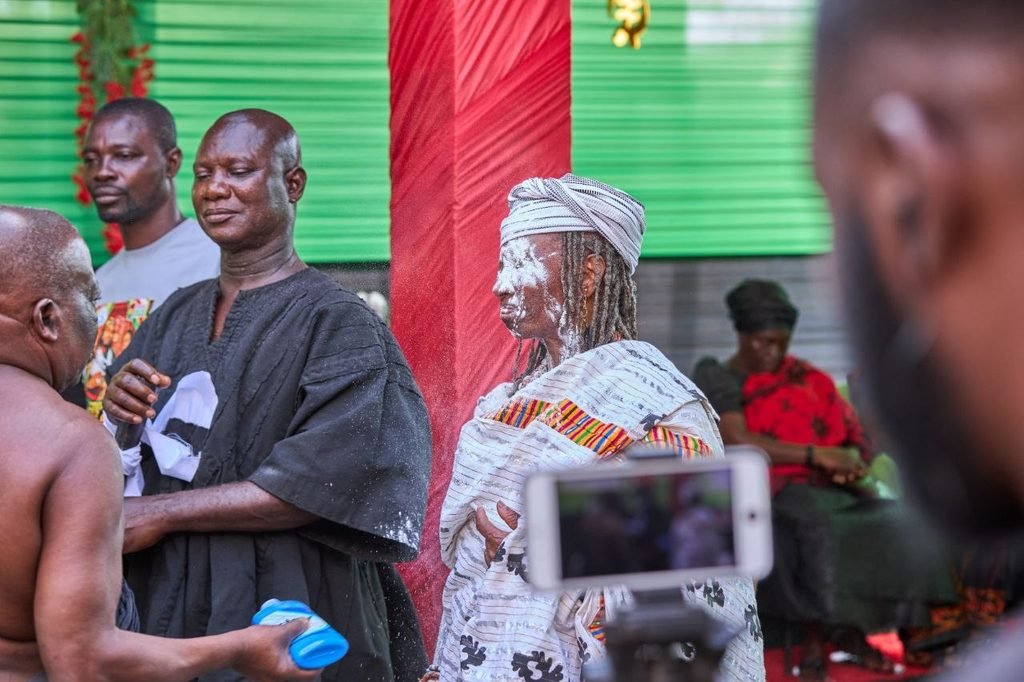
It celebrated professional advancement, the continuation of family aspirations and a connection to cultural heritage.
For a father, seeing a daughter gain admission to the same university where he holds a distinguished academic position offered another reason to celebrate.
For the professor, the moment placed family achievement alongside his own professional and traditional milestones.
Kambon had already established a place in the traditional life of Akuapem Mampɔn through an earlier installation as Banmuhene Kyidɔmhene, recorded in 2017.
His latest enstoolment adds another chapter to that relationship.
In Akuapem Mampɔn, the day brought together the university, the palace and the family table in one celebration. And for Kambon, the journey from the lecture room to the traditional procession showed how scholarship, cultural responsibility and family achievement could converge in a single memorable occasion.
By Enoch Ntiamoah Siaw
SKIP THE QUEUE, TAP THE NEWS
You can now read the Ghanaian Times and The Spectator newspapers from the comfort of your device via TimesNewsPlus.
Join our WhatsApp Channel: https://whatsapp.com/channel/0029VbBElzjInlqHhl1aTU27

Intercity STC Coaches Limited has interdicted a driver captured in a viral video allegedly hitting a Sprinter bus during an overtaking manoeuvre at Pokuase before driving away from the scene.
In a public notice, the company described the driver’s conduct as unacceptable, stressing that it did not reflect the safety standards and professionalism it upholds.
Management said it had commenced an immediate investigation into the incident and identified the driver, who has been interdicted pending the outcome of the disciplinary process.
The company added that it was awaiting an official report from the Pokuase Police Command to help establish the facts surrounding the incident.
STC reaffirmed its commitment to passenger safety and responsible road use, while thanking members of the public for bringing the incident to its attention.
Management assured the public that appropriate action would be taken following the investigation.
By: Jacob Aggrey