News
We can now track excavators before they arrive in Ghana – Armah Kofi Buah


- /home/u249204778/domains/spectator.com.gh/public_html/wp-content/plugins/mvp-social-buttons/mvp-social-buttons.php on line 27
https://spectator.com.gh/wp-content/uploads/2025/07/WhatsApp-Image-2025-07-23-at-15.07.11.jpeg&description=We can now track excavators before they arrive in Ghana – Armah Kofi Buah', 'pinterestShare', 'width=750,height=350'); return false;" title="Pin This Post">
- Share
- Tweet /home/u249204778/domains/spectator.com.gh/public_html/wp-content/plugins/mvp-social-buttons/mvp-social-buttons.php on line 72
https://spectator.com.gh/wp-content/uploads/2025/07/WhatsApp-Image-2025-07-23-at-15.07.11.jpeg&description=We can now track excavators before they arrive in Ghana – Armah Kofi Buah', 'pinterestShare', 'width=750,height=350'); return false;" title="Pin This Post">
The Minister for Lands and Natural Resources, Emanuel Armah Kofi Buah says the ministry now has the capacity to track earth-moving equipment such as excavators even before they enter Ghana’s ports.
During his presentation at the Government Accountability Series held at the Jubilee House, the minister, Emmanuel Armah Kofi Buah, indicated that a new digital tracking system has been introduced to monitor all imported excavators from the point of entry into the country.
The initiative, developed in partnership with the Ministry of Transport, the Ministry of Finance, the Ghana Revenue Authority (Customs Division), and the Ghana Ports and Harbours Authority, aims to clamp down on the use of unregistered and illegal machinery in mining operations across the country.
The Government Accountability Series is an initiative by the Ministry of Information in collaboration with key civil society groups to ensure that leaders remain answerable to the people they serve.
Mr. Kofi Buah explained that so far, over 1,200 excavators have been impounded at the ports, pending proper validation and clearance.
He said this is part of efforts to sanitize the mining sector and prevent illegal mining activities, popularly known as “galamsey”.
He further noted that the Minerals Commission is now using real-time geo-fencing and tracking technology to monitor equipment movement across mining areas.
He revealed that a pilot programme involving 191 excavators is currently underway at a dedicated control room within the commission.
“This is a very innovative move. We are now able to know when an excavator is shipped, when it lands, and where it is headed. We will no longer allow the free movement of mining machinery without proper monitoring,” the minister said.
He pointed out that the new system forms part of a broader national plan to enforce mandatory registration and tracking of all mining and heavy-duty equipment used in the country.
Mr. Buah assured the public that government remains committed to cleaning up the mining sector and protecting Ghana’s forests and water bodies from destruction caused by illegal mining.
By Jacob Aggrey







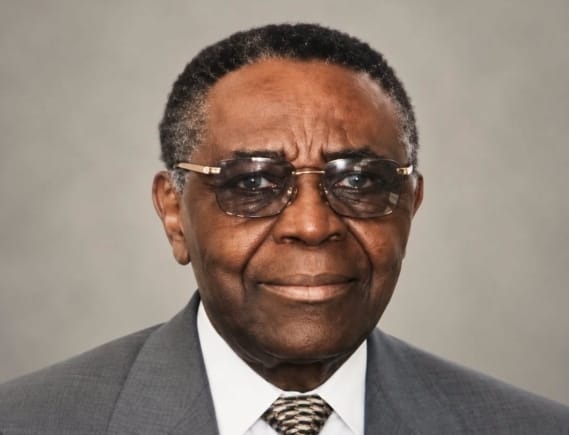
The New Patriotic Party (NPP) has announced with profound sorrow the passing of Ambassador Samuel Arthur Odoi-Sykes, describing him as an eminent statesman, distinguished patriot, and one of the founding pillars of the party.
In a statement issued by the party, Ambassador Odoi-Sykes was eulogized for dedicating several decades of his life to the service of Ghana and the cause of democratic governance.
“His constant dedication to public service, constitutional democracy, and principled political leadership earned him the admiration and respect of colleagues across the political divide,” the statement said.
Ambassador Odoi-Sykes served as Member of Parliament for Ashiedu Keteke, now Odododiodio, during the Third Republic, where he rose to become Minority Leader of Parliament. He was noted for his exemplary parliamentary leadership and advocacy for democratic ideals.
As a founding father of the NPP, he played a pivotal role in laying the institutional and ideological foundations of the party.
His leadership as National Chairman from 1998 to 2001 was instrumental in uniting and strengthening the NPP, culminating in its historic electoral victory in the year 2000 and the first democratic transfer of power between political parties under the Fourth Republic.
Following that landmark achievement, he continued his service to the Republic as Ghana’s High Commissioner to Canada from 2001 to 2006, where he represented the nation with distinction and enhanced Ghana’s diplomatic relations abroad.
The party noted that throughout his lifetime, Ambassador Odoi-Sykes served on numerous national and party committees, offering wise counsel, strategic leadership and invaluable institutional memory.
“His integrity, humility, intellect, and constant commitment to Ghana’s democratic development will remain an enduring source of inspiration for present and future generations,” the NPP said.
“His passing marks the end of an illustrious chapter in Ghana’s political history. The nation has lost a distinguished public servant, while the New Patriotic Party has lost one of its most respected elder statesmen and steadfast architects.”
The party extended its deepest condolences to his wife, children, the entire Odoi-Sykes family, friends, and associates.
“As we mourn his passing, we also celebrate a life exceptionally lived in faithful service to God, country, and the Party. Ambassador Samuel Arthur Odoi-Sykes has indeed paid his dues, and his legacy of principled leadership, patriotism, and selfless service will forever remain etched in the annals of Ghana’s democratic history.
“May his soul rest in perfect peace, and may his memory keep inspiring generations yet unborn,” the statement concluded.
By Edem Mensah-Tsotorme
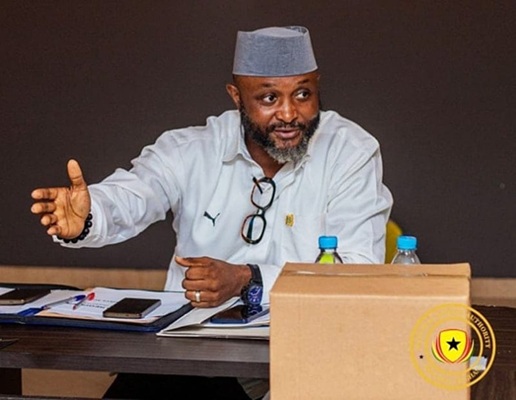
Lawyers for suspended National Sports Authority (NSA) Director-General, Yaw Ampofo Ankrah, say he will not appear before Parliament for now because matters concerning him are currently under investigation by the Criminal Investigations Department (CID) of the Ghana Police Service.
In a statement issued on behalf of Mr Ampofo Ankrah, his legal counsel, Jerry Avenorgbor of Brookman Amissah & Associates, said the sports administrator has cooperated and will continue to cooperate with the police as they work to establish the facts.
The lawyers said Mr Ampofo Ankrah and his representatives would refrain from making detailed public comments on the allegations while the investigation is ongoing.
They urged the media and the public to exercise restraint and avoid presenting allegations, speculation or unverified information as established facts.
The lawyers stressed that the existence of an investigation does not, by itself, amount to a finding of wrongdoing against Mr Ampofo Ankrah or any other person.
On calls for Mr Ampofo Ankrah to appear before Parliament, his lawyers said it would be “imprudent” for him to do so while the CID investigation remains active and he is under suspension.
According to them, appearing before Parliament at this stage could create complications for the investigation and potentially affect the process through which the facts are being established.
Mr Ampofo Ankrah has therefore decided to defer any appearance until the investigation has been concluded and the circumstances surrounding his suspension have been determined by the appropriate authorities.
His lawyers, however, stressed that the decision should not be interpreted as a refusal to submit to lawful processes or to account to Parliament or any other constitutionally mandated institution.
They explained that the position is intended to protect the integrity of the ongoing investigation and prevent any action that could potentially interfere with it.
The lawyers further indicated that if his suspension is lifted and he is restored to his position as Director-General of the NSA at the discretion of the Office of the President, he will respond appropriately to any lawful request to appear before Parliament or another competent institution.
Mr Ampofo Ankrah and his legal representatives are expected to respond to the findings of the investigation and address any issues requiring clarification once the appropriate authorities have completed their work.
They have meanwhile called for patience and respect for the ongoing investigative process.
By: Jacob Aggrey