News
US Ambassador visits development partners in Northern Regions

Ambassador Stephanie S. Sullivan, last week, paid a visit to development partners in Tamale, Yendi, Buipe, and Salaga, affirming the United States’ commitment to Peacebuilding and development in the Northern Region.
She held meetings with, Mr Shanui Alhassan Shaibu, the Northern Regional Minister and Chairman of the Regional Security Council, as well as representatives of the Northern Regional Peace Council and West African Network for Peacebuilding (WANEP).
The Ambassador met with traditional leaders including the Overlord of Dagbon, Ya-Naa Abukari II, Mion Lana Abdulai Mahamadu, Paramount Chief of Buipe, Buipewura Abdulai Jinapor II, and Paramount Chief of Salaga, Kpembewura Bangabe Ndefuso IV.
She congratulated the Northern Regional Peace Council and WANEP on their work and urged them to continue building community resilience, reinforcing social cohesion, and help individuals to reject extremism.
The Ambassador highlighted United States Agency for International Development (USAID) projects and pledged to support initiatives meant to equip traditional authorities and Regional Peace Councils with skills and knowledge to mediate conflicts in their jurisdictions.
Mrs Sullivan visited the Buipe Port in the Savannah Region where USAID’s West Africa Trade and Investment Hub is supporting businesses in the north to develop export partnerships to access international markets.
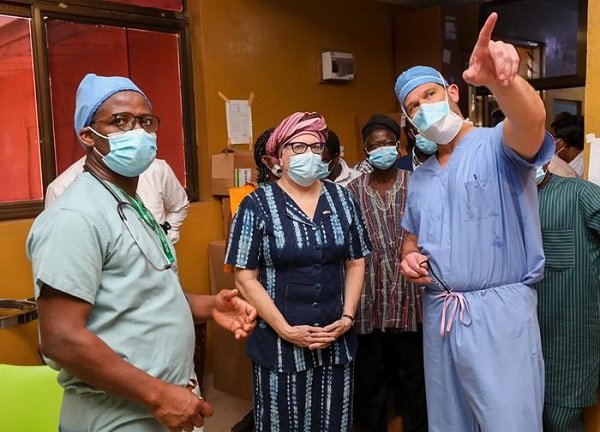
The Ambassador again visited a new Trauma and Emergency Ward at the Yendi Government Hospital being constructed by Mission:318, a private U.S. charitable organisation that has provided medical services and supplies to the Yendi community for more than 10 years.
“Americans’ deep connection with Ghanaians is not just about the strong and enduring partnership with the U.S. Government. Mission:318 models many of the values of the American people – sharing the fruits of our prosperity and helping others to help themselves,” she said.
Coinciding with the start of Women’s History Month, the Ambassador further met with six female alumni of U.S. exchange programmes, focused on peace and security, countering extremism, and empowering civil society.
By Spectator Reporter
News
Allegiance to God or Political Party
As an intellectual, I watch and listen to discussions on TV and Radio respectively. I also sometimes browse the net to watch and read what is happening on social media platforms.
The attitude that are displayed by a lot of the political activists in terms of their comments is deeply concerning. Then comes the shock when these people begin to declare that they are Christians and start mentioning the denominations they belong to.
Early this week, one of them, mentioned that he belongs to the same denomination I belong to and I suddenly felt sad. People are defending the indefensible so long as it is in the interest of their political party.
They deliberately run commentaries that support the party line instead of upholding morality. Such attitude is the beginning of corruption and should such people get into public office, they are certain to condone wrong doing, no wonder the unacceptable corrupt acts that get exposed at Public Accounts Committee hearings, year after year.
I keep saying that the problem of this country is not the lack of expertise or resources, but lack of morality because it is the glue that holds each sector of the economy together and the overall governance together.
When society, does not prioritise morality, it does not matter how intelligent the people are, governance systems will not deliver expected outcomes. Citizens must therefore have a mindset of putting the nation first, in other words, citizens must be patriotic.
It is therefore worrying to see a lot of people rather doing everything possible to maintain allegiance to their political party. When national issues are being discussed, you find them towing their party line of argument, even if their party position lacks moral value.
Taking into account the population census, about 71 per cent are Christians and about 19 per cent are Muslims, implying that majority of the population are religious. Hence, the moral decline is the fault of the religious people, especially Christians, since they form the majority.
There are a lot of youthful people, who are quite intelligent and eloquent in the two leading parties in the country. When you listen to their logical analysis of issues, it leaves you in no doubt about their high level of intelligence.
As I keep saying, the most dangerous person, is not the armed robber but an intelligent person with a criminal mindset. Such a person can engage in propaganda that can create tension in the country.
Such people can lie with a straight face in such a convincing manner that, it can create chaos in the country. The political parties have a responsibility for ensuring a mindset change of their communicators to adhere to moral values and to be patriotic at all times.
What they should realise, is that, should the nation erupt in flames as a result of their careless utterances, as happened in Rwanda, no one will be spared.
The clergy, are usually the voice of conscience, who comes in to quell the storm, when there is confusion in the country. Unfortunately, some of them have lost credibility. They have tarnished their reputation by being partisan.
They have allowed their actions and utterances to betray which political party they sympathise with. This has taken away the neutrality which would enable them to mediate in conflicts that may arise.
It has gotten so bad that the youth openly insult them on social media platforms and so they do not have the moral authority to admonish, criticise or advise politicians who by their utterances go overboard and needs to be condemned or criticised.
It is high time the clergy with credibility, used their pulpits to preach against unpatriotic behaviour in our political space. God bless.
News
UG Professor proposes Genes–Mind–Community model to improve kidney care in Africa

A Professor at the University of Ghana Medical School, Prof. Vincent Boima, has called for a major shift in the treatment and prevention of chronic kidney disease (CKD) in Ghana and across Africa, warning that the continent cannot rely on dialysis alone to manage the growing health burden.
Delivering his inaugural lecture at the university’s Great Hall on Thursday, Prof. Boima stated that chronic kidney disease was more common in Africa than in many high income countries, with most patients seeking treatment only when the disease had reached advanced stages.
Speaking on the theme, “From Genes to Mind: Holistic Pathways to Precision Kidney Care for Africa,” he explained that hypertension and diabetes remained the leading causes of kidney disease in Ghana, where many younger and economically active people were being affected.
According to him, the high cost of dialysis, limited transplant facilities and unequal access to treatment raised concerns about whether many cases of kidney failure could have been prevented through earlier interventions.
Prof. Boima proposed what he described as the “Genes–Mind–Community” model, which combines genetics, mental health and community based healthcare approaches to improve kidney care in Africa.
He explained that the “Genes” pillar focused on understanding the role genetics played in kidney disease among Africans, particularly the APOL1 risk variants common in West Africa.
The professor noted that studies in Ghana and other West African countries had shown that many people carried high risk APOL1 genes, which increased the chances of developing non diabetic kidney disease when combined with factors such as infections, hypertension and environmental pollution.
However, he cautioned that genetic information should be used responsibly and ethically, stressing that it should improve treatment decisions without increasing stigma or inequality.
Prof. Boima therefore called for more African led research into kidney disease genetics, affordable testing methods for early detection and stronger health systems to prepare for future gene targeted treatments.
On mental health, he indicated that psychological wellbeing was an important part of kidney care because many patients with hypertension, chronic kidney disease and those on dialysis experienced depression, anxiety and emotional distress.
He explained that financial difficulties, irregular access to medication and weak follow up systems often worsened the mental health burden on patients, affecting their ability to continue treatment.
To address the problem, he proposed routine mental health screening in hypertension and kidney clinics, together with culturally sensitive counselling and support systems.
Prof. Boima stressed that psychological care should become part of chronic disease management rather than being treated as optional.
Touching on the “Community” pillar, he stated that prevention remained the most effective and affordable strategy for reducing kidney failure, stroke and heart disease in Africa.
He disclosed that community studies in Ghana had shown that large scale blood pressure screening programmes could identify many people living with undiagnosed hypertension.
Despite this, he pointed out that many patients struggled to continue treatment because of transport costs, long hospital waiting times, expensive medication and inadequate financial support.
Prof. Boima proposed decentralising healthcare through community based services and primary healthcare centres, while also empowering nurses, pharmacists and other non physician health workers to assist with prevention and treatment.
He further recommended the use of simple technologies such as text message reminders to help patients take medication, reduce salt intake, exercise regularly and attend medical appointments.
The nephrologist also encouraged the use of family and faith based support systems to improve treatment adherence and continuity of care.
Speaking on the state of kidney treatment in Ghana, Prof. Boima explained that dialysis remained the main form of kidney replacement therapy in the country, although treatment was expensive and available mainly in a few locations.
He observed that many patients paid for dialysis from their own pockets, creating serious financial hardship for families, while kidney transplantation services also remained limited.
According to him, these challenges highlighted the need for Ghana to focus more on prevention, primary healthcare and long term chronic disease management instead of depending heavily on dialysis centres.
He called for expanded National Health Insurance coverage for essential medicines and diagnostic services, improved data systems, stronger primary healthcare and policies to support mental health and ethical genetic care.
Prof. Boima concluded by urging African countries to lead a new era of “precision kidney care” that focused on people rather than only treating diseased organs.
The Vice Chancellor of the University of Ghana, Professor Nana Aba Appiah Amfo, commended Prof. Boima for his work, stating that the lecture had reshaped thinking on kidney healthcare in Africa.
She noted that the presentation highlighted the hidden financial and social costs of kidney disease and reinforced the need for healthier lifestyles, including reducing salt intake, exercising regularly and taking blood pressure checks seriously.
Prof. Appiah Amfo added that Africa must not only participate in precision medicine but should also help shape its future direction.
By: Jacob Aggrey
News3 days agoGhana’s Chris Koney participates in high-level dialogue at Africa Forward Summit 2026
News1 week agoIsaac Adongo defends BOG Governor, says Ghana “in safe hands”
Features3 days agoFix It Fast or Lose Them Forever: The Ever-Rising Importance of Service Recovery in Competitive Industries