News
Unveiling Ghana’s unsung heroines, breaking barriers and redefining the status quo


- /home/u249204778/domains/spectator.com.gh/public_html/wp-content/plugins/mvp-social-buttons/mvp-social-buttons.php on line 27
https://spectator.com.gh/wp-content/uploads/2024/03/Justice-Annie-Ruth-Jiagge.jpg&description=Unveiling Ghana’s unsung heroines, breaking barriers and redefining the status quo', 'pinterestShare', 'width=750,height=350'); return false;" title="Pin This Post">
- Share
- Tweet /home/u249204778/domains/spectator.com.gh/public_html/wp-content/plugins/mvp-social-buttons/mvp-social-buttons.php on line 72
https://spectator.com.gh/wp-content/uploads/2024/03/Justice-Annie-Ruth-Jiagge.jpg&description=Unveiling Ghana’s unsung heroines, breaking barriers and redefining the status quo', 'pinterestShare', 'width=750,height=350'); return false;" title="Pin This Post">
Justice Annie Ruth Jiagge
The story of Ghana’s struggle for independence had often been told with men leading its agenda.
State ceremonies such as founder’s day often laud the efforts of Dr Kwame Nkrumah, Ako Adjei, Edward Akuffo Addo, Obetsebi Lamptey, Ofori Atta and Joseph Boakye Danquah in the country’s quest for independence.
Ghana’s independence from the British colonial rule was led by Dr Kwame Nkrumah, but he did not do it all by himself.
Apart from the support he had from men, women also played important roles in the struggle for independence.
But most often the story of Ghana’s struggle for independence showing the roles and contributions of women to the development of the country is either scanty or not mentioned at all.
In his inaugural speech, it is said that Dr Kwame Nkrumah praised two women for their roles played during in the struggle. These women were Rebecca Naa Dedei Aryeetey also known as Naa Dedei Ashinkinshan who was a political activist, businesswoman and a feminist and Akua Shorshoorshor
Some other women who were pivotal in the struggle for independence and its development were Ama Nkrumah a political activist and Sophia Oboshie Doku, a devoted female activist and the first female parliamentarian,
Other women were Mabel Dove Danquah a journalist and a politician, Agnes Oforiwaa Tagoe-Quarcoopome a market queen and a business woman at Makola and Okaishie and Susan Alhassan, an author and a politician.
These women used their influence, resources and knowledge to help bring Dr Kwame Nkrumah to power and also championed the cause of women in the country.
Also, there were women groups such as the Convention People’s Party (CPP) Women’s Wing, the All- African Women’s League which was later renamed to Ghana Women’s League (GWL) in 1960 and the Federation of Gold Coast Women (FGCW).
These women’s group brought significant change in the living conditions of other Ghanaian women.
Annie Ruth Jiagge
A lot of women had shaped the discourse on the role of women in nation building and development and one of such is Annie Ruth Jiagge
Annie Ruth Jiagge was the first woman in Ghana to become an Appeals Court Judge and an outstanding women rights advocate at both National and International levels
Born in Lome Togo, she later relocated to Keta in the then British Togoland due to the decision of her parents for her to learn the English language.
She had her secondary school education at Achimota College with the plan of following her parents’ footsteps to become a teacher like them. She later went through teacher training and graduated in 1937 with her certificate.
After teaching for six years, she realised she wanted a life beyond the classroom, hence her decision to pursue law, took a bold step and applied to the London school of Economics and Political Science in 1946 and she was admitted.
She got to the London School of Economics and Political Science where she sat for her first examination and smoothly passed with flying colours. After that, Annie successfully went through her studies, graduated with her LLB in 1949 and got called to the bar in 1950.
When she returned to Gold Coast in 1950, she went straight into private practice and worked as a practising barrister in the chambers of Mr K.A. Bossman in Accra.
Later, she became a magistrate in 1953. Three years later she was promoted to the position of a senior magistrate. In 1959 she was appointed a judge of the Circuit Court of Ghana.
Annie Ruth Jiagge was later appointed by the Nkrumah Government as a Judge of the High Court of Ghana in 1961 and from that same year to 1976 Justice Jiagge was a council member of the University of Ghana.
During that period she represented Ghana on the United Nations Commission in 1966. While a member of the Commission she was exposed to the nature of violence against women worldwide, which fuelled her passion to advocate the cause of women.
In 1969, Justice Jiagge was appointed Judge of the Court of Appeal, a position she served until 1980, and later became its president. She remained president of the court of Appeal until her retirement in 1983.
In 1975, Justice Jiagge founded and served as the first Chair of the Ghana National Council on Women and Development aimed at the integration of women in development and eliminating discrimination against women.
Justice Jiagge through education, professional training and experience understood the multiple of constraints that burdened women and sought resolution for them in law and through public policy.
She addressed social issues affecting women and their relation to law and also focused on the legal regulation of issues such as the age of marriage, consent to marriage, registration of marriages, maintenance and custody of children as well as inheritance and divorce.
Justice Jiagge was a pioneer in the micro-credit space as she was instrumental in the establishment of the Women’s Bank now known as Women’s World Banking (WWB) that continues to work till date with financial institutions in 32 countries, providing loans to some 24 million small entrepreneurs around the world out of which 80 per cent are women.
She was nicknamed “quiet heroine” because she understood the pain of women and helped alleviate it.
Justice Jiagge is being celebrated as an astute legal luminary and jurist who made significant impact across the globe. She played instrumental role in the formulation of women’s right as human rights that are enshrined in international law.
Justice Jiagge’s legacy still persists as she inspired many women in Ghana to pursue legal careers. For instance, Justice Joyce Bamford Addo became the first woman to be appointed to the Supreme Court and later became the first woman Speaker of Parliament in Ghana. For instance, Justice Joyce Bamford Addo became the first woman to be appointed to the Supreme Court and later became the first woman Speaker of Parliament in Ghana.
Today’s Woman
In an interview with an Educationist, Mr Anis Haffar, on the role of women in Ghana’s development, he said in the African culture women had played key roles in societies citing Yaa Asantewaa, the Ashanti Queen warrior as an example.
He said in the organisation of societies, the role of women is key, explaining that “they are the nourishing aspect of societies, so women’s role have always been predominant except that they have not been showcased.”
He said currently things had changed and there were models all around for upcoming girls and young women to look up to.
According to Mr Haffar, there are women in industry, law, education and research and entrepreneurship and that it does not take the law to identify women who had played significant roles in society.
He mentioned that it would not be difficult for today’s women to identify a particular woman they want to emulate adding that a cross section of women are doing notable things in the society.
He challenged young women to be proactive and be able to define what their contribution to the society would be and focus on developing self-agencies.
“There was a time where women had to be validated by men but things have changed. If we look at Efua Sutherland, Ama Atta Aidoo and the rest of them, they were not validated by men. They validated themselves. They developed a substantial agencies for themselves.”
“They stood on their own two feet and what that does is that, it’s going to embolden others that these are role models and it is not the typical situation where mothers were home keepers. They had an extra-ordinary role to play but unfortunately we do not elevate them to the same levels as we elevated men,” Mr Haffar said.
Mr Haffar said stronger women excel so the younger women need to be strong, develop strong agencies for themselves explaining that today’s woman has to stand on her own and not be intimidated.
By Jemima Esinam Kuatsinu


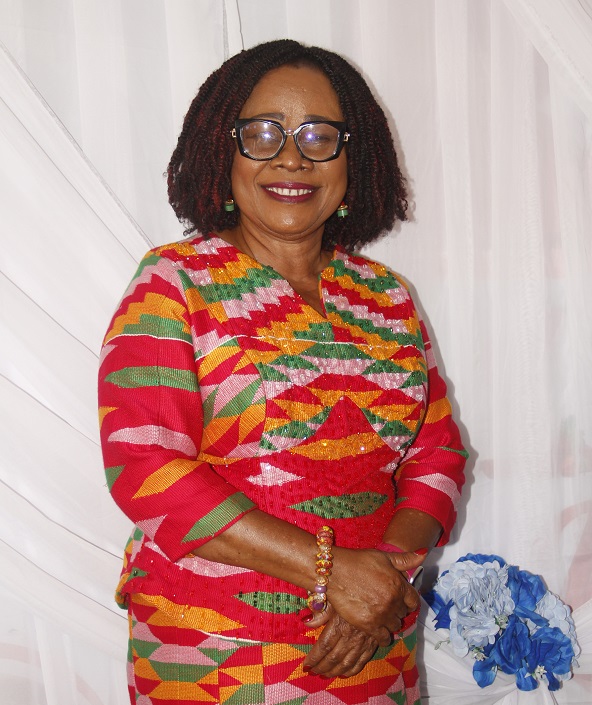
A nine-member board for the New Times Corporation (NTC), publishers of The Ghanaian Times and The Spectator newspapers was sworn into office on Thursday with a call to strengthen the governance of the Corporation.![Dr. Binka (seated second from right) with Dr Okpoti [right] the board and Management of NTC photos Okai Elizabeth.](https://spectator.com.gh/wp-content/uploads/2026/08/Dr.-Binka-seated-second-from-right-with-Dr-Okpoti-right-the-board-and-Management-of-NTC-photos-Okai-Elizabeth-1024x683.jpg)
The new NTC board is chaired by Dr Charity Binka and has Very Rev. Helena Amma Serwah Opoku-Sarkodie, Mr Tito Kojo Voegborlo Esq and Naana Aklerh Amenyah Kubi I as members. Read More
SKIP THE QUEUE, TAP THE NEWS
You can now read the Ghanaian Times and The Spectator newspapers from the comfort of your device via TimesNewsPlus.
Join our WhatsApp Channel: https://whatsapp.com/channel/0029VbBElzjInlqHhl1aTU27
Christians have been urged to demonstrate a living faith in Jesus Christ by allowing their confession of Him as Lord and Saviour to reflect in their daily lives.
According to the Kaneshie District Pastor of the Evangelical Presbyterian Church, Ghana (EPCG), Rev. Dzidzor Nathaniel Affram, a genuine Christian’s confession should go beyond words and be demonstrated through obedience to God, love for others and service to the Church.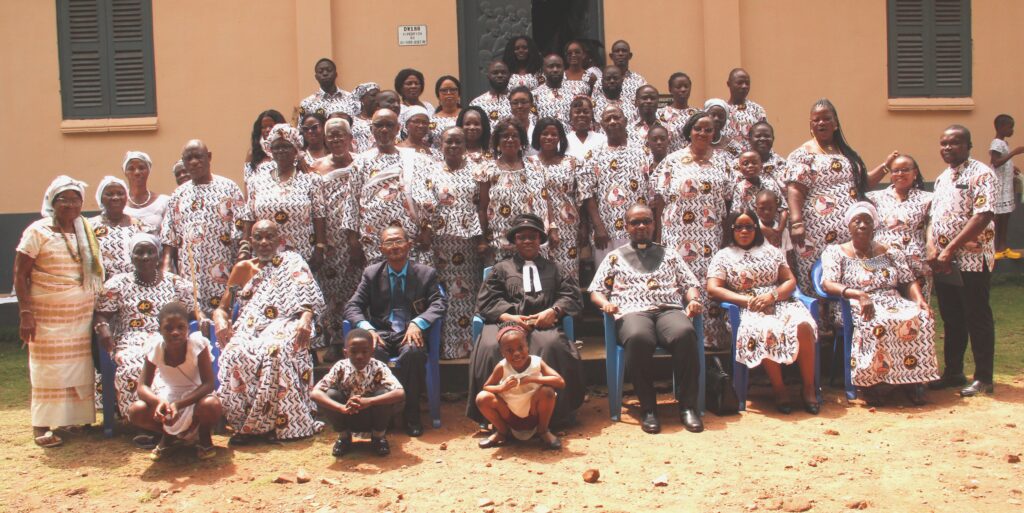
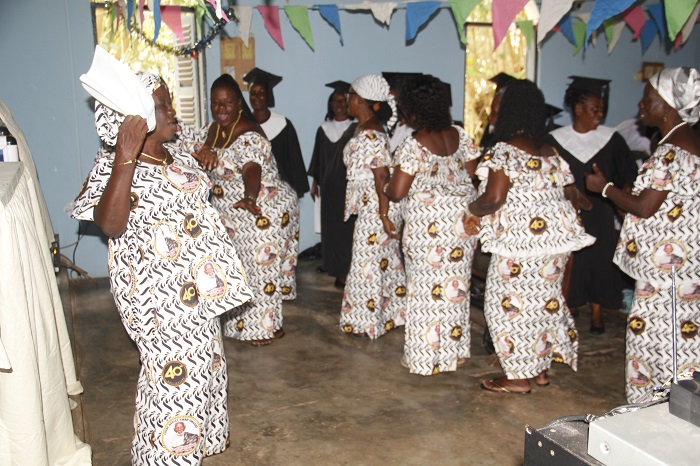
He made the call at the 40th anniversary remembrance service for the late Wesley Kwasi Kwadzo at the Evangelical Presbyterian Church, Ghana, Maranatha Congregation at Awudome Avenui in the Volta Region.
Speaking on the theme, “The Church Built on a Living Confession,” Rev. Affram said life would continually present challenges capable of testing Christians’ faith, making it necessary for believers to hold firmly to their confession that Jesus Christ is Lord.
He explained that accepting Jesus Christ as Lord and Saviour required Christians to live according to His teachings, stressing that their faith must be evident in their conduct.
“A living confession listens to God and not man,” he said, urging Christians to remain obedient to God even when faced with difficulties and pressures.
Rev. Affram further encouraged the congregation to care for vulnerable people and demonstrate concern for others, adding that such acts were practical expressions of Christian faith.
He also urged Christians to identify and use their God-given gifts to build the Church.
He said every member of the Church had a role to play and cautioned Christians against looking down on others because of their status or abilities.
The remembrance service brought together family members, friends, members of the congregation and sympathisers to commemorate the 40th anniversary of the late Wesley Kwasi Kwadzo.
By Lizzy Okai