Hot!
Unapproved fees affecting NHIS patronage in UER

- /home/u249204778/domains/spectator.com.gh/public_html/wp-content/plugins/mvp-social-buttons/mvp-social-buttons.php on line 27
https://spectator.com.gh/wp-content/uploads/2022/03/Mr-Samuel-Lekamwe-Lobber.jpg&description=Unapproved fees affecting NHIS patronage in UER', 'pinterestShare', 'width=750,height=350'); return false;" title="Pin This Post">
- Share
- Tweet /home/u249204778/domains/spectator.com.gh/public_html/wp-content/plugins/mvp-social-buttons/mvp-social-buttons.php on line 72
https://spectator.com.gh/wp-content/uploads/2022/03/Mr-Samuel-Lekamwe-Lobber.jpg&description=Unapproved fees affecting NHIS patronage in UER', 'pinterestShare', 'width=750,height=350'); return false;" title="Pin This Post">
The demand for unapproved fees from patients by some health facilities in the Upper West Region is said to be affecting patronage of the National Health Insurance Scheme in the area.
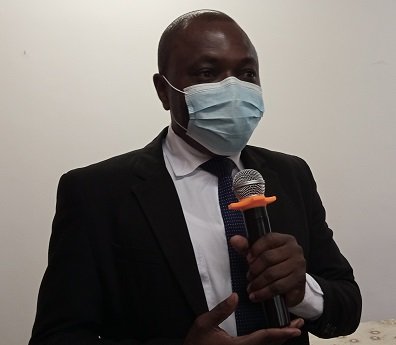
Mr. Samuel Lekamwe Lobber, Regional Director of the National Health Insurance Authority (NHIA) brought this to the fore at an End-of-Year Performance Review Meeting held in the region recently.
He said that such illegal fees made clients to lose confidence in the Scheme and asked those health institutions involved to stop.
“Illegal charges remain the biggest headache to the NHIA in the region and it is affecting our efforts to mobilise more clients because if someone goes for healthcare and is asked to make payment for a condition that is already covered, that experience will not encourage them to renew their commitment with the scheme.
“Some of these health facilities charge unapproved fees for which they do not even issue receipts and still make claims to the authority for reimbursement”, he explained.
He indicated that the thought of having to pay for petty things such as folders and laboratory tests at health facilities discouraged some people from registering under the scheme as they did not value the services of the insurance scheme.
Mr Lobber said the fact that such people even went back to discuss their experiences at the health centres with others could further discourage several others from joining the scheme.
He appealed to health facilities across the region to be guided by the ethics of their profession which was to deliver quality healthcare.
He explained that to partly tackle this issue, a new feature would be added to the mobile renewal platform which allow the authority to confirm from patients if they had visited a particular health facility for health care services or not.
This feature, he said, would help check false claims tendered in by some health facilities and also reduce the rate of charging illegal fees.
The Director appealed to their clients to make use of the mobile renewal platform to check for drugs and services they were entitled at the health centre in order to avoid falling victim to the illegal charges.
He used the opportunity to commend staff of the authority for working harder to ensure that they attained 80 percent coverage of clients and said the move was to enhance access to universal health coverage by residents of the region.
The meeting which was on the theme “Sustaining our gains for universal health coverage- a collective responsibility” brought together former and current stakeholders of the authority to consolidate gains, share ideas and experiences and also chart the way forward.
From Lydia Darlington Fordour, Wa


A 24-year-old tricycle (Pragyia) rider, has been jailed three months by the Nkawie Circuit Court in the Atwima Nwabiagya South Municipality of the Ashanti Region for biting a Community Police Assistant (CPA) at Nkawie.
Abdul Aziz pleaded guilty to the charge of negligently causing harm and was convicted on his own plea.
Police Inspector Kwaku Frimpong, prosecuting told the court presided by Mr Robert Addo that, complainants in the case were officers from the Nkawie Divisional Motor Traffic and Transport Department (MTTD) of the Ghana Police Service.
He said on September 3, at about 8:40am, the complainants led by Chief Inspector Abedi Larbi, were on their official patrol duty to ensure safety at Nkawie township and met the convict, who was in-charge of a Pragya tricycle with registration number M-25-A-3722.
He explained that, after a careful inspection, it was detected that the convict was without licence and other required documents, so Alhassan Seidu, the CPA, was instructed to lead him to the office for the next action.
On their way to the office, the convict took a different direction, so the CPA directed him to take the right route to the police station, but he disobeyed and attacked the CPA, resulting in a struggle between them.
In the process the convict bit the CPA on the chest, so he shouted for help and some nearby youth rushed to the scene and helped him to arrest the convict.
In his caution statement, he admitted the offence and after further investigations he was charged and brought before the court. –GNA
SKIP THE QUEUE, TAP THE NEWS
You can now read the Ghanaian Times and The Spectator newspapers from the comfort of your device via TimesNewsPlus.
Join our WhatsApp Channel: https://whatsapp.com/channel/0029VbBElzjInlqHhl1aTU27
The New Patriotic Party (NPP) has urged the government to place all 54,985 candidates affected by the 2026 Basic Education Certificate Examination (BECE) placement exercise in schools and publish the final outcome.
The party says the government must ensure that the affected candidates secure actual school places rather than merely being allowed to access the self-placement portal.
In a statement signed by the Chairman of the NPP Policy Co-ordination Committee, Kojo Oppong Nkrumah, the party expressed concern about the situation facing the candidates.
The NPP said the government had announced that 53,887 of the affected candidates could use the self-placement system after initially being told that they had not qualified for secondary school.
It, however, argued that access to the portal did not guarantee that candidates would secure their preferred schools or programmes.
“Ghanaian parents and candidates will judge the resolution of the challenge by one thing only: how many of the original 54,985 are sitting in a classroom, not how many were allowed to open a website,” the statement noted.
The party said the government’s own figures showed that the country had 859,828 declared vacancies for 623,072 BECE candidates.
It explained that the main challenge was the concentration of demand in a small number of highly subscribed schools.
The NPP noted that 313,283 candidates selected Category A schools as their first choice, while those schools had 76,417 declared vacancies.
It therefore called on the government to explore ways to improve schools with available spaces, including providing teachers, laboratories and better programmes.
The party urged the government to use the 85 private schools participating in the Free SHS programme to absorb candidates who remained without placements.
The NPP further called for clarification of the rule and pass mark used for this year’s placement exercise, saying parents were entitled to know the standard before their children sat the examination.
It urged the government to take urgent action to ensure that the affected candidates were not left behind in the transition to secondary education.
By: Jacob Aggrey