News
UMaT wants Land Deed for School of Railways


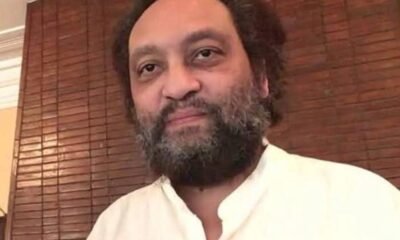
Prof. Amankwah delivering his address
The Vice Chancellor of University of Mines and Technology (UMaT), Tarkwa, Professor Richard Kwasi Amankwah, has appealed to the Ministry of Railway Development, to help secure a land deed the School of Railways and Infrastructure Development (SRID) at Essikado, in the Western Region.
This, he argued, would help SRID prevent future litigation and also expand its infrastructure to service the needs of the industry.
Prof. Amankwah made the appeal last Saturday when UMaT’s SRID observed the rail transport day on the theme ‘Ghana’s Rail Transport: Challenges and Future Prospects’.
“I appeal to the minister to approve the pending agreement to fully operationalise the Memoranda Of Understanding (MOU) and help in the development of SRID,” he added.
SRID, Prof. Amankwah said, was ready to expand and provide accommodation to prospective students but was faced with land deed.
“Somebody is ready to build a 2, 500 bed facility for us but the issue is that the land does not belong to us. In two years time, SRID will become a college and if government wants to proclaim it as a university, we are ready to release,” he added.
He stated that presently SRID, which began operations in 2020/21 academic year, had about 800 students offering BSc Engineering and seven Certificate Programmes tailored for the railway sector, including Locomotive Engineering, Permanent Way Engineering and Signalling and Telecommunication.
Again, Prof Amankwah said, as part of the school curriculum, BSc students would undertake at least three railway related courses to enable them to earn additional qualification in Railway Engineering at the end of their four-year programme.
Plans for a Post Graduate Certificate Programme in Railway Engineering was also underway.
In 2021, the VC said, SRID in collaboration with AYA Engineering and GIZ began a Summer School Training programme on railway engineering and allied disciplines
UMaT SRID, he explained, championed the rail transport day, in solidarity with gallant railway staff, who worked tirelessly for the benefit of the country and shared ideas on sustainable implementation of the railway master plan of Ghana.
Prof. Amankwah believed the railway sector would continue to see significance improvement to become the once vibrant sector of the economy.
Western Regional Minister, Kwabena Okyere Darko-Mensah, also spoke about operations of railway which he said reduced pressure and traffic on road networks and also improved the internal and external trade among neighboring countries.
Noting challenges of GRCL, Mr Darko-Mensah assured that “government was working hard with the craftiest technology and stakeholders to aid in the lifting of the glory of our reputable institutions again.”
Reminiscing the railway days, Omanhen of Essikado, Nana Kobina Nketsiah V, also reiterated that Ghana could work again with railways.
From Clement Adzei Boye, Essikado

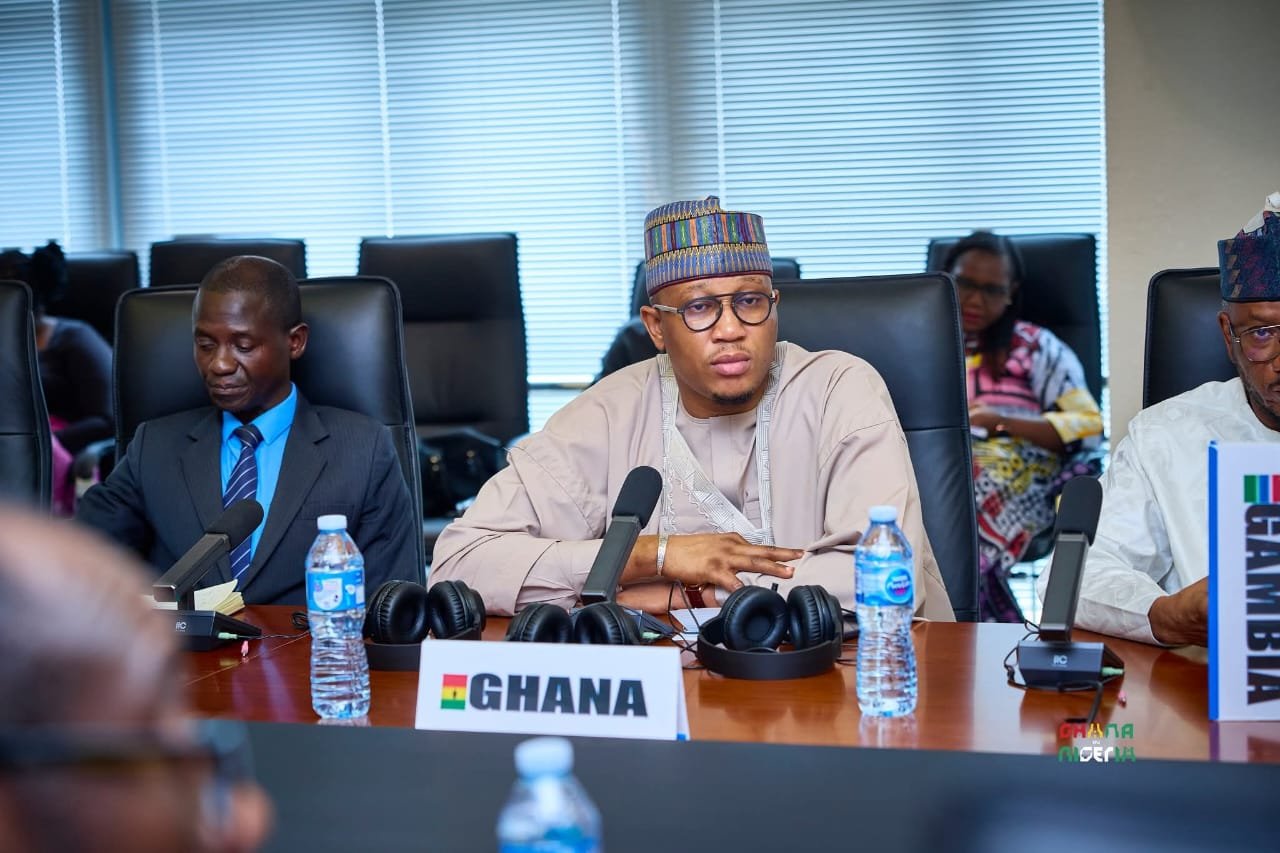
The Ghana High Commission in Abuja, Nigeria, is appealing to the public to help trace the relatives or next of kin of Apia Solomon, a Ghanaian national believed to be from Osu, Accra.
According to a public announcement by the High Commission, Mr. Solomon, born on March 6, 1960, in Accra, died on July 5, 2021, from cardiopulmonary failure.
He worked as a temporary civilian staff member at the National Defence College in Nigeria. His remains are currently being kept at the Nigerian Air Force Hospital morgue in Abuja, pending burial arrangements.
The High Commission says efforts to locate his relatives have so far been unsuccessful and is urging anyone with information about his family, friends or next of kin to come forward.
Anyone with relevant information is encouraged to contact the Ghana High Commission in Abuja.
By: Jacob Aggrey
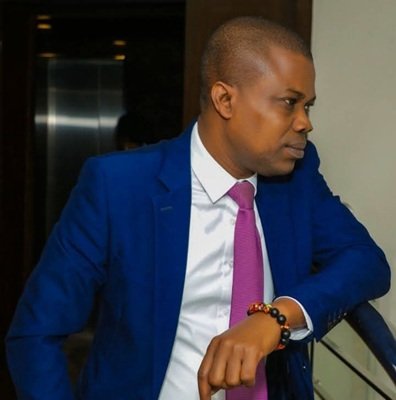
Security consultant Richard Kumadoe has blamed what he describes as flawed recruitment and incomplete background checks for some of the problems facing the Bureau of National Intelligence (BNI).
He has called on the leadership of the BNI to review the backgrounds of officers recruited during specific periods, particularly those who entered the agency under recent recruitment processes.
Speaking on the issue on TV3 yesterday, Mr Kumadoe alleged that some individuals were recruited into the intelligence agency without proper background checks and completed vetting.
“Certain categories of persons were dumped into the BNI, whose backgrounds were not checked, and whose vettings were not completed,” he stated.
He said some of the officers linked to the concerns appeared to have been recruited within the same period, making it necessary for the agency to examine the recruitment records and backgrounds of those who joined during that time.
Mr Kumadoe argued that the problems could be addressed by ensuring that recruitment procedures were properly followed and that all applicants underwent the required checks before being employed.
According to him, when the selection process is flawed, it can lead to problems within the institution.
He blamed the politicisation of security institutions, arguing that appointing people without the necessary intelligence experience and allowing political interests to influence recruitment could undermine their operations.
“When you have a selection procedure that was flawed because you politicised the place, brought in people to come and head the place when they have no business being there, they don’t know anything about being a BNI officer, they are not intelligence officers, and you flood the place with politicians and political artists, then you circumvent the standard procedure and you are going to have some of these problems,” he said.
Mr Kumadoe, however, defended the current leadership of the BNI, arguing that efforts to address longstanding problems within security institutions could bring such issues to light.
He said the leadership should be assessed in the context of the steps it is taking to improve the agency’s operations and uphold professional standards.
Drawing on his own experience in the intelligence field, he said the opportunity to serve under experienced officers had helped him develop the skills and integrity needed to contribute to national security.
By: Jacob Aggrey