Health Essentials
Turning our roads into battlefields

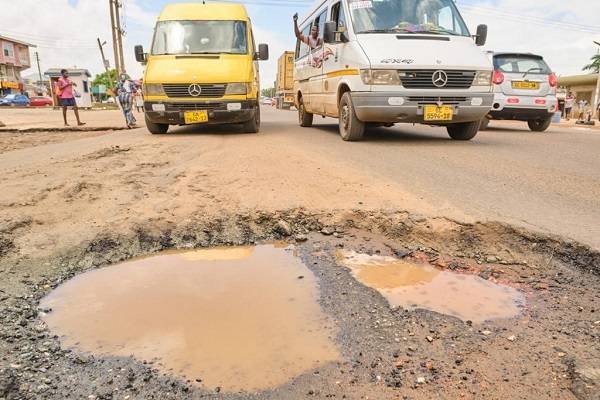
Potholes on the road
I am so optimistic about Ghana making major positive gains by making small changes that people have often misinterpreted my passion for our dear country.
I have been excited by the War Against Indiscipline (#WAI) initiated by CitiFM; without a doubt by favourite media house. It is a tedious process and it’s not surprising that my folks are on a short “break”.
As part of my contribution to the “struggle” I am re-producing an article I wrote about a decade ago after an ambulance ride with a client from Aburi to a hospital in Accra.
It is often said that “all is fair in love and war” but have you not heard of people who have been tried and punished for war crimes? Love birds who have allowed jealousy to rule them have had to exchange their beds at home with that of a cell. After an ambulance ride across Accra I have concluded that “all is fair on our roads.”
Our roads are competing with war zones for honours. Which one kills more? Which one maims more? The list of atrocities is endless. Ghana loses over $230million every year to road traffic accidents and 60 percent of these accidents are caused by over-speeding and drunk driving.
Some of our roads may have potholes or pits and in a few areas we have huge crevices with roads in between them but after all is said and done our attitude is probably our greatest setback.
During my ambulance ride with a patient I realised that from the ‘trotro’ driver who found himself behind the wheels of a vehicle through a miraculous act, the apparently well-educated middle-aged young lady driving an SUV who felt it was her right to keep driving despite the obviously blaring siren of the ambulance, to the policeman who kept directing traffic totally oblivious of his surroundings and of course the cyclist who felt it was okay to cross an ambulance, we all need to get back to the basics of road use
Using the road can be likened to a stint on the battlefield. There is chaos! Drivers stop, turn and move at will without signaling and if you should complain you will be greeted with a barrage of insults. I pity anyone who lives more than four miles from their place of work.
You will often arrive at work drained by the stress and you return home cursing. That mood is certainly not good for innocent family members.
We will not be able to control road traffic accidents and its effects only by wearing seatbelts, making sure our vehicles are road worthy and our streets well lit. We need to take a close look at changing our attitude and we will look at a few areas.
1. THE POLICE
a. I like the police, they protect us and I have many friends in the unit but I worry a lot when I see an “arrest” being made of a car with a DVLA plate or some other trivial reason right in the middle of the Kwame Nkrumah Circle. Please keep the traffic moving and let other colleagues at vantage points deal with such issues. Of course there may be instances when the crime is so unpardonable that you will need to stop them even if it requires creating traffic by getting someone to move all the way out of the inner lane. I hope the police have a means of communicating with their colleagues.
2. ROAD SIGNS
a. The George Bush Highway is beautiful but certainly incomplete. Road markings and directional signs are rare. Quite often the turning you need to use will just creep up on you. The busy drivers who think waiting is a crime will not think twice before crossing three lanes of fast moving cars to get to the turning. I think we should have several directional signs starting at least two miles from each turning to help us choose the appropriate lane. I guess those in-charge expect us to learn over time but that is disastrous.
3. KNOWLEDGE OF REGULATIONS
a. I do not think even 50 percent of our road users have a clue about regulations and ethics on the road. Most of us are limited. I see trucks moving at snail pace in the inner lanes all the time. Why can’t we have signs that read “inner lane only for overtaking?”
b. The folks driving the bullion vans are real bullies. Why do they think they have the right to switch their hazard lights on and drive facing oncoming traffic? It is so scary.
I think there is a law that prevents them from doing that. I think they rather draw attention to themselves. Really! Do they always have money in there?
c. These days anyone riding a beautiful luxury car thinks he should not stay in traffic. They often behave just like the bullion van drivers. If you need to engage in any antics on the road, please keep us safe and request for police escort.
4. ROAD CONSTRUCTION (POT HOLES AND PITS)
a. I always cringe when I have to use a road at night especially when I have not used it in over 24 hours. There are huge pits at several junctions and you definitely will need to visit the mechanic when you accidentally fall into one. You will be lucky if your car does not need bodyworks after such an encounter. Yes we will always leave such pits uncovered and with no warning signs.
b. Why don’t we maintain our roads? We only do some work when there is a problem or one of the amenity providers decides to lay a cable right across the road. Certainly we cannot spare time to cover up this mess properly.
c. We dodge speed ramps (or hills), potholes etc. with total disregard for oncoming vehicles. It does not matter to us that we are moving into their lanes and need to wait till the time is right. How can you, with an impatient taxi driver hooting his horn behind you.
5. SPEED LIMITS
a. We speed unnecessarily in residential areas, in congested urban slums and in places you can never imagine. What is the hurry? Can we have signs with speed limits please!
b. I have seen vehicles (including myself) stopped for over-speeding on a quiet but good highway but not once in a residential area.
6. RIDERS
a. I thought all road users; and this includes pedestrians and riders (cyclists, bikers) had to obey traffic regulations. The riders will flout the law and ride boldly through a red light even in the full glare of uniformed men. Pardon me but not once have I (emphasis on I) seen one of such riders being arrested. Not only do they put their own lives at risk but they also cause accidents when oncoming vehicles have to brake suddenly to avoid hitting them.
7. POLLUTION
a. Don’t we have any laws restricting the honking of horns? We need to stop this noise pollution. Some drivers think it is fun to toot their horns and they will even do this while they are parked or even in the vicinity of a hospital.
b. The exhaust fumes do not need any further introduction.
8. LITTERING OUR ROADS
a. Riding in a vehicle does not give you the mandate to throw rubbish onto the street. We need to keep our roads clean
b. To the drivers of trucks that transport our garbage. Why do you punish us for paying you to provide us with a service? Do these people intentionally drop garbage on the road so that they can create space to load more? I know those in charge are reading.
Our roads are sending us to our graves instead of making us more comfortable and we all need to work together to save lives that contribute meaningfully to nation building.
We can win this battle against Indiscipline on our roads and all others will be added!!
AS ALWAYS LAUGH OFTEN, ENSURE HYGIENE, WALK AND PRAY EVERYDAY AND REMEMBER IT’S A PRICELESS GIFT TO KNOW YOUR NUMBERS (blood sugar, blood pressure, blood cholesterol, BMI)
By Dr. Kojo Cobba Essel
Health Essentials Ltd/ Mobissel
(dressel@healthessentialsgh. com)
*Dr. Essel is a medical doctor, holds an MBA and is ISSA certified in exercise therapy, fitness nutrition and corrective exercise. He is the author of the award-winning book, ‘Unravelling The Essentials of Health & Wealth.’
THOUGHT FOR THE WEEK – Join me on Saturday


This week I bumped into Deborah, one of my avid readers and I promised her I will be writing this weekend. So Deborah, this is for your reading pleasure and to pick some golden nuggets for the future.
The quest to find the best way to make one’s golden years, happy, exciting, healthy and a time most people look forward to continues unabated. One factor that keeps popping up is the need to grow friendships with people more than 20 years younger than yourself.
Do not take this for granted. It is a form of “social security” since these close friends who are much younger than you will step in to support you in more ways than you can ever imagine.
Some conditions may make life challenging for older adults but knowing these Geriatric Giants helps us to take the necessary steps to reduce our risk.
“Geriatric Giants” refers to a group of chronic health conditions that are common in the elderly, typically 65-year-olds and older.
These conditions quite often co-occur and can impact on the independence, dignity and overall wellbeing and quality of life of an elderly person.
These Geriatric Giants include:
- Impaired Intellect/ Memory (e.g. Dementia)
- one of the major battles we need to deal with is challenges with memory
- Exercise, adopt the Mind Diet, build a great social network and enjoy time outdoors
- Keep reading and solving puzzles for as long as possible
- Instability – leading to much feared falls
- A good reason to indulge in Balance Training and Core Strengthening exercises from today
- Ensure your home is safe; avoid clutter such as cables crisscrossing floors, toys etc. These are all trip hazards and should be avoided
- Many healthy, happy and fun-loving older adults have died soon after a fall with its attendant complications.
- Do whatever it takes to avoid falling
- Immobility (opening the doors to pressure sores, joint stiffness)
- Even when you are unable to move about on your own it is important to get support to change positions as often as possible or get an appropriate mattress or bed that prevents prolonged pressure over any single point.
- Make sure you passively or actively move joints daily.
- Incontinence (urine, faeces or both)
- This is one of the reasons older adults prefer to stay at home and avoid going out to meet friends etc.
- Iatrogenic Disorders – adverse effect of medication
- Quite often most older adults are on several medications and some side effects such as drowsiness may seem to cause more unhappiness and may even lead to falls.
- Inappetite – this may result in poor nutrition
- This may also be linked to loss of teeth thus making chewing very difficult or limited.
- The loss of smell and taste may also reduce the amount of food one may willingly eat.
The power to reduce the impact of the Geriatric Giants starts now and should be a lifetime commitment. It is never too early to start making the appropriate lifestyle modifications, nor is it too late to reduce the impact of the giants on one’s life.
Other conditions that significantly impact on the lives especially of the elderly are:
- Sleep Disorders
- Good sleep has the power to give us energy, improve our thought pattern and even helps us to make good choices.
- Good sleep sets the tone for a healthy life
- Constipation
- This is a challenge that confronts quite a number of older adults.
- Movement, fibre and lots of water go a long way to reduce the stress that frequent constipation generates.
- Fraility
- Muscle loss is real and as we age, we lose a significant percentage of our muscle plus our bones also become brittle.
- Make sure strength training is part of your exercise schedule
- Polypharmacy
- Another headache that needs to be confronted head-on
- Everyone especially older adults need a good primary care physician or a general practitioner who can coordinate all medicines from the different Specialists who may be attending to an elderly person. This ensures that unnecessary medicines are dropped
The goal of care at all times is to optimise the quality of life. As family, professional caregivers and friends we should always show respect so that the dignity of the elderly is preserved at all times. For those of us who are not yet in the age group with such challenges, we need to start the conversation about the type of care we will prefer and take steps to stay healthy and independent for as long as possible. The goal should be a long Healthspan and not just a long Lifespan.
AS ALWAYS LAUGH OFTEN, ENSURE HYGIENE, WALK AND PRAY EVERYDAY AND REMEMBER IT’S A PRICELESS GIFT TO KNOW YOUR NUMBERS (blood sugar, blood pressure, blood cholesterol, BMI)
Dr. Kojo Cobba Essel
Health Essentials Ltd (HE&W Group)
(dressel@healthessentialsgh.com)
*Dr. Essel is a Medical Doctor with a keen interest in Lifestyle Medicine, He holds an MBA and is an ISSA Specialist in Exercise Therapy, Fitness Nutrition and Corrective Exercise. He is the author of the award-winning book, ‘Unravelling The Essentials of Health & Wealth.’
Thought for the week – “There is no magic formula to being happy but making a conscious effort to be happy goes a long way.” – Dr. Kojo Cobba Essel
By Dr. Kojo Cobba Esse
The call to action
We must move beyond the cycle of temporary outrage. I propose a four-point blueprint for the Ministry of Health and the government: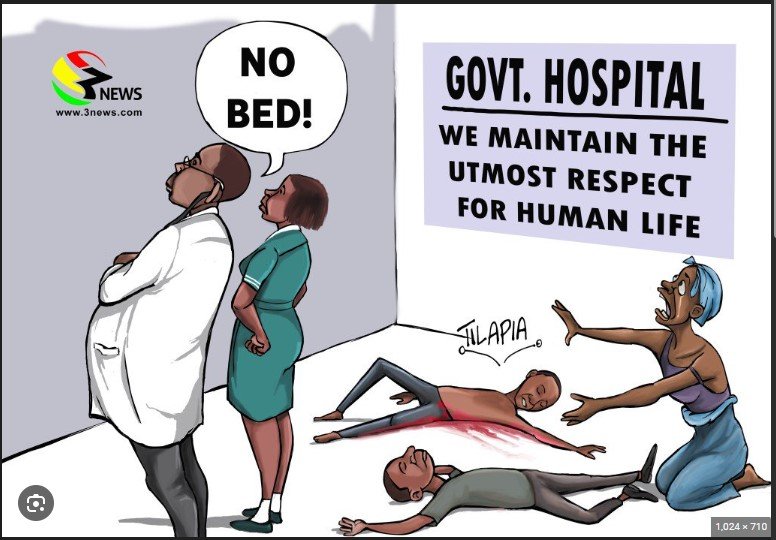
1. A Digital Bed-Tracking Command Centre: Legally mandate all public and major private hospitals to update a live, digital bed-registry every hour. The NAS must be able to see a vacancy before they move. This must be matched with the available resources and services so that the right patient will be sent to the right facility.
2. Strategic Capacity Expansion: We must stop building “prestige projects” and start building high-volume stabilisation centres. We need a targeted investment to triple the ER bed count in Accra and Kumasi within 24 months. This should then be extended to other regional capitals.
3. Specialised Emergency Hubs: Designate specific hospitals as “Centres of Excellence” for Cardiac and Stroke care (and for other health emergencies), ensuring they have 24/7 imaging and intervention capabilities as well as the requisite expertise to manage these conditions. Policy makers must incentivise public-private partnerships to ensure that a heart attack in Accra or Kumasi can be treated with the same urgency as one in New York.
4. Develop a nationwide trauma system: This is extremely important because trauma is a major cause of deaths in Ghana. In the US, each state has a statewide trauma system with three levels. Level 1 trauma centres are usually University Teaching hospitals that provide comprehensive trauma care and also play an important role in local trauma system development, regional disaster planning, increasing capacity and advancing trauma care through research. Level II trauma centres are expected to provide initial definitive trauma care for a wide range of injuries and injury severity.
Level III centres provide definitive care to patients with mild trauma. Having such systems is imperative to ensure proper treatment of trauma patients.
Even for those who survive trauma, disability is a major assault on economic potential and viability. Importantly all this cannot happen with a cash and carry system. Emergencies should be managed under a different model to save life and limb first. Obviously, there is a need to ensure that healthcare facilities will be able to recover their investments in emergency care, and that balancing act needs careful consideration.
Frontline clinicians are often forced to bear the public’s anger for infrastructure deficits they did not create and cannot fix. This is a failure of governance, not a lack of clinical care. Responsibility lies with the policy makers who manage the nation’s resources.
The “No Bed Syndrome” is a systemic disease. It cannot be cured with a directive from the Ministry of Health, parliament or a lecture on ethics. It requires a blueprint, a budget, and the political will to treat this like the menacing threat it is.
It is safe to say that non-emergent healthcare is excellent in Ghana for the most part if you can afford it. However, emergency care is suboptimal. We had a sitting president die from an emergency health issue and a former vice president also die from an emergency. If that is not enough warning, it is clear that anyone can be a victim of an emergency.
If we do not act, the next ambulance driving aimlessly through the streets of Accra could be carrying anyone, including the very people who have the power to fix this issue.
Prof. Jonathan Laryea is a Professor of Surgery at the University of Arkansas for Medical Sciences in Little Rock. Arkansas. He is board certified in General Surgery, Colorectal Surgery and Clinic Informatics.
He is a graduate of the University of Ghana Medical School (Class of 1997)