Features
The Saga of being Ewe… (Final Part)


- /home/u249204778/domains/spectator.com.gh/public_html/wp-content/plugins/mvp-social-buttons/mvp-social-buttons.php on line 27
https://spectator.com.gh/wp-content/uploads/2022/07/Komfo-Anokye-Pix.jpg&description=The Saga of being Ewe… (Final Part)', 'pinterestShare', 'width=750,height=350'); return false;" title="Pin This Post">
- Share
- Tweet /home/u249204778/domains/spectator.com.gh/public_html/wp-content/plugins/mvp-social-buttons/mvp-social-buttons.php on line 72
https://spectator.com.gh/wp-content/uploads/2022/07/Komfo-Anokye-Pix.jpg&description=The Saga of being Ewe… (Final Part)', 'pinterestShare', 'width=750,height=350'); return false;" title="Pin This Post">
• The Akuapem Guan and Ewe claim Okomfo Anokye was one of their own
First, it must be pointed out that the Asante have never claimed to own Komfo Anokye as theirs, but they treasure him for having ‘conjured ‘ the Golden Stool from the sky. It is rather the Akuapem Guan and Ewe who claim the great spiritualist as one of their own.
I read about Komfo Anokye and the Asante kingdom in Primary School. In Upper Primary I started hearing the story of one Atsu Tsala who was said to become known as Komfo Anokye. This was almost six decades ago. The wife of Tsala’s twin brother, Etse Tsali, was said to have lived in a thicket called Kleve, west-south-west of Anyako. People feared to go to Kleve because of the spirituality the place evokes even till today.
At age 12, I was asked by my maternal grandmother one day to accompany her to Kleve. We called her Daaɖi, and in her company I had no reason to fear anything. It turned out that twins could go to Kleve without any inhibition. Daaɖi was a twin. She was going to Kleve to look for her twin sister who died when they were still toddlers.
My grandmother chartered a canoe to ferry us to the thicket just about three knots from our home. She led me into the thicket, leaving the boatsman waiting at the landing. In the thicket was a clearing, a dirt floor that looked like having being swept seconds before our arrival. There was no one in sight. It was rather cool in there as opposed to the warmth outside. I took in the foliage that gave ambience to the dreaded Kleve.
Daaɖi said something I could not quite comprehend and a voice that filled the whole place responded and I heard the voice say her twin she inquired about had already returned to the physical plane and was a young girl in some village whose name I cannot recollect and that her grief must be over. The voice told her that the grandson she came with would one day give her twins. I gave this prediction little thought.
It was on our way back that Ɖaaɖi confirmed the story of Tsali and Tsala, who were psychic twins from birth. Their Dad, Akplɔmada (the spear that cannot be thrown), was himself a very powerful spiritualist. As young adults Tsali was notorious for showing off his powers to the chagrin of their father and their village folks.
Tsali would mock people on their way to their farms. He would put a cassava stick in the ground and by the time the people returned from their farms, the cassava he put in the soil hours earlier was ready for harvesting. That was the misuse of powers that got Tsala to go back to Notsie in Togo because he was uncomfortable with the brother’s behaviour.
Tsala returned by way of the Kabakaba hills near Koedze and journeyed to Akwamu. It was said he teleported himself to the west bank of the Volta river. Another narrative was that he commanded a crocodile to ferry him across. Then he went on through Krobo land and settled at Awukugua, then later met an Asante royal at Brekusu and went to Kumasi with him.
Meanwhile, extremely fed up with Tsali and his shenanigans the people grabbed him, tied him up, put him in a sack with a huge rock tied to the sack to add weight and dumped him in the Volta river. They saw him go under. Next day Tsali was spotted on the back of a crocodile with the sack slung over his shoulder with the boulder inside it.
Realising his status with the people, Tsala left, settled at Kleve and married a woman. The boulder is still at Konu, the eastern tip of Anyako today. It’s called Tsali Kpe (Tsali’s Rock).
Now, the Awukugua narrative is that a baby was born with unusual characteristics to one Annor. As a result people would say, “Annor, kye wo bia,” to wit, Annor, look at your child, hence the child being called Anokye. One old friend I had when I was in College at Akropong, Opanyin Akuffo, debunked this narrative. He asserted that there are traditional and customary ways of even giving strange names, but Annor kye is not one. According to him, the name Anokye predated Komfo Anokye.
Opanyin averred that it could have been none of anyone else’s business to ask or tell Annor to look at his own child. To him, this did not add up to make any sense.
“The folks referred to him as Komfo Nokye because they could not pronounce Notsie correctly. They then decided since Anokye was part of their names, they could as well call him thus. Tsala saw their challenge with how to pronounce Notsie and let them call him Anokye instead, “he told me.
He said people were easily called by their places of origin. Maame Fante, Maame Nkran, Egya Lome etc. He added that Akans could not pronounce Notsie and, indeed, names of non-Akan names correctly. After he took me to see the place Komfo Anokye stayed, Opanyin Akuffo narrated in almost same detail as my grandmother did. I was in awe of this octogenarian who was not Ewe yet knew what he was talking about. He was the one who confirmed my long held knowledge that there was cocoa in Ghana before Tetteh Quarshie brought the Fernando Po variety.
The old man confirmed that no one knew how Komfo Anokye died. He simply ‘went away’ as did Tsali. The woman Tsali married did not know how her husband ‘went away’. The mystery accounts for the fear of Kleve. Tsali’s wife was only called Kleve Teshie. She lived alone by herself in the thicket because people feared to go near her.
Nothing planted in the clearing at Kleve will sprout or geminate. No one knows why.
It is said that those who befriended Tsali were told by Tsali himself that his twin brother had gone with some royals to Coomasi (Kumasi) after being in Notsie and Akuapem mountains. He was said to have told people that he and his brother would one day ‘travel together.’
It is up to the reader to decide which narrative makes more sense and closer to the truth. Truth, however, is that the deaths of Komfo Anokye and Tsali were never known or recorded.
Just before my grandmother died in February of 1983 she told her daughter, my aunt, to tell me to take good care of her sisters (my twin daughters) who were toddlers at the time.
There is also the issue of whether kente originated from Bonwire in Ashanti or Kpetoe in the Volta Region. Much as I would personally advocate historical facts to be established and documented, what is rather very important is for our leaders to get kente patented as a Ghanaian product for the economic benefits to the country.
How China comes to produce fabric in kente and adinkra designs beats my mind. It is as if this country is rudderless and has no sense of direction. The Philippines have a white apparel made from sisal that has become a national costume, which in turn rakes in revenue to that country.
An Asante friend who has expertise in Asante linguistics tells me kente is one of many words borrowed into Akan lingo. The Ewe call it kete, which has a convoluted but relevant meaning to the woven fabric.
As a nation we care very little about how to make our indigenous resources attractive enough to take in revenue. Politicking seems to be a more accepted discourse than our economic survival as a people. The direction we are heading does not give hope for the future. Sad, if you asked me.
Writer’s email address: akofa45@yahoo.com
By Dr Akofa K. Segbefia

“A woman who abandons her baby in a dustbin at Kasoa Lorry Station is not always a wicked woman. Sometimes, she is a wounded woman whose mind has broken, whose family has rejected her, and whose society has left her with only one terrible option: disappear or be disgraced.”
That is the hard truth Ghana must hear.
In the last 10 days alone, our nation has been confronted with the same painful headline, twice.
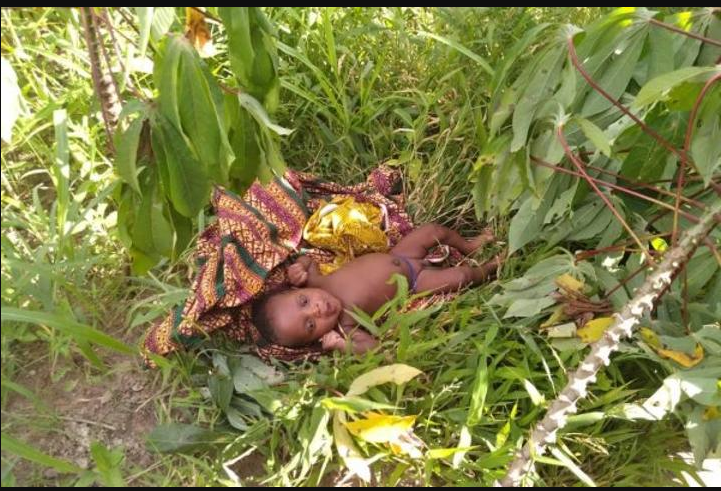
Case 1 – Kasoa Main Lorry Station, Central Region: A newborn baby girl was found abandoned inside a dustbin at the public toilet of the Kasoa Main Station. A woman who went to use the facility discovered the infant and raised an alarm. Commercial drivers and bystanders quickly retrieved the baby and rushed her to the Kasoa Polyclinic for emergency medical care.
Case 2 – Asante Bekwai, Ashanti Region: On Thursday morning, August 20, 2026, a two-week-old neonate was reportedly abandoned by an unknown nursing mother at Bekwai in the Ashanti Region. Residents who came across the child raised the alarm. The baby was admitted to the Bekwai Government Hospital as police commenced investigations.
Let me be clear from the start: Newborn abandonment is wrong. It is dangerous. It is criminal. And it can kill. This article does not excuse it. But if we only arrest and shame, we will never stop it. We must treat the root, not just punish the fruit.
What exactly is newborn abandonment? – The two definitions
The Legal Definition: Under Ghana’s Criminal Offences Act, 1960 (Act 29), Section 96, and the Children’s Act, 1998 (Act 560), abandonment of a child under 12 years is a criminal offence. It is classified as exposure and abandonment, punishable as a misdemeanor or felony. The law sees the mother as a perpetrator.
The Psychological definition: In clinical textbooks, newborn abandonment is defined as the intentional, permanent relinquishment of all parental rights, care, and responsibilities over an infant within the first 28 days of life without making formal, legal arrangements for care.
To understand this crisis properly, we must not confuse it with child abandonment. Newborn abandonment happens within 0-28 days of life, often driven by acute panic, denial of pregnancy, or postpartum psychosis where the attachment bond never formed. Child abandonment, on the other hand, involves toddlers to teenagers where a bond existed but collapsed over time due to chronic poverty, family breakdown, or parental burnout. One is an acute crisis of the first month; the other is a chronic breakdown over years. Both are harmful, but they need different interventions.
Psychologically, newborn abandonment is the ultimate rupture of the primary attachment bond. Think of a 19-year-old university student who secretly gives birth alone in her hostel room, wraps the crying baby in a polythene bag, and drops it at a refuse dump at midnight. That is not just a crime scene; it is a scene of extreme panic and psychological dissociation.
Why would a mother carry a baby for 9 months and then abandon it?
This is the question every Ghanaian asks. If you wanted to abandon it, why not abort? The answer is deeply psychological:
1. The psychodynamics of denial of pregnancy: This is a profound defense mechanism, not a lie. The mother’s subconscious mind completely rejects the reality of the pregnancy. She does not gain weight normally, feels no kicks, does not seek antenatal care, and genuinely convinces herself she is not pregnant until sudden, shocking labour pains take her by surprise in a toilet or bedroom.
2. Fantasy of a dissolving problem: This is called cognitive avoidance. She believes “my boyfriend will come back,” “my mother will forgive me,” or “something miraculous will happen before birth.” So she waits, paralyzed, until the baby is here.
3. Barriers to safe abortion: Deep religious guilt, moral anxiety, fear of dying from a back-alley abortion, lack of money for a safe procedure, and family laws force her to carry to term even when she feels incapable.
4. The shock of reality and acute panic: Upon delivery, the physical presence and crying of the newborn shatters all denial. Confronted with immediate exposure, shame, and reality, her brain enters a trauma response — “fight, flight, or freeze.” For many, it becomes “flight” — physically escape the threat of exposure to survive socially. That is why babies are left in places where others will find them -lorry stations, churches, hospitals.
Source:
Counselor Prince Offei, CPAC’s founder, is a leading Mental Health Professional, Marriage Counsellor, Author, ADR Expert/Arbitrator, and Spectator Newspaper Columnist. He writes on relationships, marriage, parenting, special needs support, and their connection to mental health. For therapy, counselling, or enquiries, contact Counselor Prince & Associates Consult (CPAC) in Accra on 0559850604 / 0551428486.
SKIP THE QUEUE, TAP THE NEWS

You can now read the Ghanaian Times and The Spectator newspapers from the comfort of your device via TimesNewsPlus.
Join our WhatsApp Channel: https://whatsapp.com/channel/0029VbBElzjInlqHhl1aTU27
Features
Environmental stewardship is an act of worship: The Islamic response to climate change, environmental degradation (Part 4)

The environmental consequences of illegal mining have reached alarming levels in Ghana. Several major rivers, including the Pra, Ankobra, Offin, Birim and Tano, have experienced significant pollution from illegal mining activities, increasing the cost and complexity of water treatment while threatening the availability of potable water for millions of citizens (Water Resources Commission, 2024; Ghana Water Limited, 2024). These developments underscore the urgent need for stronger environmental governance and collective action.
Islam equally emphasises accountability in governance. The Prophet Muhammad (peace be upon him) taught that every leader is responsible for those under his or her authority (Sahih al-Bukhari, Hadith 7138; Sahih Muslim, Hadith 1829). This principle extends to public officials entrusted with environmental regulation, traditional authorities responsible for communal lands, mining companies, local assemblies, and community leaders. Environmental protection cannot succeed
where accountability is absent.
At the same time, addressing galamsey requires more than law enforcement. Sustainable solutions must tackle the underlying socio-economic realities that drive individuals into illegal mining. Many young people are motivated by unemployment, poverty, and limited economic opportunities. Islamic principles of social justice therefore call for the creation of alternative livelihoods through sustainable agriculture, vocational training, responsible small-scale mining under strict environmental standards, entrepreneurship, and skills development. Environmental protection and economic empowerment should not be viewed as competing priorities but as complementary goals that promote human dignity and national development.
Faith communities also have an indispensable role to play. Mosques, churches, schools, traditional councils, and civil society organisations possess significant influence in shaping public attitudes and behaviours. Imams, in particular, should consistently remind congregations that wealth acquired through actions that destroy communities and Allah’s creation cannot be regarded as a blessing. Religious education should cultivate environmental ethics alongside spiritual devotion, reinforcing the understanding that protecting rivers, forests, and farmlands is an expression of gratitude to Allah and a fulfilment of the trust of Khalifah.
Ultimately, the struggle against galamsey is more than a campaign to protect natural resources; it is a struggle to uphold justice, preserve human dignity, and honour the trust that Allah has placed upon humanity. Lasting solutions will require strong governance, responsible citizenship, sustainable economic opportunities, and renewed moral leadership. Only when these elements
work together can Ghana safeguard its natural heritage for present and future generations.
Water conservation, waste management and sustainable development: Practical expressions of Islamic stewardship
Religious education should cultivate environmental ethics alongside spiritual devotion, reinforcing the understanding that protecting rivers, forests, and farmlands is an expression of gratitude to Allah and a fulfilment of the trust of Khalifah.
Ultimately, the struggle against galamsey is more than a campaign to protect natural resources; it is a struggle to uphold justice, preserve human dignity, and honour the trust that Allah has placed upon humanity. Lasting solutions will require strong governance, responsible citizenship, sustainable economic opportunities, and renewed moral leadership. Only when these elements
work together can Ghana safeguard its natural heritage for present and future generations.
Islam is not merely a religion that condemns environmental destruction; it also provides practical guidance for preserving and sustaining the natural world. Through its teachings on moderation, cleanliness, conservation, and responsible consumption, Islam cultivates an environmental ethic that remains remarkably relevant to contemporary challenges such as water scarcity, pollution, waste management, and climate change. These teachings encourage Muslims to become
responsible custodians of Allah’s creation in both private and public life.
Water conservation: A sacred responsibility
Water occupies a unique position in Islam as the source of life and an essential element of worship. Allah says, “And We made from water every living thing. Then will they not believe?” (Qur’an 21:30, Sahih International). This verse reminds believers that water is not merely an economic resource but a divine blessing upon which all living creatures depend. The importance of water is further reflected in Islamic acts of worship. Muslims perform ablution (wudu) before the five daily prayers and ritual bathing (ghusl) under prescribed circumstances.
Yet, despite its central role in purification, Islam strongly discourages wastefulness. The Prophet Muhammad (peace be upon him) once advised one of his companions not to waste water while performing ablution, even when using water from a flowing river (Sunan Ibn Majah, Hadith 425). This timeless guidance establishes the principle that abundance does not justify extravagance.
Conservation remains a religious obligation regardless of the apparent availability of natural resources.
This Prophetic teaching carries profound implications for contemporary Ghana. Illegal mining has severely polluted many rivers, increasing the cost of water treatment and limiting access to safe drinking water for numerous communities. Climate change has also intensified seasonal variability in rainfall, placing additional pressure on freshwater resources (IPCC, 2023). Against this
backdrop, conserving water is no longer simply an environmental preference—it is a moral imperative grounded in Islamic teaching.
Water conservation should therefore become a shared responsibility among households, educational institutions, industries, and places of worship. Simple practices such as repairing leaking pipes, harvesting rainwater, protecting riverbanks, avoiding contamination of water bodies, and promoting efficient irrigation contribute to safeguarding one of Allah’s greatest blessings. Every effort to preserve water is an investment in public health, food security, and the
wellbeing of future generations.
Unfortunately, indiscriminate disposal of refuse remains a significant challenge in many communities. Plastic waste clogs drainage systems, contributes to flooding during the rainy season, pollutes rivers and beaches, and threatens marine ecosystems. Open burning of waste further degrades air quality and poses serious health risks, particularly for children and the elderly (UNEP,2024).
The author is Chief Imam of Katamanso Municipal and Certified Counsellor and Governnace Expert.
SKIP THE QUEUE, TAP THE NEWS
You can now read the Ghanaian Times and The Spectator newspapers from the comfort of your device via TimesNewsPlus.
Join our WhatsApp Channel: https://whatsapp.com/channel/0029VbBElzjInlqHhl1aTU27