News
Stay away from pain killers…they can affect fertility — Specialist


Dr. Dixie Constantini, a Specialist Obstetrician Gynaecologist with the Women’s Health, Obstetrics and Gynaecology has stated that there are group of pain killers that could affect ovulation and reduce fertility by 75 per cent or more just after 10 days of usage.
She has, therefore, advised women who are trying to conceive but are experiencing any form of pain to have discussion with their doctors before taking pain killer medicine.
Speaking in an interview with The Spectator on Wednesday about some activities that could reduce the chances of a woman trying to conceive, Dr. Constantini said it was important that women who were trying to conceive limited the quantity of pain killer drugs they took or should completely stay away from some specific types.
She named aspirin, brufen among others, (Non Steroidal Anti-inflamatory Drugs (NSAIDs) as some of the drugs to avoid when trying to conceive.
She explained that such pain killers reduced the progesterone levels, a hormone that was necessary for fertility.
“When this happens, you are likely not to ovulate and pregnancy is unlikely if you don’t ovulate” she said.
The Specialist Obstetrician Gynaecologist noted that most fertility problems could easily be solved if women sought help from the right sources and not try to solve such problems by themselves.
She said the journey to conception was a serious one and so no action should be taken without first consulting a doctor.
She said it was sad to find out that someone had struggled through conception because she was not doing things right but not due to irreversible reasons.
Women’s Health Obstetrics and Gynaecology is made up of group of specialists that deal with health concerns women have mainly on gynaecology and pregnancy related issues.
From Dzifa Tetteh Tay, Tema.



The Ghana High Commission in Abuja, Nigeria, is appealing to the public to help trace the relatives or next of kin of Apia Solomon, a Ghanaian national believed to be from Osu, Accra.
According to a public announcement by the High Commission, Mr. Solomon, born on March 6, 1960, in Accra, died on July 5, 2021, from cardiopulmonary failure.
He worked as a temporary civilian staff member at the National Defence College in Nigeria. His remains are currently being kept at the Nigerian Air Force Hospital morgue in Abuja, pending burial arrangements.
The High Commission says efforts to locate his relatives have so far been unsuccessful and is urging anyone with information about his family, friends or next of kin to come forward.
Anyone with relevant information is encouraged to contact the Ghana High Commission in Abuja.
By: Jacob Aggrey
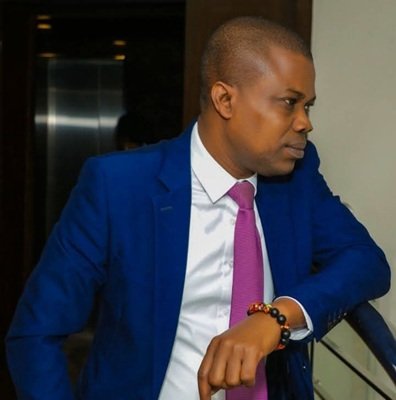
Security consultant Richard Kumadoe has blamed what he describes as flawed recruitment and incomplete background checks for some of the problems facing the Bureau of National Intelligence (BNI).
He has called on the leadership of the BNI to review the backgrounds of officers recruited during specific periods, particularly those who entered the agency under recent recruitment processes.
Speaking on the issue on TV3 yesterday, Mr Kumadoe alleged that some individuals were recruited into the intelligence agency without proper background checks and completed vetting.
“Certain categories of persons were dumped into the BNI, whose backgrounds were not checked, and whose vettings were not completed,” he stated.
He said some of the officers linked to the concerns appeared to have been recruited within the same period, making it necessary for the agency to examine the recruitment records and backgrounds of those who joined during that time.
Mr Kumadoe argued that the problems could be addressed by ensuring that recruitment procedures were properly followed and that all applicants underwent the required checks before being employed.
According to him, when the selection process is flawed, it can lead to problems within the institution.
He blamed the politicisation of security institutions, arguing that appointing people without the necessary intelligence experience and allowing political interests to influence recruitment could undermine their operations.
“When you have a selection procedure that was flawed because you politicised the place, brought in people to come and head the place when they have no business being there, they don’t know anything about being a BNI officer, they are not intelligence officers, and you flood the place with politicians and political artists, then you circumvent the standard procedure and you are going to have some of these problems,” he said.
Mr Kumadoe, however, defended the current leadership of the BNI, arguing that efforts to address longstanding problems within security institutions could bring such issues to light.
He said the leadership should be assessed in the context of the steps it is taking to improve the agency’s operations and uphold professional standards.
Drawing on his own experience in the intelligence field, he said the opportunity to serve under experienced officers had helped him develop the skills and integrity needed to contribute to national security.
By: Jacob Aggrey