Nutrition
Solving infertility issues: Women selling their eggs for quick money?

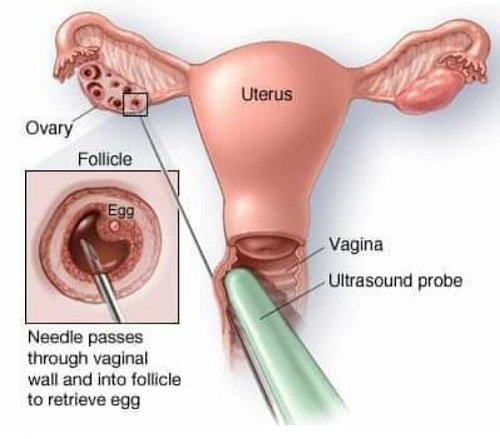
The thought of a woman to sell her eggs because of financial challenges may seem too easy a way to make money.
The motivation to do this could be stronger because after all, the eggs are “wasted” every month in a woman who has no plans to conceive and so what is the farce about making some cash out of them.
Currently, there are women or couples who are willing to pay substantial sum of money as compensation to women willing to donate their eggs, and the financial reward offered to an egg donor may often be bait many potential donors cannot resist.
This results in their participation in the egg donation process, oblivious of the risks relative to their health and safety, including loss of fertility and sometimes the death of the donor.
According to a Specialist Obstetrician Gynaecologist with the Women’s Health Obstetrics and Gynaecology, Dr Dixie Constantini, in an interview with The Spectator last Friday, said egg donation, medically, was the process by which a woman was given medication to stimulate ovulation and her eggs harvested.
She explained that the choice by a woman to be a recipient of a donor egg generally fell into three categories.
She said that the first were women who were unable to produce viable eggs of their own. The second category included women above the age of 40 opting for assisted reproduction, and the third comprised women who had genetic conditions and wished not to pass on to their children, or who had multiple pregnancy failures which could not be medically explained.
The Obstetrician Gynaecologist said in some cases, the recipient might be a surrogate mother who had offered to carry the baby on behalf of another person or family.
“The recipient could also choose to carry the baby by herself after the donated egg has been fertilised by the semen of her partner. This usually happens when she intends to keep the baby and wants to experience pregnancy on her own” she explained.
She said each month women who had reached puberty and had not gone past menopause released egg from their ovaries, and on rare occasions released two.
“The egg if healthy can be fertilised by an equally healthy sperm. The union of egg and sperm is termed as fertilisation and this is key to any pregnancy occurring. The womb of a woman has a special lining that can increase and decrease in thickness in response to signals received from the body,” DrConstantini said.
She said that while some women donated their eggs purely for monetary benefit, a few others were motivated by altruism.
She said the collected eggs were stored and could be used by other women for the purposes of having a baby by a process known as assisted reproduction.
“Healthy Women between the ages of 18 and 32 are usually considered suitable candidates for egg donation. This criterion is, however, country-specific. A limit to the number of times an individual can donate eggs exists. These limits, set by health authorities of various countries, are intended primarily to safeguard the health of the donor” she said.
She said in some countries the upper limit for donations by an individual was six during their lifetime, however, in other jurisdictions, the upper limit was 10 donations per individual during their lifetime.
DrConstantini cautioned women who wished to donate eggs to be well informed and also go to trusted heath facilities.
“Not all monies are worth it,” she cautioned, as she explained that a person could have fertility problems later in life or even lose her life during egg retrieval if not done well.
She said, it was important that before a person made the decision to become an egg donor, she should know that as much as the process could be complication free, the hormones given before this procedure could have side effects including headaches or bloating.
The Specialist Obstetrician Gynaecologist said the hormones could also come with side effects such as mood changes , extreme enlargement of ovaries, fluid filling the lungs and abdomen of the donor, increased blood clot formation and having a stroke.
She, therefore, advised women to make sure they are thoroughly informed of the risks that come with the procedure,s as they can encounter post procedure and think seriously about the decision to donate egg before they agree to go ahead with signing consent forms to undergo a procedure as such”.
Meanwhile, in an interview with some members of the public in reaction to a question as to whether they would be willing to do an egg donation or be a recipient, there were divergent views.
A student of a public university who spoke on condition of anonymity said she would like to donate her eggs because she was not ready to get married now and felt instead of losing them every month, she would rather give to someone who was desperate.
“I see nothing wrong with it. I feel it is just like donating blood to someone who is in dire need of it. The person will be eternally grateful to you and even bless you. I would like to do it for free than sell it. It would make me feel better “ she said.
“Under this economy I wouldn’t mind selling my eggs. I will make good money and I don’t think this is a crime or sin” a trader also said.
A 40-yea-old nurse said if she had found herself desperate to have a child as a younger person, she would have gladly gone for the option of being a recipient of another person’s egg.
She was, however, concerned that there was not “straight forward “ laws in the country regulating the practice and so might give room to abuse by young girls or women which would and compromise their health.
From DzifaTettehTay, Tema.



Ingredients
-Oil
-1 large onion
-2 cups of rice
-Salt
-2 cups of wheat
Preparation
-In a medium saucepan, heat oil over medium-low heat
-Add the onion and cook, stirring frequently, until soft and turns golden brown
-Wash rice and wheat and put into pan. Sauté for two to three minutes, until toasty and fragrant
-Add water and salt and allow to boil.
– Reduce heat to low and allow to simmer for 10 to 15 minutes until rice is tender and the water is absorbed.
-Taste the rice/wheat; if it is still a bit firm, add a few more tablespoons of water and cook a few more minutes.
-When the rice/wheat is ready, take it off the fire and serve hot
Benefits of wheat
–Improves digestion: High levels of insoluble fibre- wheat promotes regular bowel movements, prevent constipation, and support a healthy gut microbiome.
-Supports heart health: Whole-grain wheat helps lower LDL (bad) cholesterol, reduces blood pressure, and decreases the risk of stroke and heart disease.
-Aids weight management: Complex carbohydrates and dense fibre slow digestion, increase feelings of fullness, and help prevent sharp blood sugar spikes.
-Lowers type 2 diabetes risk: Steady glucose release and minerals like magnesium improve insulin sensitivity.
– Provides essential vitamins and minerals: Wheat supplies B vitamins, iron, magnesium, phosphorus, zinc, and selenium, which help build bones and boost immune function.
–Delivers Antioxidants: Compounds like phenolic acids, ferulic acid, and lutein protect cells from oxidative stress and support eye health.
SKIP THE QUEUE, TAP THE NEWS
You can now read the Ghanaian Times and The Spectator newspapers from the comfort of your device via TimesNewsPlus.
Join our WhatsApp Channel: https://whatsapp.com/channel/0029VbBElzjInlqHhl1aTU27

Ingredients
-4 cups of crushed corn
-1 cup of sugar
Method:
-Soak crushed corn for two or more days to ferment
-Boil the fermented corn for about 20-30 minutes until foamy substance is dried up
-Pour sugar in a saucepan and heat until almost burnt
-Strain water from the boiled corn and pour in the saucepan containing sugar
-Use a strainer to strain the chaff
-Allow to cool and store in refrigerator
– Serve with milk
By Linda Abrefi Wadie