News
Skills dev’t training for youth launched at Sekondi-Takoradi

- /home/u249204778/domains/spectator.com.gh/public_html/wp-content/plugins/mvp-social-buttons/mvp-social-buttons.php on line 27
https://spectator.com.gh/wp-content/uploads/2023/06/Mr.-Abdul-Mumin-Issah-launching-the-Skills-development-Project.jpg&description=Skills dev’t training for youth launched at Sekondi-Takoradi', 'pinterestShare', 'width=750,height=350'); return false;" title="Pin This Post">
- Share
- Tweet /home/u249204778/domains/spectator.com.gh/public_html/wp-content/plugins/mvp-social-buttons/mvp-social-buttons.php on line 72
https://spectator.com.gh/wp-content/uploads/2023/06/Mr.-Abdul-Mumin-Issah-launching-the-Skills-development-Project.jpg&description=Skills dev’t training for youth launched at Sekondi-Takoradi', 'pinterestShare', 'width=750,height=350'); return false;" title="Pin This Post">
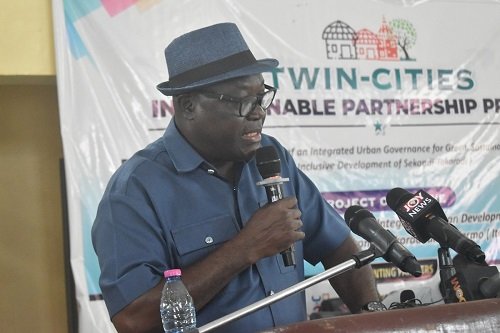
Mr. Abdul-Mumin Issah launching the Skills development Project
The Sekondi-Takoradi Metropolitan Assembly (STMA) has launched skills development training under the European Union-funded Twin Cities in Sustainable Partnership Project (TCSPP) being implemented in Sekondi-Takoradi in Ghana and Palermo in Italy.
The three-year project aims to enhance the capacity of authorities to address the challenges of urban sprawl, climate change and inadequate social safety nets for vulnerable populations within the two cities.
The launch of the TCSPP Project is also to commemorate the 2023 Europe Month Celebration in Ghana under the theme, “Celebrating Youth and Skills” and to recognise the EU as a funding agency of TCSPP and their contributions and initiatives to support Ghanaian youth in acquiring the right skills for quality jobs.
The Metropolitan Chief Executive (MCE) of STMA, Mr. Abdul-Mumin Issah, said that having a workforce in a society with the skills that were in demand contributed to sustainable growth, led to more innovation and improved competitiveness.
He said one of the major challenges in society today was the high population of unemployed youth and its corresponding challenges of crime, illicit use of drugs, and irregular migration to southern Europe through the desert and the Mediterranean Sea.
He said the TCSPP Skills Development programme was therefore aimed at complementing the many interventions both the central government and other stakeholders were making to address the youth unemployment situation in the metropolis and other parts of Ghana.
Mr. Issah disclosed that the programme was intended to train 350 vulnerable groups, including unemployed women and youth, returnees and potential future migrants, in professional skills in crop production, animal husbandry, aquaculture, bio-digester technology, eco-friendly oven production and plastic waste recycling.
He said the training would focus on two key areas, namely urban agriculture techniques and green and climate-smart production technologies, adding that “the project will provide post-training assistance to well-deserving trainees by supporting them to construct 500 bio-digester toilets and 100 eco-friendly ovens across the metropolis.
The MCE said the situation reaffirmed his long conviction that “teaching and learning employable skills” was the way forward for most unemployed people to become self-employed and employable in the competitive job market.
The Project Coordinator, Mr. Isaac Aidoo, said the project needed about 350 youth to start the skills training, but at the time of the launch, the number was not up, so he appealed to more youth to come and pick forms because the training was very beneficial.
The chairperson for the launch, Nana Kofi Abuna V, who is the chief of Essipun, said those who had picked forms should count themselves blessed to get the opportunity.
She told the trainees to be committed, determined and visionary, setting some goals ahead of their completion and working hard to get there.
She advised parents not to discourage their children from learning skills because it was the only way to reduce unemployment in the country by making the youth more self-employed and dependent on themselves.
From Peter Gbambila, Sekondi



John Boadu has been elected as the National Chairman of the New Patriotic Party (NPP) following the party’s National Delegates Conference held on Saturday, October 3, 2026, at the Baba Yara Sports Stadium in Kumasi.
Boadu secured a decisive victory with 2,888 votes, beating his closest contender Boakye Agyarko who polled 2,408 votes.
Former Chairman Paul Afoko garnered 790 votes, while Sammy Crabbe managed 41 votes.
The victory marks a major political comeback for John Boadu, who previously served as the party’s General Secretary.
Ahead of the elections, Sammy Crabbe had reportedly pulled out of the race to form an alliance with John Boadu, a move that appears to have strengthened Boadu’s numbers on the day.
The keenly contested chairmanship race was a highlight of the 2026 National Executives Election, which drew thousands of delegates from across the country to Kumasi.
Boadu is expected to lead the party’s reorganization efforts ahead of the 2028 general elections.
By Edem Mensah-Tsotorme
Women have been asked not to dismiss painless lumps in the breast, as the absence of pain does not mean a lump is harmless.
A Specialist Radiation Oncologist at the Korle-Bu Teaching Hospital, Dr Mary Ann Dadzie, said women should seek medical attention promptly whenever they noticed any unusual changes in the breast.
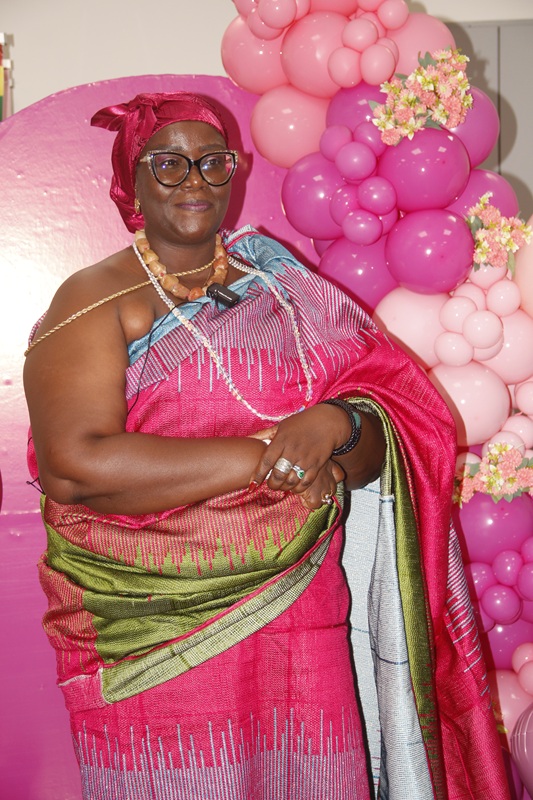
“A painless lump is not a harmless lump. You need to take action and not wait for pain,” she said.![Prof.Dr.Grace Ayensu-Danquah [middle] launching of Breast Cancer Awarencss Mouth with Dr.Caroline Reindorf Amissah[second from right] and other officials Photo Okai Elizabeth.](https://spectator.com.gh/wp-content/uploads/2026/10/Prof.Dr_.Grace-Ayensu-Danquah-middle-launching-of-Breast-Cancer-Awarencss-Mouth-with-Dr.Caroline-Reindorf-Amissahsecond-from-right-and-other-officials-Photo-Okai-Elizabeth.jpg)
Dr Dadzie made the call at the 2026 national launch of Breast Cancer Awareness Month, held on the theme, “early action, better outcomes.”
She expressed concern that about 45 per cent of breast cancer patients seen at Korle-Bu failed to return after starting treatment.
According to her, some patients began treatment but later stopped reporting to the hospital, leaving health professionals uncertain about their wellbeing.
She attributed the situation to several factors, including fear of death, financial difficulties, long distances to health facilities, lack of time and stigma.
Dr Dadzie urged women to know their breasts and seek medical attention within two weeks of noticing any abnormality.
She said warning signs could include a lump or thickening in the breast or armpit, changes in breast size, an inverted nipple, nipple discharge and changes in the skin, including redness, sores or an orange-peel appearance.
She cautioned women not to assume they were safe simply because they had no family history of breast cancer, explaining that only about five to 10 per cent of women with the disease had a familial or genetic mutation.
Dr Dadzie encouraged women to undergo regular clinical breast examinations and discuss appropriate screening options, including mammography and ultrasound, with health professionals.
She also called on families, particularly husbands and partners, to support women who needed breast examinations or treatment.
“Home is where the support begins,” she said, urging families to provide practical assistance such as transportation and childcare.
Dr Dadzie further appealed for breast cancer services to be brought closer to communities through increased access to mammography, ultrasound and biopsy services, as well as the training of more health professionals.
The Deputy Minister of Health, Prof. Dr Grace Ayensu- Danquah, said breast cancer remained a major health concern among women in Ghana, with an estimated 4,650 new cases and about 2,060 deaths recorded annually.
She said Ghana’s breast cancer response focused on prevention, early detection, equitable access to treatment and compassionate care.
Dr Ayensu-Danquah said the country was working to strengthen awareness, clinical breast examinations, referral systems, pathology and diagnostic services to improve breast cancer outcomes.
The World Health Organisation (WHO) representative, Dr Joana Ansong, said too many women continued to present with advanced breast cancer, resulting in avoidable suffering and deaths.
She called for stronger health education, timely diagnosis, rapid referral and equitable access to comprehensive treatment and support.
Dr Ansong said breast cancer awareness should move beyond campaigns to sustained action involving government, communities, health professionals, civil society organisations, the private sector and families.
By Esinam Jemima Kuatsinu