News
Silence box fighting violence, forced marriages in the Nanumba North District.


- /home/u249204778/domains/spectator.com.gh/public_html/wp-content/plugins/mvp-social-buttons/mvp-social-buttons.php on line 27
https://spectator.com.gh/wp-content/uploads/2025/02/The-silence-box-1000x600.jpg&description= Silence box fighting violence, forced marriages in the Nanumba North District.', 'pinterestShare', 'width=750,height=350'); return false;" title="Pin This Post">
- Share
- Tweet /home/u249204778/domains/spectator.com.gh/public_html/wp-content/plugins/mvp-social-buttons/mvp-social-buttons.php on line 72
https://spectator.com.gh/wp-content/uploads/2025/02/The-silence-box-1000x600.jpg&description= Silence box fighting violence, forced marriages in the Nanumba North District.', 'pinterestShare', 'width=750,height=350'); return false;" title="Pin This Post">
Aisha, a 16-year-old girl’s prefect of Montanaya Junior High School in the Nanumba North district in the Northern Region, is among hundreds of girls in rural communities, where a simple metal box kept in a safe room in their school is offering a lifeline for many innocent girls.
To the untrained eye, it looks ordinary. It’s just a box with a narrow slit at the top, but to the teenage girls, it is a silent witness and a keeper of secrets. “This is the Violence Reporting Box.
In Nabuli, violence was once an unspoken norm for decades, where issues of domestic abuse, child marriage, and gender-based violence were swept under the carpet.
The victims bore their pain in silence, fearing banishment when such issues were reported to powerful community elders.
It was installed as part of a community driven initiative, spearheaded by ActionAid and implemented by songtaba, a local base NGO.
Madam Hamida Kukuna, the Community Officer for Songtaba at Nabuli said the box does not judge, but only listen, trying to address your issue if you have been wronged.
She indicated that every week, trained volunteers discreetly emptied the box, forwarding reports to a team of social workers and law enforcement officers stationed in the district capital, after victims of violence anonymously slip handwritten notes into the box.
“At first, the box was a curiosity, where children giggled as they looked at it, and villagers questioned its purpose”, she said.
Ms Hamida continue that for weeks it remained empty, then after one rainy evening, she saw a footprint towards the box so she opened it and saw a piece of paper inside.
It stated “He comes every night when my mother is away. I am only 12, Please help me.”
The volunteers acted swiftly and that led to the identification of the girl and rescued her from her abusive uncle, who was later arrested.
The news spread quickly, and for the first time, the people of Nabuli realised the power of this silent box.
Soon, more notes followed, as a wife who had been battered for years sought help and a father reported his daughter’s forced marriage to a much older man.
According to Hamida, the box became a beacon of hope, an outlet for the voiceless.
Moreover, she said within a year the box has facilitated the rescue of over 30 individuals from abusive situations.
“It has also triggered critical conversations about violence, gender roles, and justice in the community, she added.
Mrs Beatrice Yanman Biije, a Programmes Officer at ActionAid Ghana at the Tamale office stated that village council, once complicit in silencing victims, began working with the authorities in creating a safe place for the teenagers.
She said one of the most remarkable transformations was when a 26-year-old mother of two, after years of beatings from her husband, wrote a note to the box with the help of a teacher.
“Her story inspired the creation of a women’s cooperative, offering skills training and support to survivors of abuse,” she said.
She added that, the initiative faced hurdles, where some villagers accused the box of encouraging rebellion and breaking families apart, said an elder in the community.
“Others tried to sabotage it, spreading rumors and threatening volunteers, but the tide was turning with each life saved, the community’s support grew stronger”, she added.
The success of the violence reporting box in Nabuli caught the attention of many schools in the communities around who are working on getting a metal box.
The box stands as a testament to what happens when silence is broken, when whispers become voices, and when justice is given a chance to thrive, even in the most unlikely places.
From Geoffrey Buta, Nabuli










The Accra Regional Police Command has arrested former professional boxer Michael Ayitey Okai, popularly known as “Ayitey Powers,” over an alleged threat of death against the Director-General of the National Sports Authority, Yaw Ampofo.
According to the Police, the 46-year-old former boxer was arrested on Monday, August 24, 2026, in connection with the alleged threat.
The Police said the arrest followed a video circulating on social media in which Ayitey Powers is alleged to have issued the threat against Mr Ampofo.
He is currently in Police custody and is assisting with investigations.
The Accra Regional Police Command said investigations are ongoing to establish the circumstances surrounding the alleged threat and determine the appropriate action to be taken in accordance with the law.
The Command has urged the public to refrain from sharing unverified information about the matter while the investigation continues.
By: Jacob Aggrey
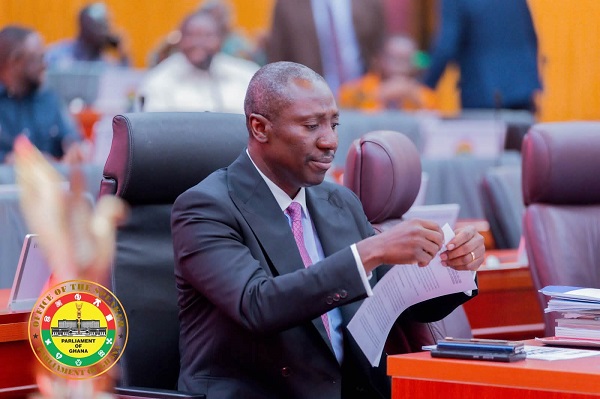
Minority Leader in Parliament Alexander Afenyo Markin has sued the Chief Executive Officer of the Ghana Gold Board (GoldBod), Sammy Gyamfi, and Multimedia Group Limited over alleged defamatory comments made against him on the Newsfile programme.
In a writ filed at the High Court in Accra, Mr Afenyo Markin is seeking GH¢15 million in damages, an apology and retraction of the statements, among other reliefs.
The suit follows comments allegedly made by Mr Gyamfi during the Saturday, August 22, 2026 edition of Newsfile, hosted by Samson Lardy Anyenini.
According to the statement of claim, Mr Gyamfi described Mr Afenyo Markin as an “extortionist” while responding to a question about GoldBod’s reported profits and its position on losses arising from its operations.
The plaintiff claims that Mr Gyamfi repeated the allegation when the host sought clarification on whether he stood by the description.
Mr Afenyo Markin further claims that Mr Gyamfi challenged him to sue him and insisted that the allegation was true.
The plaintiff argues that the statements created the impression that he engages in extortion, uses his political influence to put improper pressure on public institutions and officials, and conducts himself in a manner inconsistent with the standards expected of a lawyer and public office holder.
He denies the allegations and maintains that he is not an extortionist and has never engaged in the conduct alleged by Mr Gyamfi.
The Minority Leader also argues that the comments were made maliciously and were presented as facts without evidence being disclosed.
He claims the statements have damaged his reputation, professional standing and public image, particularly because of his position as a senior political figure and legal practitioner.
The suit also names Multimedia Group Limited as a defendant because, according to the plaintiff, the alleged defamatory comments were broadcast through JoyNews and subsequently circulated on social media platforms, including X, Facebook and YouTube.
Mr Afenyo Markin claims Multimedia failed to stop the comments or deactivate Mr Gyamfi’s microphone after the allegations were made.
He is therefore asking the court to award him general, aggravated and exemplary damages, as well as GH¢15 million in compensation and legal costs.
He is also seeking an order compelling the defendants to issue a full, unconditional and unequivocal retraction and public apology.
The plaintiff wants the apology and retraction to be given similar prominence and reach as the original publication, including through JoyNews and the social media platforms where the comments were disseminated.
He is further seeking a permanent injunction preventing the defendants from repeating the alleged defamatory statements or words with a similar meaning.
The writ requires the defendants to enter an appearance within eight days after being served.
It warns that failure to do so could result in judgment being entered in their absence.
The case was filed by lawyer Paa Kwesi Abaidoo of Dehyena Chambers on behalf of Mr Afenyo Markin.
By: Jacob Aggrey