Hot!
Sheer opulence, vote-buying caused NPP’s defeat in Assin North – Mussa Dankwah


- /home/u249204778/domains/spectator.com.gh/public_html/wp-content/plugins/mvp-social-buttons/mvp-social-buttons.php on line 27
https://spectator.com.gh/wp-content/uploads/2023/06/7ff6b9a4-68b7-407f-8765-e36e6cb7687b.jpeg&description=Sheer opulence, vote-buying caused NPP’s defeat in Assin North – Mussa Dankwah', 'pinterestShare', 'width=750,height=350'); return false;" title="Pin This Post">
- Share
- Tweet /home/u249204778/domains/spectator.com.gh/public_html/wp-content/plugins/mvp-social-buttons/mvp-social-buttons.php on line 72
https://spectator.com.gh/wp-content/uploads/2023/06/7ff6b9a4-68b7-407f-8765-e36e6cb7687b.jpeg&description=Sheer opulence, vote-buying caused NPP’s defeat in Assin North – Mussa Dankwah', 'pinterestShare', 'width=750,height=350'); return false;" title="Pin This Post">
Executive Director of Global Info Analytics, Mussa .K. Dankwah, has outlined major causes that led to the defeat of the New Patriotic Party (NPP) in the Assin North by-election.
The pollster prior to the election disclosed that, per their latest poll, the New Patriotic Party’s candidate Charles Opoku was leading by a slight margin.
During an interview on Eyewitness News on Citi FM, Mussa Dankwah said sheer opulence exhibited by some of the NPP members, vote-buying amongst other factors led to the party’s defeat.
“It was a combination of many factors: the perception that they are persecuting James Gyakye Quayson, the fact that they left development projects in Kumawu [uncompleted],and they hurriedly came to Assin North and another factor was the sheer opulence and sprinkling of money in the constituency. It made some people very angry,” the pollster told sit-in host of Eyewitness News, Nii Larte Lartey, on Wednesday.
He further highlighted the reasons Charles Opoku lost the election and explained that majority of his demography didn’t vote especially strongholds of the NPP.
“James Gyakye won the people who were undecided, most of them, and Charles Opoku lost grounds to Quayson on the basis that his demography didn’t come out to vote, especially strongholds of NPP such as Kushea and Breku, where they were hoping to win, but they didn’t. These are the reasons James Gyakye Quayson outperformed,” he stated.
Mr. Quayson polled 17,245 votes representing 57.56%, while Charles Opoku of the New Patriotic Party (NPP) received 12,630 votes, representing 42.15% after the by-election on Tuesday, June 27, 2023.
The Liberal Party of Ghana’s (LPG) candidate, Sefenu Bernice Enyonam, garnered a paltry 87 votes, representing 0.29%.
The by-election became necessary after Gyakye Quayson was kicked out of Parliament for having dual citizenship prior to filing his forms to contest in the 2020 elections in the Assin North constituency.
Source: Citinewsroom.com



The Tema Regional Police Command has arrested a 32-year-old man for allegedly posing as a soldier and extorting money from unsuspecting members of the public at Ashaiman.
The suspect, identified as Bright Atsu Kudiabor, was arrested by the Ashaiman Police on Wednesday, September 16, 2026, at about 7:00 a.m.
According to the Police, he was arrested at an area known as “I Shall Return”, where he was allegedly parading himself as a soldier and demanding money from people.
The Police said Kudiabor, who is an ex-convict, was initially arrested by personnel of the Ghana National Fire Service in Ashaiman with assistance from other members of the public.
A search conducted on him after he was handed over to the Police reportedly led to the recovery of a set of military camouflage uniform.
The suspect is currently in Police custody and assisting with investigations.
The Tema Regional Police Command said he would be processed for court after investigations are completed.
The Police urged the public to remain vigilant and report anyone who falsely presents themselves as a soldier or a member of another security agency to deceive or extort money from the public.
By: Jacob Aggrey
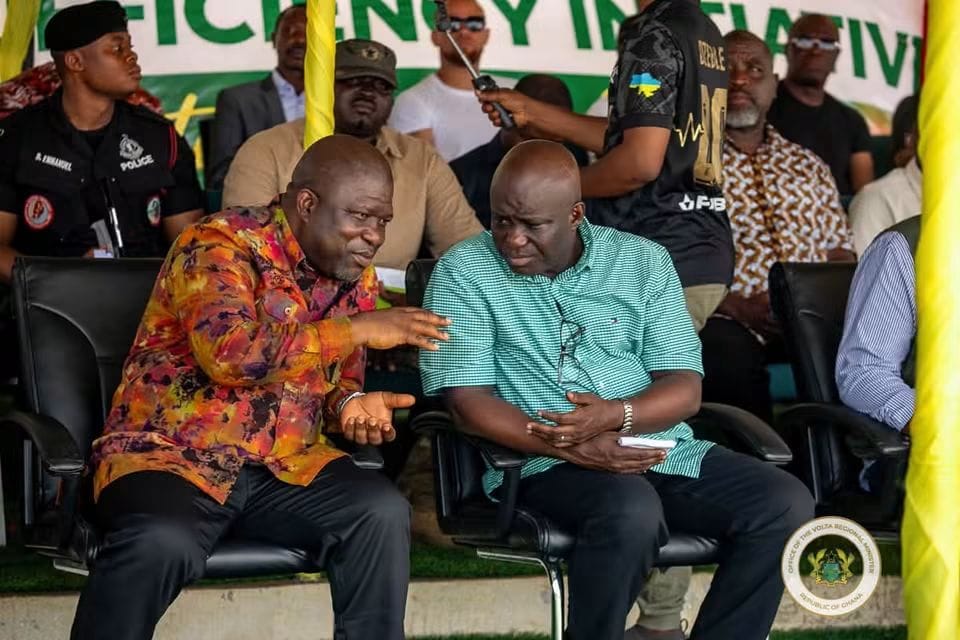
Volta Regional Minister, James Gunu, says the Volta Region holds enormous agricultural potential and efforts must be geared towards connecting farmers to the needed resources to unlock that potential.
He said focus must be on linking farmers to resources, technology, financing and markets to increase production, create jobs and build sustainable livelihoods.
Hon. Gunu made the remarks at the national launch of the Ghana Tomato Self-Sufficiency Initiative (GHATSI) held at Anloga in the Volta Region on Tuesday, September 15.
The initiative, under the theme “Produce at Home. Feed the Nation. Export the Surplus,” seeks to boost local tomato production, processing and marketing while reducing Ghana’s heavy reliance on imported tomatoes.
The launch was attended by the Minister for Food and Agriculture, Eric Opoku, his Deputy, John Setor Dumelo, Feed Ghana Coordinator, Bright Demordzi, Members of Parliament, traditional leaders, MMDCEs, farmers and other stakeholders.
Mr.Gunu expressed appreciation to the Minister for Food and Agriculture for the support announced for the region, including two excavators, 200 cartons of organic fertiliser, and GH¢200,000 for Ms. Kuatudzo Esther Dela, a tomato farmer and processor from Ziope.
He described the initiative as an important step towards making agriculture a stronger driver of food security, job creation and economic growth in the Volta Region.
By Edem Mensah-Tsotorme