Nutrition
Roast turkey with cranberry sauce

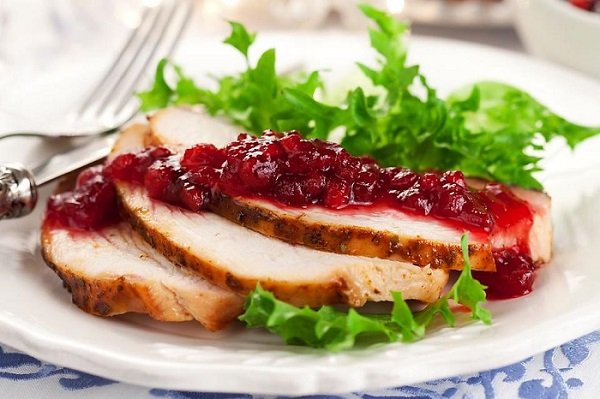
Ingredients
- 1 whole turkey
- 100 grammes of butter
- 100 grammes of onion, chopped
- 100 grammes of celery, chopped
- 10 grammes of crumbled sage and thyme
Salt and pepper to taste
- 10 grammes of garlic minced
- Balsamic vinegar
- 20 grammes of sugar
.150 grammes of cranberry
Preparation
– Melt butter over medium heat. Stir in onions, celery, sage, thyme and pepper; cook, stirring occasionally, for 10 minutes or until browned.
-Remove giblets and neck from the turkey cavity, keep for gravy. Rinse turkey inside and out with running water.
– Stir together butter, sage, salt and pepper; rub over turkey, inside and out. Loosely pack stuffing into neck and body cavities, fold over and skewer neck flap closed over stuffing. Tie legs together.
– Place turkey, breast side up on rack in roasting pan.
– Cover with foil and roast in 325°F oven for about 1.5 hours, basting with pan juices every 30 minutes.
– Remove foil and continue to roast or 1 3/4 hours, basting every half hour, or until instant-meat thermometer inserted into thickest part of thigh reads 185°F. Keep it under lamp for carving
.
-Meanwhile, in saucepan, bring chicken stock turkey neck, giblets, onion and bay leaf to boil, reduce heat and simmer.
– While cooked turkey rests, skim excess fat from roasting pan whisk in flour until well combined.
-Gradually whisk in reserved giblet stock; Bring to boil and cook, Season to taste with salt and pepper. Strain and serve alongside turkey.
-For cranberry sauce in small saucepan, heat oil over medium heat; stir in onion and garlic and cook, stirring occasionally, for five minutes or until softened.
– Put balsamic vinegar; boil for five minutes or until reduced. Mix together cranberries, sugar, salt and pepper.
– Mix into onion mixture; bring to boil and cook, until cranberries are tender and sauce is thick.
Source; foodndtv.com


Ingredients
-Oil
-1 large onion
-2 cups of rice
-Salt
-2 cups of wheat
Preparation
-In a medium saucepan, heat oil over medium-low heat
-Add the onion and cook, stirring frequently, until soft and turns golden brown
-Wash rice and wheat and put into pan. Sauté for two to three minutes, until toasty and fragrant
-Add water and salt and allow to boil.
– Reduce heat to low and allow to simmer for 10 to 15 minutes until rice is tender and the water is absorbed.
-Taste the rice/wheat; if it is still a bit firm, add a few more tablespoons of water and cook a few more minutes.
-When the rice/wheat is ready, take it off the fire and serve hot
Benefits of wheat
–Improves digestion: High levels of insoluble fibre- wheat promotes regular bowel movements, prevent constipation, and support a healthy gut microbiome.
-Supports heart health: Whole-grain wheat helps lower LDL (bad) cholesterol, reduces blood pressure, and decreases the risk of stroke and heart disease.
-Aids weight management: Complex carbohydrates and dense fibre slow digestion, increase feelings of fullness, and help prevent sharp blood sugar spikes.
-Lowers type 2 diabetes risk: Steady glucose release and minerals like magnesium improve insulin sensitivity.
– Provides essential vitamins and minerals: Wheat supplies B vitamins, iron, magnesium, phosphorus, zinc, and selenium, which help build bones and boost immune function.
–Delivers Antioxidants: Compounds like phenolic acids, ferulic acid, and lutein protect cells from oxidative stress and support eye health.
SKIP THE QUEUE, TAP THE NEWS
You can now read the Ghanaian Times and The Spectator newspapers from the comfort of your device via TimesNewsPlus.
Join our WhatsApp Channel: https://whatsapp.com/channel/0029VbBElzjInlqHhl1aTU27

Ingredients
-4 cups of crushed corn
-1 cup of sugar
Method:
-Soak crushed corn for two or more days to ferment
-Boil the fermented corn for about 20-30 minutes until foamy substance is dried up
-Pour sugar in a saucepan and heat until almost burnt
-Strain water from the boiled corn and pour in the saucepan containing sugar
-Use a strainer to strain the chaff
-Allow to cool and store in refrigerator
– Serve with milk
By Linda Abrefi Wadie