Editorial
Promoting constitutionalism is key in our national life

Society is made up of individuals and groups of people whose interests may be similar or different from one another.
However, to ensure social progress, laws are made in different forms to regulate all activities in the country, so that the interest of all individuals will be guaranteed. At the same time, the laws whether at national or community levels are meant to hold the country together and promote the common interest of everyone.
By constitutionalism, we refer to keeping to the practice and tenets of the 1992 Constitution, bylaws and rules, and ensure that all behaviour falls in line with the fundamental law of the land.
It is for this reason that the National Commission for Civic Education (NCCE) carries out special programmes every year to promote National Constitutional Week in the country for everyone to appreciate the importance of constitutionalism.
The National Constitution Week, which starts from April 28 to May 4, was instituted in 2001 by the NCCE to ensure that the Constitution becomes a living document embossed on the minds and hearts of Ghanaians in pursuit of democracy and good governance.
April 28 was adopted as the commencement date for the activities because that was the day a National Referendum was held to endorse the Constitution in 1992.
The NCCE uses the occasion to create an increased and sustained interest and participation of all Ghanaians in the democratic dispensation for the achievement of good governance, social and political stability for national unity and development.
In a democratic society such as Ghana, keeping to the tenets of constitutionalism is what is needed to ensure that problems are resolved in the most acceptable way in line with the laws of the land.
Constitutionalism protects everybody and ensures that even those who flout the law are given the opportunity to defend themselves before being made to face any punishment, if they so deserve.
The Constitutional Week promoted by the NCCE must not be taken for granted but vigorously pursued in all parts of the country in the interest and protection of everyone irrespective of status, ethnic background, religious characteristic and so on.
At the same time, going by the laws of the land gives us the opportunity to resolve all problems in a peaceful manner according to law. This prevents a situation where misguided military men may find it necessary to intervene in politics and disturb the constitutional order.
This is how as a nation we can develop along a smooth path of peace and smooth socioeconomic progress.
The NCCE must be supported to carry out all the activities marking the Constitutional Week as well as implementing other programmes meant to promote the constitutional order for the common good of Ghanaians.
This is what we are all looking for to promote better quality life in line with democracy, freedom and liberties as well as smooth political life in the country.


Dear Editor,
It is often said that a healthy nation is a wealthy nation. However, this saying becomes worrying when the health of citizens is threatened by the conditions under which the food they consume daily is sold.
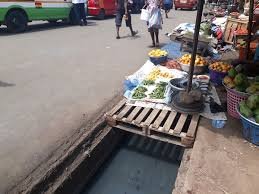
In Ghana, the conditions under which food is sold is quite disturbing. Over the years, I have observed that the environments where food is prepared and sold are often unhygienic.
In many cases, containers holding food such as rice and waakye are left uncovered or not properly covered, exposing them to contamination.
While many Ghanaians paid little attention in the past to the conditions under which food was sold, the narrative seems to be changing in recent years.
I recall an incident during my days in Senior High School (S.H.S.) when my friends and I went out to buy food. At one location, some of us chose not to buy because we assumed the food would be expensive due to how neat the place looked.
Unfortunately, we ended up purchasing food from a different place that was somewhat unhygienic. We overlooked the poor conditions because we believed the quantity offered was better than at the cleaner location.
However, I am certain that my friends and I would not repeat such a mistake today, as we now understand the health implications of that decision.
While public education is important in addressing this issue, I believe it is time for regulatory and law enforcement agencies, such as the Food and Drug Authority (FDA), to crack the whip on food sellers and vendors who operate in unhygienic environments and conditions.
As citizens, we must also be mindful of where we buy our food to protect ourselves and our families from diseases and illnesses. We should choose ‘quality’ over ‘quantity’ and prioritize our health.
From Syram
Oyarifa
Dear Editor,
I write to express concern and call for improved security measures before and after every football match.
The recent robbery attack that led to the tragic death of a player, on their return from a Match day 29 game against Samartex, is both shocking and heartbreaking.
The incident, which reportedly occurred around 10:30 p.m., highlights the growing risks faced by players and team officials while traveling.
Football is meant to unite and entertain, not to expose lives to danger. It is therefore imperative that authorities, the Ghana Football Association, and security agencies put in place adequate protection for teams, especially during late-night travels.
I strongly urge all stakeholders to treat this matter with urgency to prevent such unfortunate incidents from recurring.
From Eugene Ampiaw
Accra

 News1 week ago
“We are working to transform the Kwahu Business Village into an international conference hub”
- News1 week ago
Kwahu Business Forum:My engagement with President Mahama has boosted my business — Lydia Forson
- News1 week ago
DeniiNoi Foundation Supports Taifa Polyclinic with Medical Equipment