Sports
President Simeon-Okraku hails Black Queens’ Bronze medal, reaffirms commitment to Women’s football development


- /home/u249204778/domains/spectator.com.gh/public_html/wp-content/plugins/mvp-social-buttons/mvp-social-buttons.php on line 27
https://spectator.com.gh/wp-content/uploads/2025/07/quee-1000x600.png&description=President Simeon-Okraku hails Black Queens’ Bronze medal, reaffirms commitment to Women’s football development', 'pinterestShare', 'width=750,height=350'); return false;" title="Pin This Post">
- Share
- Tweet /home/u249204778/domains/spectator.com.gh/public_html/wp-content/plugins/mvp-social-buttons/mvp-social-buttons.php on line 72
https://spectator.com.gh/wp-content/uploads/2025/07/quee-1000x600.png&description=President Simeon-Okraku hails Black Queens’ Bronze medal, reaffirms commitment to Women’s football development', 'pinterestShare', 'width=750,height=350'); return false;" title="Pin This Post">
President Kurt Edwin Simeon-Okraku has expressed immense pride in the Black Queens’ historic Bronze medal win at the 2024 Women’s Africa Cup of Nations, emphasizing the importance of continued investment in women’s football.
Following Ghana’s third-place triumph, the 2nd Vice CAF President highlighted the impact of the GFA’s strategic initiatives, including the DNA Women’s Football Strategy.
He “From the moment we developed the strategy, launched the talent identification program, established the Academy in the North, invested in the Women’s Premier League, and boosted TV coverage, we knew we were on the right path,” he said. “Thank God for the Bronze. Our investment in women’s football is yielding results, and we’re confident about our collective future.”
President Simeon-Okraku praised the Black Queens for their resilience and determination, acknowledging that their achievement signals greater potential for Ghanaian women’s football.
“We need to let the team enjoy this moment. Although they didn’t win the ultimate trophy, their achievement speaks volumes about the huge potential in our women’s game,” he stated.
Looking ahead, he emphasized the need for sustained investment, expanded talent identification programs, and a structured pathway for player development from the U-15 level to the senior national team.
“With the right investment, more talent identification programs, and a natural progression of players, we’ll reach our desired destination,” he affirmed. “The talent in them is unbelievable.”
The Black Queens’ bronze medal marks Ghana’s first WAFCON podium finish in over two decades, reigniting hopes for a new era of dominance in African women’s football.








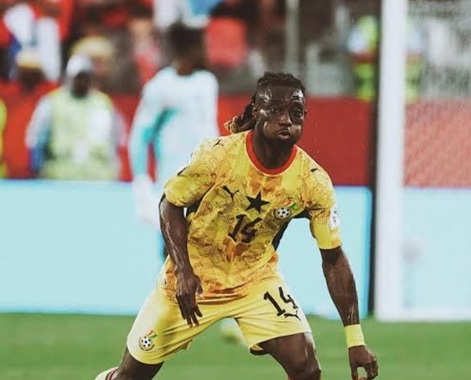
Black Stars defender Gideon Mensah has taken full responsibility for Ghana’s shocking 4-2 defeat to The Gambia at the Accra Sports Stadium.
Ghana threw away a 2-0 lead after goals from Ernest Nuamah and Felix Afena-Gyan, with Mensah at fault for two of the Gambian goals, conceding a penalty with a rash challenge and misplacing a back pass that gifted Ebrima Colley the visitors’ third goal.
Speaking after the game, the left-back, who captained the side in the absence of several senior players, said the team must accept all criticism.
“We have to accept that luck wasn’t on our side and we probably didn’t perform as we were supposed to perform. As captain today, I will take responsibility for everything that happened,” he said.
He added that “We are the players and we have to accept whatever comes from the people we play for.”
Mensah also pointed to the difficulty of integrating new faces into the team, noting that many of the players are still adjusting to what it means to wear the national colours.
“We can’t hide from the fact that we had so many newcomers in the team. When we talk about newcomers, it has to do with mentality. They didn’t know about playing for Ghana, wearing the Ghana jersey,” he explained.
He further added that “This is not something we can switch overnight. It takes time for new players to learn that playing for Ghana comes with a whole lot. You’re playing for a country where everybody lives off football, and everybody is happy when Ghana wins.”
The defeat is Ghana’s second in a row in Group C, following the opening 2-0 loss to Côte d’Ivoire in Bouaké.
By Edem Mensah-Tsotorme
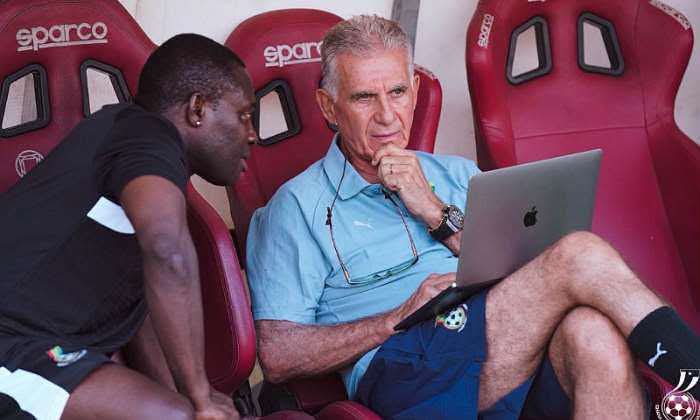
Black Stars coach Carlos Queiroz says two soft goals conceded just before half-time destroyed his team’s morale and turned the game against them.
Ghana were in total control at the Accra Sports Stadium on Tuesday, leading 2-0 through Ernest Nuamah’s penalty and Felix Afena-Gyan’s low drive, and looked set for a comfortable win.
But the Scorpions pulled one back from the spot and snatched an equaliser before the break, leaving the home side stunned.
“This was one of those days when everything went wrong for our team. Especially in the first half after we were leading 2-0. We conceded two goals very easily, and those two goals turned the story of the game around,” Queiroz said after the match.
According to him, “At the moment we should have gone for an easy result in the second half, those two goals in the first half killed the morale and made my players nervous. That was one of the reasons we were not able to perform well in the second half.”
The Portuguese trainer also defended his midfield choices and his decision not to start some of the new faces, insisting he has never been afraid to give opportunities to youngsters.
“Never in my life am I afraid to start a new player. Giving opportunities to players at 17, 18 years old has always been my benchmark,” he stressed.
Queiroz reserved special praise for substitutes Ibrahim Sulemana and Augustine Boakye, who lifted the team after coming on.
“I think Ibrahim came very well into the game, he had a good performance in the second half. He brought the team forward. Augustine brought the team forward as well,” he noted.
On Boakye, who earned his first Black Stars call-up under Queiroz for the World Cup, he added: “I called him for the first time to the national team for the World Cup. Everybody was surprised by that. Now you saw during the game, step by step, that he is a player who deserves to be here.”
He explained that with several players short of game time, including Kojo Oppong Peprah, Kwasi Sibo and Sulemana, he had to manage the squad carefully, especially after starting the game with only two fit centre-backs.
“We have the best players available to play this game. When some of our players are not on fresh legs, we have to make decisions to have solutions,” Queiroz said.
By Edem Mensah-Tsotorme