News
Poor weather and downdraft caused military Helicopter crash – Investigation Report

- /home/u249204778/domains/spectator.com.gh/public_html/wp-content/plugins/mvp-social-buttons/mvp-social-buttons.php on line 27
https://spectator.com.gh/wp-content/uploads/2025/11/WhatsApp-Image-2025-11-11-at-14.48.06-757x600.jpeg&description=Poor weather and downdraft caused military Helicopter crash – Investigation Report', 'pinterestShare', 'width=750,height=350'); return false;" title="Pin This Post">
- Share
- Tweet /home/u249204778/domains/spectator.com.gh/public_html/wp-content/plugins/mvp-social-buttons/mvp-social-buttons.php on line 72
https://spectator.com.gh/wp-content/uploads/2025/11/WhatsApp-Image-2025-11-11-at-14.48.06-757x600.jpeg&description=Poor weather and downdraft caused military Helicopter crash – Investigation Report', 'pinterestShare', 'width=750,height=350'); return false;" title="Pin This Post">
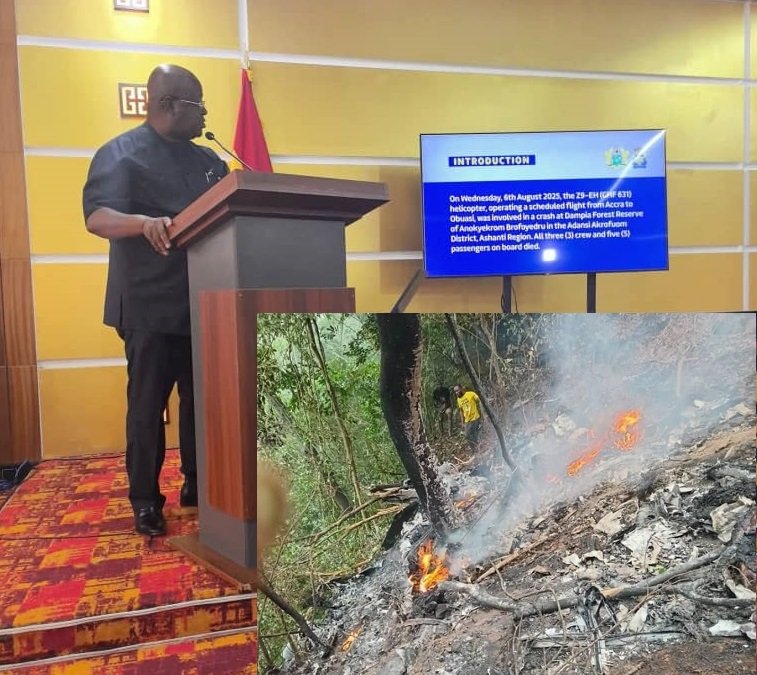
The investigation into the military helicopter crash that killed eight people on August 6, 2025, this year has concluded that the accident was caused by sudden bad weather and a powerful downdraft that forced the aircraft to lose altitude unexpectedly.
According to Captain Paul Fodjour, Head of Investigations at the Aircraft Accident and Incident Investigation and Prevention Bureau (AIB-Ghana), the helicopter encountered severe weather conditions shortly before the crash.
He made this known on Tuesday when he presented the final report of the probe team to the public in Accra.
The helicopter, identified as Z-9EH with tail number GHF 631, was flying from Accra to Obuasi on August 6, 2025, when it crashed in the Ashanti Region.
All three crew members and five passengers on board lost their lives.
Following the tragedy, President John Dramani Mahama directed that a full investigation be conducted to determine the cause of the accident and recommend measures to prevent future occurrences.
The investigation team, led by COP Abdul Razak Osman, National Security Coordinator, included experts from the Ghana Armed Forces, AIB-Ghana, the National Intelligence Bureau, and the U.S. Air Force.
Captain Fodjour explained that the aircraft was airworthy and had passed all necessary safety checks before takeoff.
However, it lacked modern safety systems such as a terrain awareness warning system, autopilot, and advanced navigation features, which could have helped the crew detect and avoid danger.
He revealed that the flight had been delayed earlier due to poor weather, but conditions worsened midair.
“Visibility deteriorated rapidly due to mist and low clouds. The crew tried to climb to clear rising terrain but suddenly lost altitude and crashed about six and a half miles from Obuasi” he said.
According to him, the investigation determined that a downdraft, a sudden downward movement of air caused by changing weather conditions over hilly terrain was the main factor that led to the crash.
“The accident was an unfortunate and sudden weather-related event. The crew were experienced and medically fit, and the aircraft was mechanically sound,” Captain Fodjour stated.
He commended the emergency response teams for their swift reaction.
“Despite the rough terrain, rain, and slippery conditions, rescue teams reached the crash site within two hours. Their effort was remarkable,” he said.
The final report made several safety recommendations aimed at preventing similar accidents in the future.
These include the modernisation of the Ghana Air Force fleet with aircraft equipped with terrain warning and modern navigation systems, the installation of cockpit voice and flight data recorders with audiovisual capability, and investment in flight simulators for pilot training.
The report called for the contracting of certified aviation weather service providers, the establishment of flight data monitoring and real-time tracking systems, and the expansion of navigational aids across the country, especially in remote areas.
Captain Fodjour said implementing these recommendations would help strengthen Ghana’s aviation safety system.
He expressed appreciation to the National Security Secretariat, U.S. and Chinese partners, and the AIB-Ghana team for their technical and logistical support throughout the investigation.
“Our goal is to turn this tragic event into lessons that will make aviation in Ghana safer,” Captain Fodjour said.
By: Jacob Aggrey







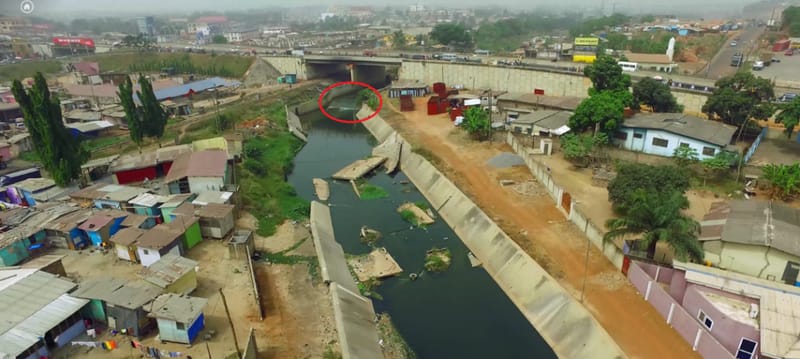
Construction of a major underground stormwater drain along the Dr. Busia Highway within the Kaneshie enclave will commence on September 7, 2026.
The Project Coordinator for the Greater Accra Resilient and Integrated Development (GARID) Project, Dr. Kwadwo Ohene Sarfo, announced this at a special media briefing on Wednesday.
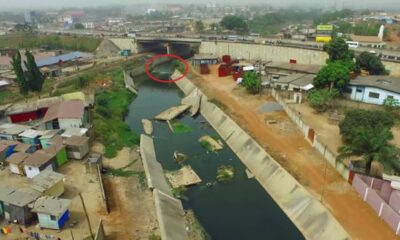
According to him, the works will involve the construction of a double-cell underground rectangular drain measuring approximately 10 metres wide and 1.95 kilometres long, stretching from Pamprom Junction to First Light Junction.
The new drain will replace the existing two 1.2-metre diameter pipes, which are inadequate to carry the volume of stormwater in the area.
Dr. Sarfo said the drain will connect at one end to the recently completed section within the Accra Academy campus and at the other end to the existing drain at Pamprom Junction.
He said the construction is expected to run from September 2026 to October 2027.
The project forms part of government’s broader flood prevention and mitigation programme aimed at addressing perennial flooding in Accra.
By Edem Mensah-Tsotorme
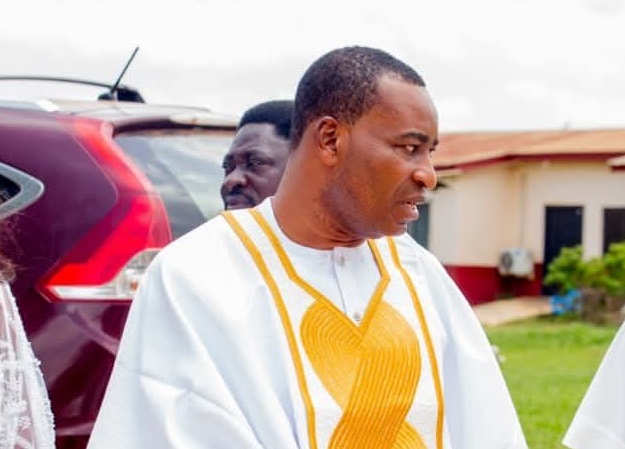
The former Ashanti Regional Chairman of the New Patriotic Party (NPP), Bernard Antwi Boasiako, popularly known as Chairman Wontumi, has withdrawn from the party’s National Chairmanship race.
In a statement issued yesterday, Chairman Wontumi who is currently serving a 20-year jail term said his decision was driven by his love for the party and his unwillingness to let his personal circumstances distract the NPP from its rebuilding efforts.
“There are moments in the life of a man when the heart wants to continue, but duty demands sacrifice. Moments when one must quietly set aside personal ambition, not because the dream has died, but because the family he loves must not be made to carry his burden. Today, I find myself at such a painful moment,” he wrote.
He disclosed that after many nights of prayer, sober reflection and consultations with his family, legal team, party elders, campaign team and trusted supporters, he concluded that his present situation must not become an additional burden on the NPP.
“This is not the decision my heart desired, but sometimes, true love requires us to release what we deeply want in order to protect what we love even more,” he added.
Recounting his years of service, Chairman Wontumi said he had served the party with everything within him, walking through heat and rain, travelling to remote communities and standing with the grassroots in both victory and defeat.
“For many years, I have served the NPP with everything within me… The NPP is not merely a political party to me. It is my family. It is my home. It is a cause to which I have dedicated a significant part of my life,” he stated.
He explained that the party, already carrying the pain of electoral defeat and the huge responsibility of preparing for the future, should not be made to carry his personal weight.
“That is why I cannot allow my present situation or personal ambition to distract the party from the difficult work of rebuilding. I cannot ask the party to carry my weight when it is already carrying the pain of defeat and the enormous responsibility of preparing for the battle ahead. I would rather carry this pain quietly than allow the party I love to suffer because of me,” he said.
He further sympathized with his supporters across the 16 regions, acknowledging that the decision would be painful for many who had sacrificed for his campaign.
“To my teeming supporters across all sixteen regions, I know this message will hurt. I know many of you will read it with tears in your eyes because I understand the sacrifices you have made for this journey,” he said.
By Edem Mensah-Tsotorme