News
Poor budget execution could hurt economic growth – IFS warns govt

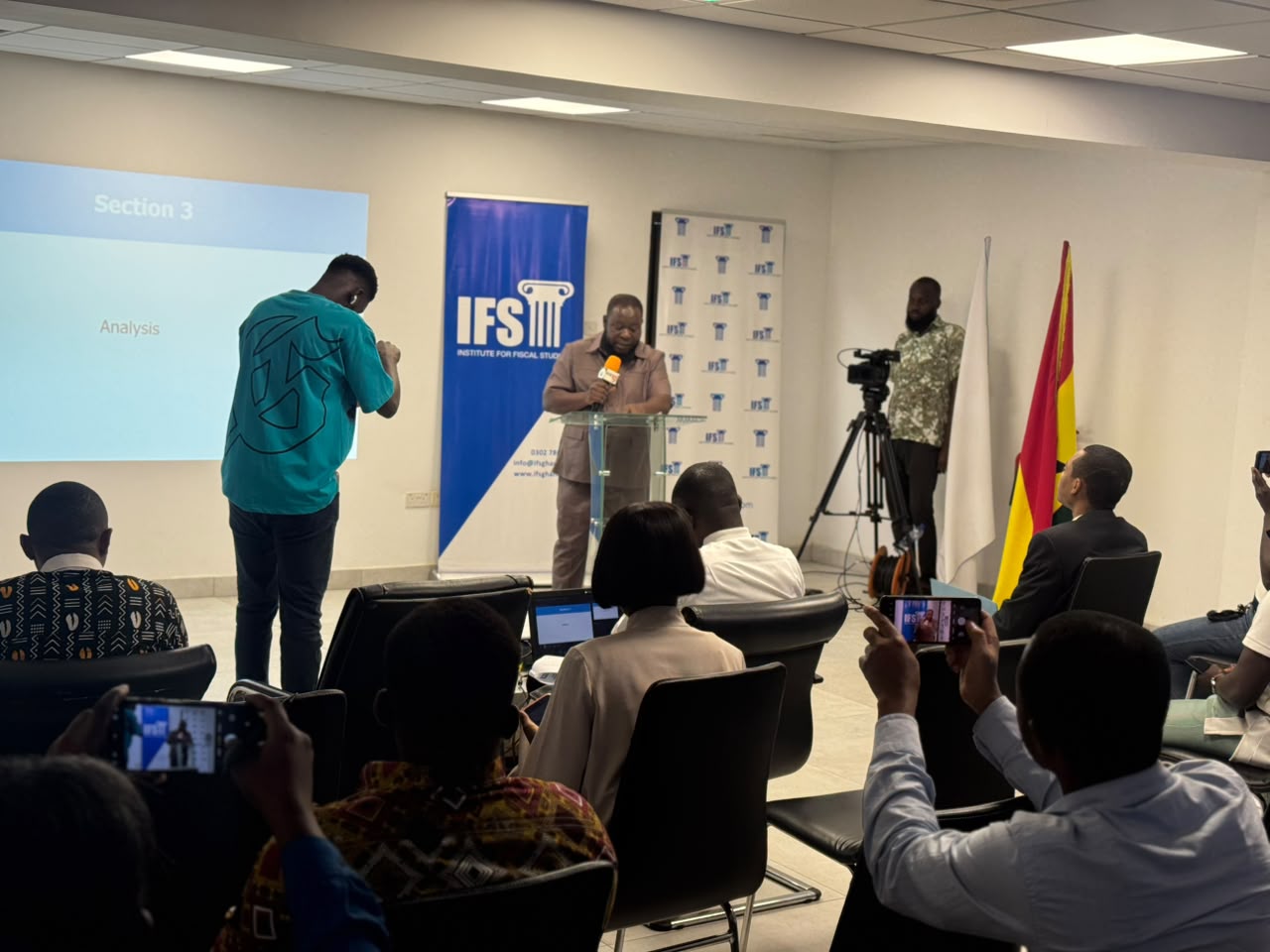
The Institute for Fiscal Studies (IFS) has warned that poor execution of Ghana’s 2026 budget could hurt economic growth, particularly if government continues to restrict spending on capital projects and arrears payments.
The warning was contained in the IFS Policy Brief No. 26, titled An Analysis of the Government of Ghana’s 2026 Mid-Year Budget Review, which assessed the implementation of the 2026 budget in the first half of the year.
Presenting the fiscal performance for the period, Research Fellow at the IFS, Dr Samuel Addo, reported that total revenue and grants stood at GH¢124.78 billion in the first half of 2026, falling short of the budgeted GH¢126.14 billion by GH¢1.37 billion, representing 1.1 per cent.
He noted that tax revenue amounted to GH¢103.77 billion, compared with a target of GH¢105.26 billion, while non-tax revenue stood at GH¢12.27 billion against a target of GH¢14.90 billion.
Dr Addo explained that the shortfall in non-tax revenue was largely driven by lower-than-expected dividend, interest and profits from oil, which fell short of its target by GH¢1.43 billion, or 37.1 per cent.
He added that foreign grants also fell short of the target, recording GH¢1.05 billion against GH¢1.07 billion, while other revenue, including ESLA proceeds, performed above target, recording GH¢7.69 billion against a target of GH¢4.21 billion.
On expenditure, Dr Addo reported that total government expenditure, including arrears payments and discrepancies, amounted to GH¢136.94 billion, falling short of the budgeted GH¢172.54 billion by GH¢35.60 billion, or 20.6 per cent.
He identified arrears clearance and capital expenditure as the areas with the biggest shortfalls.
According to him, actual arrears clearance stood at GH¢5.34 billion against a budget target of GH¢13.98 billion, representing a shortfall of 61.8 per cent and an execution rate of only 38.2 per cent.
Capital expenditure also stood at GH¢22.18 billion against a target of GH¢36.56 billion, representing a shortfall of GH¢14.38 billion, or 39.3 per cent.
Dr Addo further reported that interest payments amounted to GH¢21.50 billion against a target of GH¢28.44 billion, while grants to other government units stood at GH¢26.21 billion against GH¢31.10 billion.
Compensation of employees also fell short of target, recording GH¢42.90 billion against GH¢45.38 billion.
He said the significant underspending resulted in the overall fiscal deficit on a commitment basis standing at GH¢6.82 billion, compared with the budgeted GH¢32.41 billion.
The primary balance on a commitment basis, he added, recorded a surplus of GH¢14.68 billion against a programmed deficit of GH¢3.97 billion.
Dr Addo also noted that despite the significant changes in actual revenue and expenditure performance, most of the components of the revised 2026 budget remained unchanged from the original budget.
He explained that the major changes involved an increase in the “other expenditure” item from GH¢16.23 billion to GH¢21.23 billion, with GH¢5 billion allocated to the Ghana Gold Board (GoldBod).
Capital expenditure, he said, was reduced by GH¢5 billion from GH¢57.53 billion to GH¢52.53 billion to accommodate the increase in the other expenditure item.
He explained that the allocation to GoldBod was intended to enable the institution to take full financial responsibility for the gold purchase programme and relieve the Bank of Ghana of that responsibility.
Poor budget execution
Commenting on the findings, IFS Fiscal Policy Researcher and microeconomist, Dr Said Boakye, described poor budget execution as one of the major challenges identified in the mid-year review.
He argued that the government’s failure to spend as planned could have serious implications for economic growth because capital expenditure and arrears payments play important roles in economic activity.
Dr Boakye explained that arrears payments provide liquidity to government contractors, suppliers and businesses that depend on them, while capital expenditure is an important component of GDP.
He therefore warned that restricting such spending could directly affect economic growth.
According to him, non-oil real GDP growth recorded 6.3 per cent in the first quarter of 2026, but this represented a noticeable decline from the growth rates recorded in the previous four quarters.
He attributed the decline partly to the sharp reduction in government spending and cautioned that continued restrictions on expenditure could cause non-oil real GDP growth to decline further.
Dr Boakye said the shortfall in revenue mobilisation and foreign borrowing could not fully explain the GH¢35.60 billion expenditure gap.
He noted that the combined shortfall in total revenue and grants and foreign borrowing amounted to GH¢8.39 billion, which was less than one-fourth of the total expenditure gap.
He identified domestic budget financing as the major reason for the expenditure shortfall, saying it fell short by GH¢34.45 billion, representing 67.2 per cent of the budgeted GH¢51.28 billion.
Dr Boakye questioned why government had accumulated GH¢15.6 billion in the Sinking Fund by July 22, 2026, despite the amount not being provided for in the original budget.
He argued that while the budget was being starved of domestic financing, government was borrowing to build up the Sinking Fund, thereby affecting funding for important areas such as capital expenditure and arrears payments.
He said the situation raised questions about whether government was unaware of the financing requirement when preparing the 2026 budget or had deliberately chosen not to capture it in the budget presented to Parliament.
“Whatever the case may be,” he argued, the situation showed poor planning and had affected the credibility of the 2026 budget.
Unrealistic targets
Dr Boakye criticised the government for maintaining what the IFS considers unrealistic revenue and economic growth targets.
He noted that the government had maintained the total revenue and grants-to-GDP target at 16.8 per cent in the mid-year review.
He argued that the target was unrealistic because Ghana’s total revenue and grants as a share of GDP had remained below 16 per cent in recent years.
He noted that between 2021 and 2025, the average initial budget target was 17.5 per cent, while the average mid-year revised target was 16.5 per cent.
However, actual outturns averaged only 15.6 per cent over the period.
Dr Boakye therefore questioned the decision to maintain the 16.8 per cent target despite the repeated underperformance.
The IFS criticised the government for keeping its 2026 real GDP growth projection at 4.8 per cent.
Dr Boakye noted that Ghana’s economy grew by 6.0 per cent in 2025, exceeding the government’s 4.8 per cent projection, while real GDP growth in the first quarter of 2026 reached 6.4 per cent.
He argued that the new data should have prompted an upward revision of the 2026 growth projection during the mid-year review.
Positive developments
Despite its concerns, the IFS acknowledged some positive developments in the economy.
Dr Boakye noted that the macroeconomic environment remained relatively stable in the first half of 2026 despite the effects of the war in the Middle East on global energy prices.
He pointed to the decline in interest rates as a particularly positive development for the private sector.
The 91-day Treasury Bill rate, he noted, had fallen to 5.7 per cent in June 2026, while the average lending rate declined to 15.6 per cent.
He welcomed the government’s decision to extend the Ministry of Finance’s Commitment Authorisation System to State-Owned Enterprises, describing it as an appropriate measure to strengthen expenditure controls and prevent the accumulation of arrears.
The IFS, however, identified inconsistencies in some of the fiscal figures presented in the mid-year budget review.
It noted, for instance, that the stated first-half revenue and grants target of GH¢126.14 billion differed from the GH¢125.43 billion obtained when the individual components were added together.
The institute questioned the presentation of two different figures for tax refunds in the budget document.
The IFS said such inconsistencies could undermine confidence in the fiscal data and called for stronger validation and verification before the figures are incorporated into budget documents.
Small-scale mining revenue
The institute also criticised the government for failing to present a clear strategy to generate more revenue from the small-scale gold mining sector.
Dr Boakye noted that Ghana’s gold exports increased by 103.3 per cent in 2025, from US$10.31 billion to US$20.98 billion.
Small-scale mining contributed US$10.80 billion, representing 51.5 per cent of total gold exports.
However, mineral royalties collected by government increased by only 21.1 per cent, from US$364.87 million in 2024 to US$441.82 million in 2025.
The IFS argued that the figures showed that the significant growth in gold exports from the small-scale sector was not translating into a corresponding increase in government revenue.
The institute therefore called on government to develop a clear strategy to mobilise revenue from the sector.
It recommended that government improve budget execution by spending in line with approved plans, make its economic and fiscal forecasts more evidence-based, and strengthen the verification of fiscal data.
The IFS further urged the government to ensure that Ghana receives a fair share of the benefits from the extraction of its mineral resources, regardless of the scale of the mining operation.
By: Jacob Aggrey






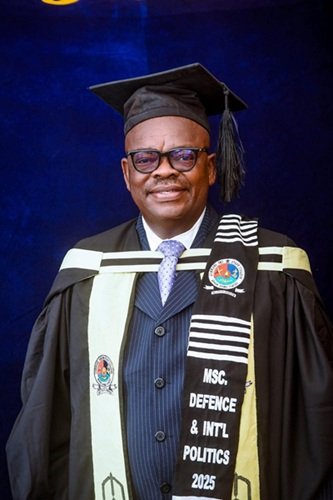
Management and staff of Owass FM have announced the passing of media personality, comedian and politician Seth Kwame Dzokoto following a medical emergency during a live morning show discussion at the station earlier today.
According to the station, Dzokoto was participating in a panel discussion on its morning show “Oman Nkoso” when he suddenly took ill and collapsed.
A statement from the station said its team immediately rushed him to the hospital for medical attention, but he was pronounced dead by the attending medical doctor upon arrival.
“We are deeply saddened by this unfortunate incident, which occurred in the course of our regular programming. Our thoughts and prayers are with his family, loved ones, colleagues, and all those who have been affected by his passing,” the statement said.
Management acknowledged that information about the incident is already circulating in the public domain, but appealed to the public and colleague media houses to respect the privacy of the bereaved family and refrain from circulating unverified information or speculation regarding the circumstances of his death.
Owass FM extended its heartfelt condolences to the family of Seth Kwame Dzokoto.
By Edem Mensah-Tsotorme

The State through the Attorney General (AG) has filed an appeal at the Supreme Court challenging the suspension of the trial in the case of The Republic v Hanan Aludiba and Faiza Seidu.
On Monday, the Court of Appeal suspended the trial in the case. But the prosecution says it has filed an appeal against the suspension order.
According to the update, the law does not allow a criminal trial to be suspended simply because an accused person has complained about some of the charges on the charge sheet, particularly when those complaints were dismissed as meritless.
It argues that if the Court of Appeal’s decision is allowed to stand, no prosecution will ever be possible, since all it would take for a trial to be suspended is an accused person complaining about anything on the charge sheet.
By Edem Mensah-Tsotorme