News
Politicising gender-based violence harmful —Dakoa Newman

- /home/u249204778/domains/spectator.com.gh/public_html/wp-content/plugins/mvp-social-buttons/mvp-social-buttons.php on line 27
https://spectator.com.gh/wp-content/uploads/2025/08/Some-participants-at-the-engagement-session-900x600.jpg&description= Politicising gender-based violence harmful —Dakoa Newman', 'pinterestShare', 'width=750,height=350'); return false;" title="Pin This Post">
- Share
- Tweet /home/u249204778/domains/spectator.com.gh/public_html/wp-content/plugins/mvp-social-buttons/mvp-social-buttons.php on line 72
https://spectator.com.gh/wp-content/uploads/2025/08/Some-participants-at-the-engagement-session-900x600.jpg&description= Politicising gender-based violence harmful —Dakoa Newman', 'pinterestShare', 'width=750,height=350'); return false;" title="Pin This Post">
A Former Minister of Gender, Children and Social Protection, Ms Dakoa Newman, has called for an end to politicising gen der-based violence.
She said it should be “treated as a national emergency.”
According to her, politicising gender-based violence was harmful, as it distracts and deters women from achieving their political dreams.
“Gender-based violence in politics should not be politicised. If we truly want more women to participate, we must address these issues collectively. Some women are tagged with names such as witches, prostitutes just for contesting for elections.”
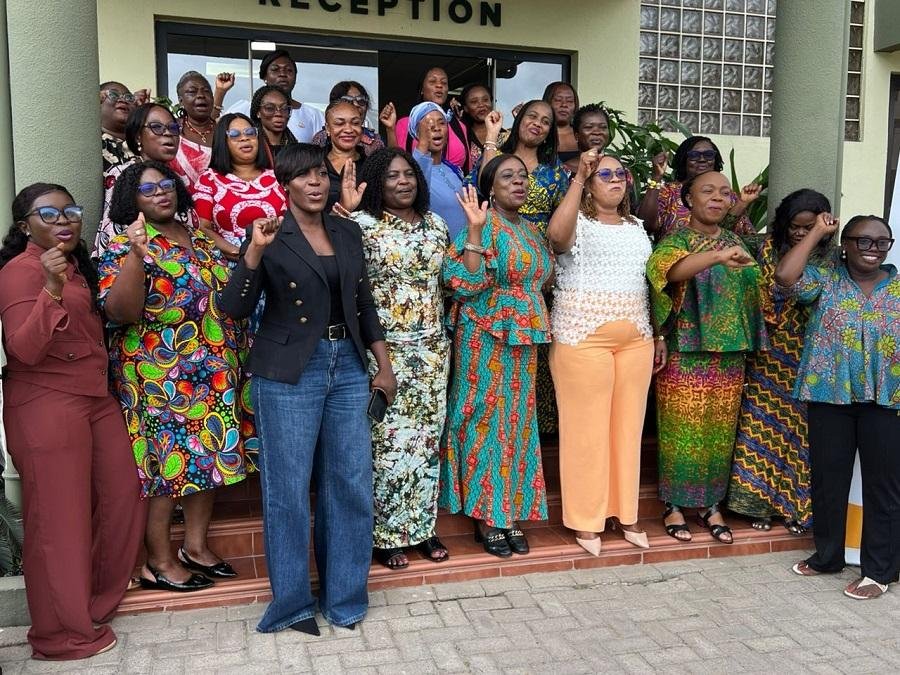
She said this during an engagement with non-elected women parliamentary candidates organised by Abantu for Development.
The session was on the theme “Strengthening Activism for a Gender-Responsive Elections 2024 in Ghana.”
The ex-MP for Okaikwei South stated that “Standing for election requires courage and sacrifice. As women, we often give up time with our families, our children, and our personal lives to pursue leadership. Whether you win or not, that effort must be recognised.”
Ms Newman noted that losing an election, while painful, should not mark the end of a political career. “It can be a stepping stone to new opportunities in governance and party leadership,” she added.
Recalling her own experiences during the 2024 elections, she stressed that political violence discourages many women from entering politics.
On financing, she urged partners and stakeholders to go beyond workshops and invest directly in women aspirants. “Financing is the number one barrier. Without resources, women cannot effectively compete. Organisations must support candidates with funding, research, and constituency-specific tools,” she emphasised.
Dr Mensah-Kutin, Chief Executive Officer (CEO) for Abantu for Development, revealed that 119 women contested in the 2024 parliamentary elections, out of which 78 did not win their seats.
She stressed that their contributions remained important for shaping future advocacy and strengthening women’s representation.
She also noted that although the Affirmative Action Law was passed in 2024, it came too close to the elections to be fully implemented, making platforms such as this engagement critical in pushing for increased participation of women in governance.
She called for full implementation of the Affirmative Action (Gender Equity) Act, 2024 (Act 1121), noting that its 30 per cent quota must be applied strictly across all levels of governance.
The event was supported by the African Women’s Development Fund (AWDF) which seeks to reflect on the experiences of women candidates during the elections.
By Linda Abrefi Wadie





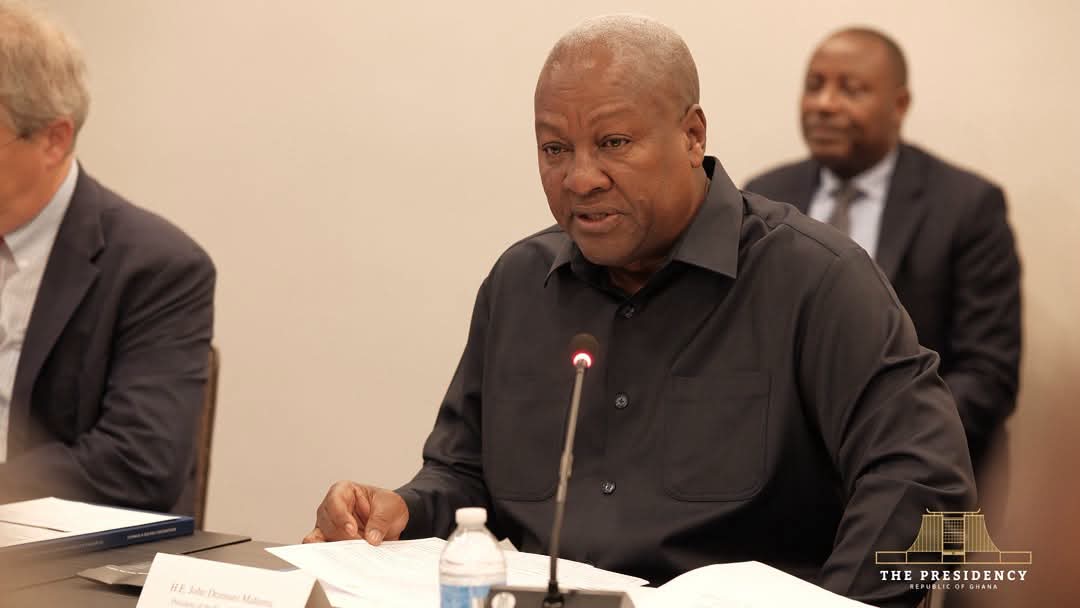
President John Dramani Mahama has called for stronger domestic capacity, effective institutions and sustainable financing as countries in the Global South continue to face growing debt pressures and disruptions in the international development landscape.
Speaking at a Presidential Roundtable organized by the Open Society Foundation in New York on Monday, on the sidelines of the 81st UN General Assembly, President Mahama said the priority for developing nations must be to create jobs, improve public services, build infrastructure and expand opportunities, particularly for young people.
“When I speak about sovereignty in this context, I am speaking about the capacity to act,” President Mahama stated.
He further stressed the need for stronger coordination across government, greater domestic resource mobilisation, sound financial management and institutions capable of delivering measurable results.
“Where an approach proves successful, the next step should be its adoption into public systems, local delivery institutions, and long-term financing models,” he added.
The high-level roundtable brought together presidents and chief executives of major global foundations to discuss sustainable development, financing and strengthening institutions across the Global South.
By Edem Mensah-Tsotorme
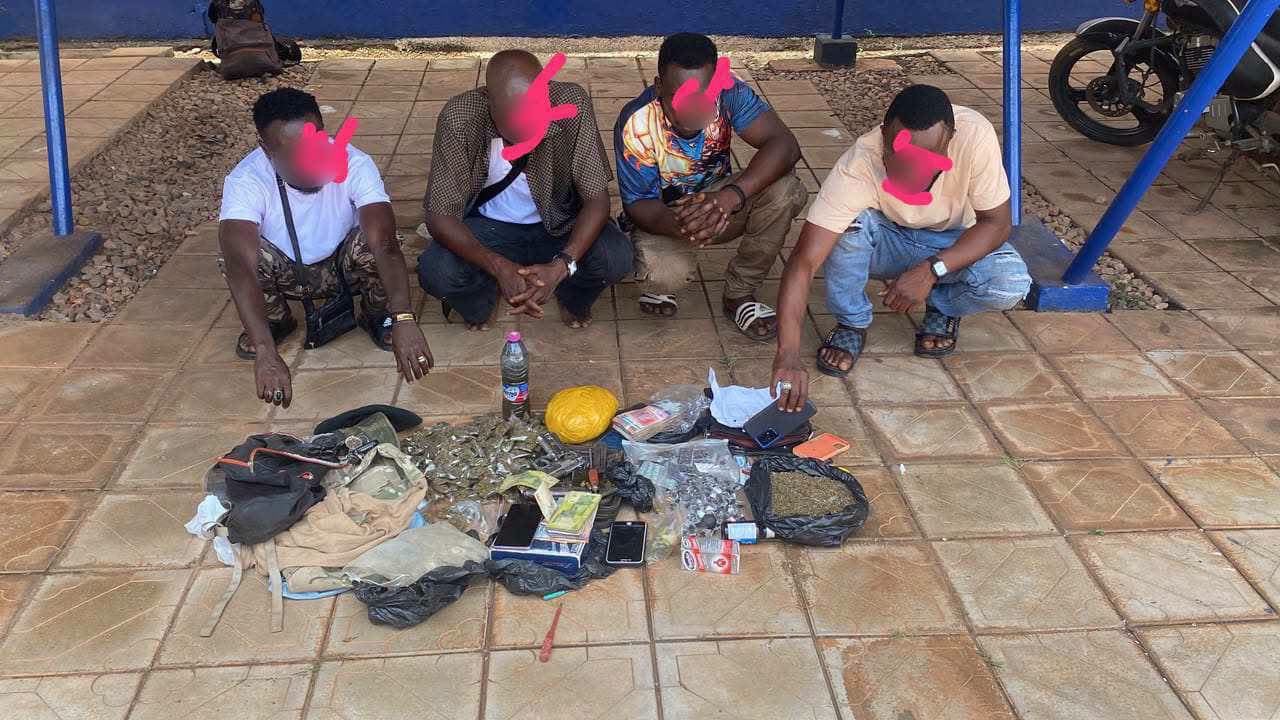
The Northern Regional Police Command has arrested five people during an operation at the Aboabo scraps area in Tamale, where two pistols, ammunition, suspected narcotics and cash were recovered.
The operation was carried out on Monday, September 21, 2026, at about 11:30 a.m. by the Special Operations Team, known as RED MARIA, as part of efforts to clamp down on drug peddling, drug use and other criminal activities in the Tamale Metropolis.
According to the police, the team acted on credible information and proceeded to the Aboabo scraps area, near the forest, where they arrested five suspects.
They were identified as Ibrahim Issahaku, 39; Mohammed John, 28; Mohammed Nawas, 25; Mohammed Osman Awal, 41; and Kwame Boateng, 28.
The police said a search at the residence of Ibrahim Issahaku led to the recovery of two foreign made pistols, two rounds of 9mm ammunition, one parcel of suspected Indian hemp and GH¢1,880 in cash.
The police also found GH¢18,825 concealed inside the motorcycle of Kwame Boateng at the ghetto. The money is suspected to be proceeds from the sale of narcotic drugs.
Other items recovered included 123 wraps of suspected Indian hemp, 12 sachets of 1mg Rohypnol, seven sachets of 250mg Tramadol, 111 wraps of suspected ashes and three motorbikes.
In a statement issued on Tuesday, September 22, 2026, the Northern Regional Police Commander, DCOP Wisdom Lavoe, said the suspects and the exhibits had been handed over to the Regional Drug Law Enforcement Unit for further investigation and the necessary action.
He added that the Regional Command would continue to conduct intelligence led operations to disrupt drug related activities and other criminal activities in the region.
By: Jacob Aggrey

 Entertainment1 week ago
Rhythms On Da Runway returns November 28 with 16th edition themed ‘Unbound’
- News1 week ago
48 Engineer Regiment to be major sub-contractor on Accra-Kumasi Expressway, $2bn ready- Prez Mahama
- Entertainment1 week ago
Ohemaa Mercy’s Tehillah Experience outfit was priestly regalia, not costume – Management clarifies