Editorial
Parliament Passes Landmark Narcotics Bill: Cannabis Cultivation for Industrial Use Now Permissible

- /home/u249204778/domains/spectator.com.gh/public_html/wp-content/plugins/mvp-social-buttons/mvp-social-buttons.php on line 27
https://spectator.com.gh/wp-content/uploads/2023/07/Parliament-house-of-Ghana.jpg&description=Parliament Passes Landmark Narcotics Bill: Cannabis Cultivation for Industrial Use Now Permissible', 'pinterestShare', 'width=750,height=350'); return false;" title="Pin This Post">
- Share
- Tweet /home/u249204778/domains/spectator.com.gh/public_html/wp-content/plugins/mvp-social-buttons/mvp-social-buttons.php on line 72
https://spectator.com.gh/wp-content/uploads/2023/07/Parliament-house-of-Ghana.jpg&description=Parliament Passes Landmark Narcotics Bill: Cannabis Cultivation for Industrial Use Now Permissible', 'pinterestShare', 'width=750,height=350'); return false;" title="Pin This Post">
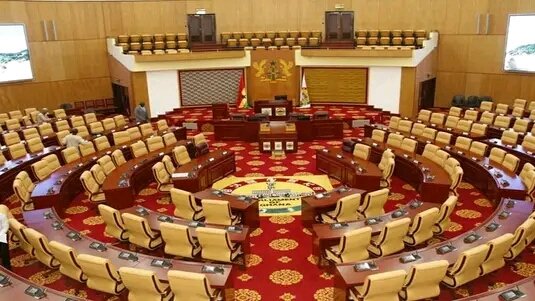
Parliament house of Ghana
Dear Editor,
Parliament has created a history by enacting a ground-breaking drug law that permits the growth and cultivation of cannabis for commercial use. With supporters emphasising the possible economic benefits and opponents raising concerns about potential ramifications, this action represents a fundamental shift in the nation’s approach to drug policy.
An important turning point has been reached in Ghana’s legislative history with the passage of the bill. The new law allows for the supervised production and processing of cannabis for industrial purposes, including uses in agriculture, textiles, and medicine. The bill’s backers contend that it creates employment prospects, opens up new economic options, and has the potential to position Ghana as a regional leader in cannabis-related companies.
Kwame Ampofo, an entrepreneur with a deep interest in the potential of the cannabis market, is one person who vehemently supports the legislation. “This Parliamentary decision is a progressive step towards releasing the economic potential of cannabis,” he emphasised. It would not only bring in money for the nation but also give our young people job chances.
However, there has also been opposition to the bill’s passage from people and groups worried about the possible dangers of cannabis growing. One such opponent is renowned psychiatrist Dr. Abena Appiah, who worries about the possible effects on public health and safety. Dr. Appiah said, “While I understand the economic benefits that this bill’s proponents highlight, we must also consider the potential consequences, especially in terms of increased drug abuse and related mental health issues”, she said.
It is crucial to remember that the legislation that has been enacted places stringent restrictions and control on the production and processing of cannabis. The prohibition of unauthorised possession, sale, or recreational use is a major focus of the law, which also lays a lot of attention on making sure that cannabis cultivation is only done for industrial uses.
With the passage of this legislation, Ghana joins an increasing number of nations that are rethinking their policies toward cannabis. Ghana wants to tap into new revenue streams, strengthen its economy, and generate job opportunities within a legal and regulated framework by embracing the possibilities of industrial cannabis farming.
The measure, according to its supporters, offers a chance for scientific research and advancement into therapeutic cannabis in addition to the commercial advantages. Supporters argue that more research into cannabis’ therapeutic potential could result in improvements in healthcare and treatment choices for a range of illnesses.
Regulatory entities will be essential in ensuring compliance and that cannabis production is done responsibly and in accordance with the established rules as Ghana moves forward with implementing the new legislation.
The adoption of this anti-drug bill demonstrates Ghana’s dedication to investigating alternate strategies and changing views on drug policy. It symbolises a tremendous advancement in the nation’s pursuit of economic development and expansion while also igniting crucial discussions about public health and safety.
The recent passage of the narcotic bill by the Ghanaian Parliament is a watershed moment for the nation. Ghana’s move to legalise cannabis planting and growing for industrial use shows that the country is open to taking advantage of new business prospects. While advocates highlight the potential advantages, issues with public health and safety must also be taken into consideration. To maximise the advantages of this historic legislation as Ghana moves forward, a balance between economic growth and responsible regulation will be essential.
Beatrice Kumah
Ghana Institute of Journalism


Dear Editor,
Before we start blaming the government, the authorities and how bad our roads are, perhaps we should first ask ourselves what role we played in making our roads unsafe.
Road safety is often discussed as though it is solely the responsibility of the government and law enforcement agencies, neglecting our roles we play to make the roads unsafe.
While authorities have an important role to play, the behaviour of individual road users remains equally important.
A driver who speed, overtakes recklessly, uses phone while driving or drives when tired is making a decision that could affect many lives.
A motorcyclist who ignored traffic light and also refuse to wear a helmet, passengers who encourage the driver to speed and the pedestrians who crosses a busy road carelessly can also contribute to danger.
We must therefore develop a strong culture of personal responsibilities on our roads.
Drivers should obey speed limit, avoid distractions and ensure their vehicles are road worthy, passengers should also not encourage reckless driving simply because they want to arrive at their destination quickly whiles pedestrians must also exercise greater caution when crossing roads.
At the same time authorities must continue to improve road infrastructures, enforce traffic regulations consistently and educate the public about responsible road use.
Road safety cannot succeed through enforcement alone; it requires change in attitude. If each road user understand that another person’s life may depend on their decision, our road can become safer.
Let us not wait for another crash before we remember the value of life. Thank you for the space.
From Akwasi Aaron
Accra.
Dear Editor,
I was concerned by a point raised during a radio review about the growing expectation among some parents that once their children attend government schools, particularly under the Free SHS programme, the government must provide virtually everything they need.
This mindset deserves serious public discussion.
The introduction of Free SHS has undoubtedly lifted a significant financial burden from parents. Government is already absorbing substantial costs associated with the education of thousands of Ghanaian children. Students in public second-cycle institutions also benefit from provisions such as tuition support, meals and other essential services.
However, Free SHS should not be interpreted as free parenting. A parent should not expect the government to provide every personal item a child needs simply because the child attends a public school. Items such as mattresses, sponges, toiletries, clothing, chop boxes and other personal necessities should, where possible, remain part of the parent’s responsibility.
The same principle applies at the basic-school level. Government has a responsibility to provide quality education and create an enabling environment for children to learn. Parents, however, have an equally important responsibility to support their children’s education and welfare.
Government cannot and should not replace the family. When parents gradually transfer every responsibility to the state, we risk creating a culture of dependency in which citizens expect government to solve every personal problem. That is neither sustainable nor healthy for our development as a nation.
We must therefore appreciate the support government provides while recognising that education is a shared responsibility. Parents must continue to contribute according to their means, schools must do their part, and government must continue providing the necessary educational infrastructure and support. Rather than asking, “What else will government give us?” parents should also ask, “What can I do to support my child’s education?”
Free education is a public investment, not an invitation for parents to abandon their responsibilities. Ghanaians must therefore change the mentality that government must provide everything. The state can carry a significant portion of the burden, but the family must never surrender its responsibility.
Free SHS should make education more accessible not make parenting optional.
From Desmond Aidoo
Sowutuom