Hot!
Over 95 percent of Savings & Loans, Microfinance customers paid fully – Governor Addison

- /home/u249204778/domains/spectator.com.gh/public_html/wp-content/plugins/mvp-social-buttons/mvp-social-buttons.php on line 27
https://spectator.com.gh/wp-content/uploads/2020/08/ghghghgh.jpeg&description=Over 95 percent of Savings & Loans, Microfinance customers paid fully – Governor Addison', 'pinterestShare', 'width=750,height=350'); return false;" title="Pin This Post">
- Share
- Tweet /home/u249204778/domains/spectator.com.gh/public_html/wp-content/plugins/mvp-social-buttons/mvp-social-buttons.php on line 72
https://spectator.com.gh/wp-content/uploads/2020/08/ghghghgh.jpeg&description=Over 95 percent of Savings & Loans, Microfinance customers paid fully – Governor Addison', 'pinterestShare', 'width=750,height=350'); return false;" title="Pin This Post">
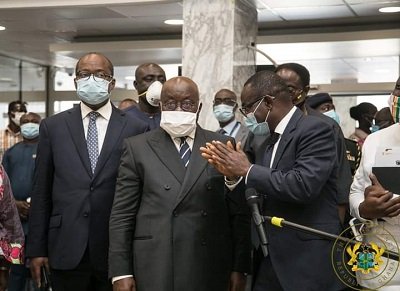
The Governor of the Bank of Ghana (BoG), Dr. Ernest Addison, has stated that all customers of the nine failed banks, and over 95 percent of customers of Specialised Deposit-taking Institutions (SDIs), which were affected by the banking sector clean-up have received their deposits.
According to Dr. Addison, the first phase of the banking sector clean-up involved the revocation of licenses of nine banks, for which all depositors were paid in full.
“The second phase has to do with the SDIs – these are the savings and loans, microfinance institutions and finance houses. In their case, for individual depositors who have been fully paid, the data that we have suggests that more than 95 percent of depositors have been fully paid,” he said.
The Governor continued, “So there are just about five percent depositors who have large amounts, these are the high net worth individuals who were settled with loans which were to be retired over five years. So, we think that most of it has been done.”
Dr. Addison made this known on Tuesday, 25th August 2020, when the President of the Republic, Nana Addo Dankwa Akufo-Addo, visited the BoG to familiarize himself with the operations of the Bank.
Touching on deposits of customers of GN Savings and Loans and First Allied Savings and Loans, the Bank of Ghana Governor noted that, over the last three weeks, all customers have been paid.
“The Government has provided a bond worth GH¢1.7 billion, for which we have monetized GH¢700 million. So, the receiver is also working at clearing the last few customers that are left in that segment. So, I think that we have made a lot of progress, Mr. President, with this depositor issue,” he added.
On helping to ensure the maintenance of a strong banking sector in the country, and to prevent the recurrence of a banking crisis, Governor Addison told President Akufo-Addo that the first step taken has been to pass the new corporate governance directive.
This, he said, had become necessary because, at the heart of the financial sector crises, was a breakdown in corporate governance in the various banks whose licenses were revoked.
“The second one has to do with misreporting of data, because of a lot of falsification of data by the financial institutions to the Central Bank. So we have brought in a new technology which will allow us to get the data directly from sources, so that no human interventions will be in there to distort the data that they send,” the Governor indicated.
The third step, he added, “has to do with the capital verification process, because a lot of the banks reported that they had capital when, in fact, they didn’t have any capital at all.”
He continued, “So we have reviewed the entire capital verification process of the bank, and it’s almost impossible now for us to have a bank that doesn’t have any capital, and yet it’s allowed to operate, and, of course, in addition to that, for all the staff of the banking solution department we have had a lot of training programmes with the IMF and other technical assistance have been provided.”
Dr Addison expressed appreciation of the country’s banking sector to President Akufo-Addo for the role he played in sanitizing the space, which has brought in its wake more confidence in its wake.
“ Your clear leadership and understanding of the role of the financial sector in the government’s transformation agenda, gave the leadership of the Bank the confidence and courage to embark on the comprehensive banking sector reforms over the last three years, which saw an increase in the minimum capital requirements, clean-up of the financial sector by the revocation of licenses of weak and insolvent institutions, and a revamp of the regulatory framework to stabilise and strengthen the sector,” he added.
The clean-up of the sector, he stressed, has resulted in a stable financial sector with fewer banks and Specialised Deposit-Taking Institutions (SDIs) that are well capitalised, liquid, and solvent, and better able to support our nation’s economic growth agenda.
“These efforts helped to earn the Bank international acclaim as the Central Bank of the Year in 2019. By the end of 2019, all the financial sector soundness indicators showed strong improvements as capital adequacy ratio, profitability, and liquidity levels increased significantly while non-performing loans declined,” he added.



The Tema Regional Police Command has arrested a 32-year-old man for allegedly posing as a soldier and extorting money from unsuspecting members of the public at Ashaiman.
The suspect, identified as Bright Atsu Kudiabor, was arrested by the Ashaiman Police on Wednesday, September 16, 2026, at about 7:00 a.m.
According to the Police, he was arrested at an area known as “I Shall Return”, where he was allegedly parading himself as a soldier and demanding money from people.
The Police said Kudiabor, who is an ex-convict, was initially arrested by personnel of the Ghana National Fire Service in Ashaiman with assistance from other members of the public.
A search conducted on him after he was handed over to the Police reportedly led to the recovery of a set of military camouflage uniform.
The suspect is currently in Police custody and assisting with investigations.
The Tema Regional Police Command said he would be processed for court after investigations are completed.
The Police urged the public to remain vigilant and report anyone who falsely presents themselves as a soldier or a member of another security agency to deceive or extort money from the public.
By: Jacob Aggrey
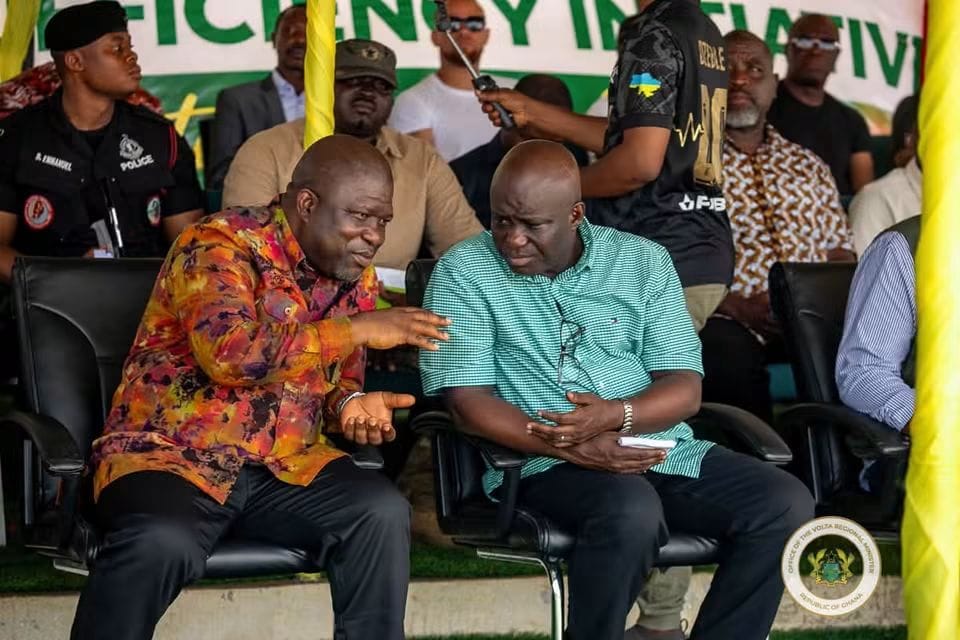
Volta Regional Minister, James Gunu, says the Volta Region holds enormous agricultural potential and efforts must be geared towards connecting farmers to the needed resources to unlock that potential.
He said focus must be on linking farmers to resources, technology, financing and markets to increase production, create jobs and build sustainable livelihoods.
Hon. Gunu made the remarks at the national launch of the Ghana Tomato Self-Sufficiency Initiative (GHATSI) held at Anloga in the Volta Region on Tuesday, September 15.
The initiative, under the theme “Produce at Home. Feed the Nation. Export the Surplus,” seeks to boost local tomato production, processing and marketing while reducing Ghana’s heavy reliance on imported tomatoes.
The launch was attended by the Minister for Food and Agriculture, Eric Opoku, his Deputy, John Setor Dumelo, Feed Ghana Coordinator, Bright Demordzi, Members of Parliament, traditional leaders, MMDCEs, farmers and other stakeholders.
Mr.Gunu expressed appreciation to the Minister for Food and Agriculture for the support announced for the region, including two excavators, 200 cartons of organic fertiliser, and GH¢200,000 for Ms. Kuatudzo Esther Dela, a tomato farmer and processor from Ziope.
He described the initiative as an important step towards making agriculture a stronger driver of food security, job creation and economic growth in the Volta Region.
By Edem Mensah-Tsotorme

 News5 days ago
48 Engineer Regiment to be major sub-contractor on Accra-Kumasi Expressway, $2bn ready- Prez Mahama
- Entertainment1 week ago
Fiifi Coleman Productions adapt ‘I Told You So’ stage play into feature film
- News1 week ago
Ghanaian journalist celebrates Texas town’s ‘Eden of the Far West’ tag after mayor’s nod