News
Omanhene of Nsein rallies chiefs to protest against bad T’di, Agona Nkwanta highway


- /home/u249204778/domains/spectator.com.gh/public_html/wp-content/plugins/mvp-social-buttons/mvp-social-buttons.php on line 27
https://spectator.com.gh/wp-content/uploads/2023/11/IMG-20231030-WA0040.jpg&description=Omanhene of Nsein rallies chiefs to protest against bad T’di, Agona Nkwanta highway', 'pinterestShare', 'width=750,height=350'); return false;" title="Pin This Post">
- Share
- Tweet /home/u249204778/domains/spectator.com.gh/public_html/wp-content/plugins/mvp-social-buttons/mvp-social-buttons.php on line 72
https://spectator.com.gh/wp-content/uploads/2023/11/IMG-20231030-WA0040.jpg&description=Omanhene of Nsein rallies chiefs to protest against bad T’di, Agona Nkwanta highway', 'pinterestShare', 'width=750,height=350'); return false;" title="Pin This Post">
The Omanhene of Nsein Traditional Area, Awulae Agyefi Kwame II, has lamented over the deterioration of the Takoradi-Agona Nkwanta highway and appealed to groups in the Western Region ‘to speak out’ on the matter.
Awulae Kwame raised these concerns when he addressed a news conference on Sunday, at his Onzayeye farms in the Nzema East municipality, on the state of roads infrastructure, cabinet appointments and the performance of the New Patriotic Party (NPP) government in the Western Region.
He said “The Western Region has the minerals, the rubber and even oil and gas. Let’s tell them enough is enough.”
Awulae Kwame expressed worry about the state of the Takoradi- Agona Nkwanta highway and complained how recently, commuters plying that route spent about three days before reaching their destinations, due to the breakdown of two haulage trucks.
Others, he said had to detour through long and bushy routes, exposing themselves to high risks.
The Omanhene recalled that at a Regional House of Chiefs meeting the Western Regional Minister, mentioned that the road would be awarded on contract but wondered if it had not been done.
He proposed that the end-of-year meeting of the House would not be about sittings, but rather a visit to the Regional Minister to ask when the Takoradi-Agona Nkwanta road would be awarded on contract.
“I urge all our chiefs (Amanhene) to also meet; If we don’t rise up, the roads will continue to rot even more than what we see. We’ve slept for long, and we will not sleep again,” said the Omanhene.
Roads, he stated, promoted intra-trade and smooth political and administrative functions of government operations.
Awulae Kwame recalled that historically, Ghana operated with a triangular route beginning from the north through Kumasi, Obuasi, Dunkwa to Takoradi while another runs along the coast to join the Kumasi- Nsawam-Accra route.
On cabinet appointments, the Omanhene argued that the 1992 Constitution guaranteed regional balance but noted that Western Region had no minister on it.
From Clement Adzei Boye, Zaeyeye



Member of Parliament for Gomoa Central, Kwame Asare Obeng, popularly known as A Plus, has detailed the steps he took to alert state institutions about a land dispute he feared could turn violent.
This comes after the recent violence linked to the Gomoa land dispute a few days ago.
Speaking on Joy News on September 3, 2026, in Accra, A Plus rejected suggestions that the government failed to act on his warning, insisting that the Ministry of Interior took the necessary steps after receiving his letter.
According to him, shortly after becoming the Member of Parliament for Gomoa Central, he wrote to the Lands Commission to seek clarity on the boundaries between Gomoa Central and Effutu.
He explained that his decision was aimed at preventing possible confrontations over administrative and traditional boundaries.
The Lands Commission, he noted, later provided him with a comprehensive report outlining the boundaries of the Gomoa and Effutu lands.
A Plus further disclosed that he wrote to the Ministry of Local Government to seek clarification on where the Gomoa Central District begins and ends.
After receiving responses from the two institutions, he wrote to the Ministry of Interior, raising concerns about an area he described as being deep within Gomoa Central but where votes cast during elections were counted as part of another constituency.
He questioned why an area that, according to the reports he received, falls within Gomoa Central was being linked to Effutu for electoral purposes.
The Gomoa Central MP also raised concerns about the location and naming of a police headquarters in the area.
According to him, the Ghana Police Service established a police station in the disputed area and named it the Effutu North District Police Headquarters.
He argued that although the police station was important for maintaining security, its name could create the impression that the disputed land belonged to Effutu.
“The Lands Commission has also given us a report that indicates that this place is not Effutu. So how can you come and put Effutu North Police Station inside Gomoa Central?” he questioned.
A Plus maintained that the police station should be renamed the Gomoa Akronkwanta Police Station to avoid further tension over the dispute.
He stressed that he followed due process by engaging the relevant state institutions and providing them with all the information he had gathered.
According to him, the Ministry of Interior also conducted its own investigations and subsequently wrote to the Ghana Police Service regarding the matter.
The police later invited chiefs connected to the dispute for discussions, he explained, but expressed concern that nearly a year later, there had been no known outcome.
“We have not heard anything,” he stated.
A Plus maintained that the relevant institutions acted after his warning but indicated that the matter remained unresolved following the police engagement with the chiefs.
By: Jacob Aggrey
Over 650 Basic Education Certificate Examination (BECE) graduates in the Suhum Municipality have received support ahead of their transition to Senior High School (SHS).
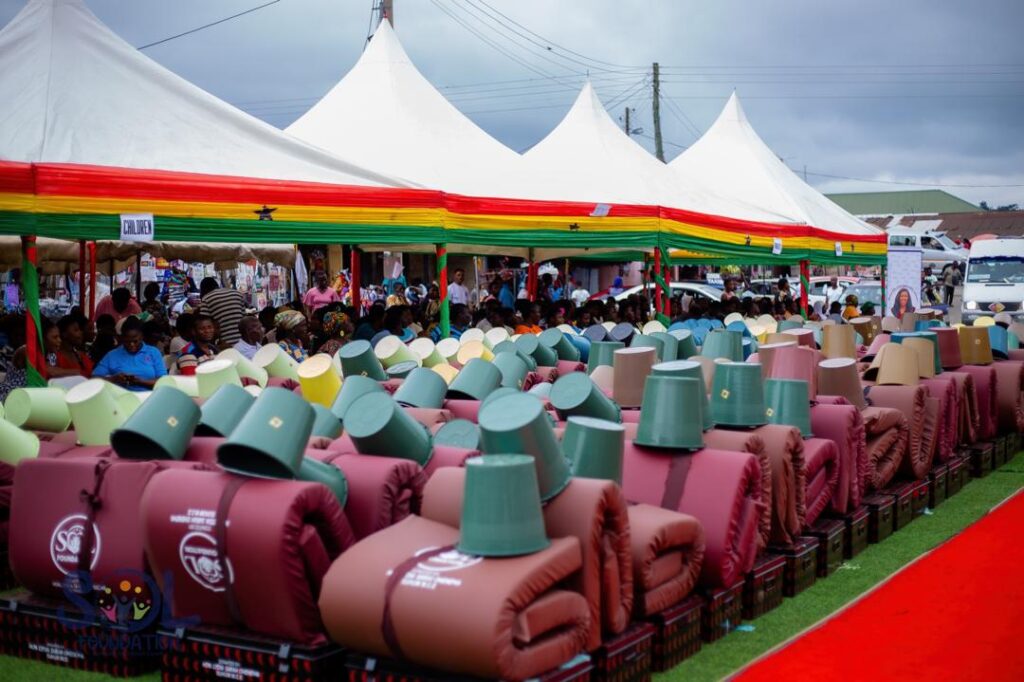
The Municipal Chief Executive (MCE) for Suhum, Lydia Sarah Ohenewaa led the initiative on Friday, September 4, at the Suhum Main Station, where beneficiaries were given trunks, mattresses and buckets to aid their preparation for boarding school.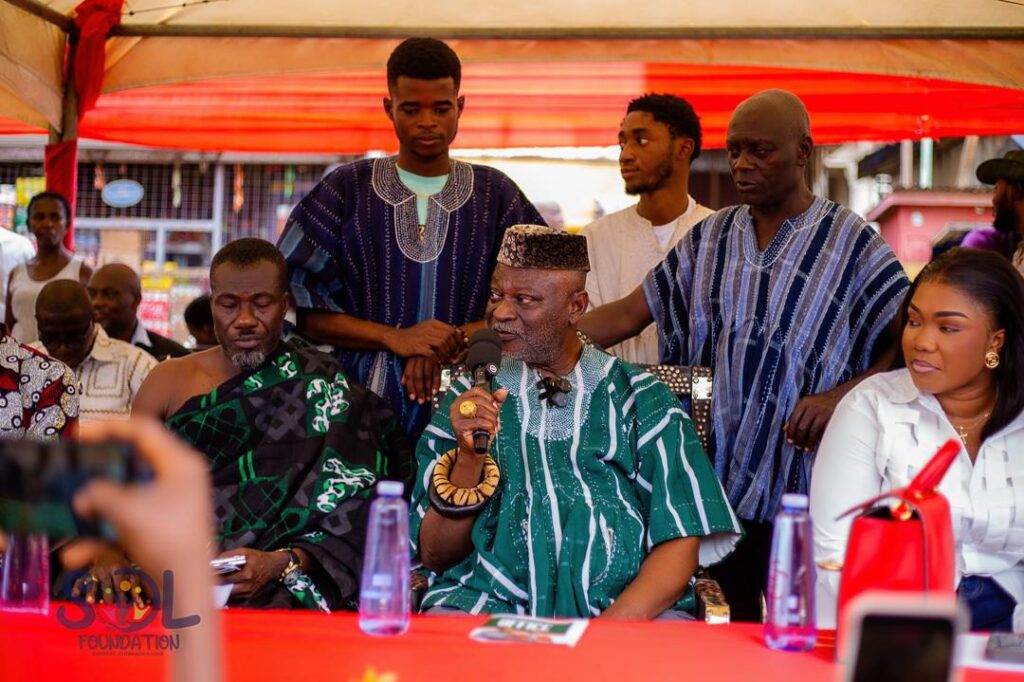
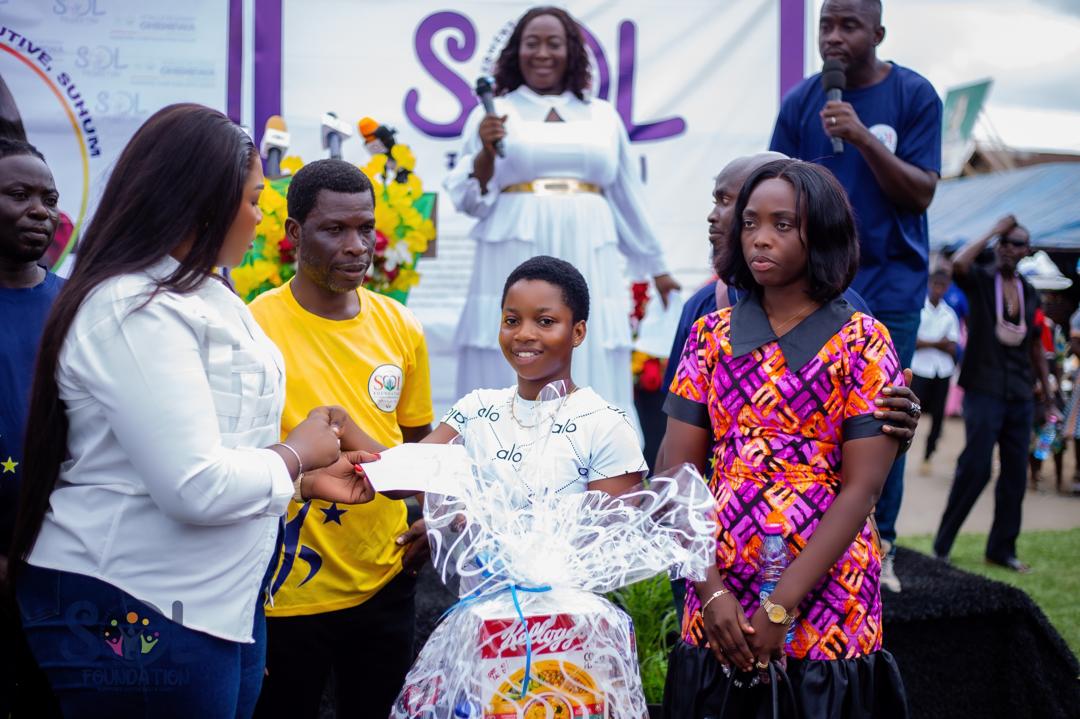
Outstanding BECE candidates were also rewarded with hampers and cash prizes.
Addressing students, parents and community members, the MCE urged the graduates to stay focused on their education and work hard to achieve their goals.
She appealed to individuals, corporate bodies and philanthropic organisations to support students from less privileged backgrounds who face challenges continuing their education.
The intervention was undertaken in partnership with the SOL Foundation, an organization dedicated to supporting vulnerable and less privileged members of society.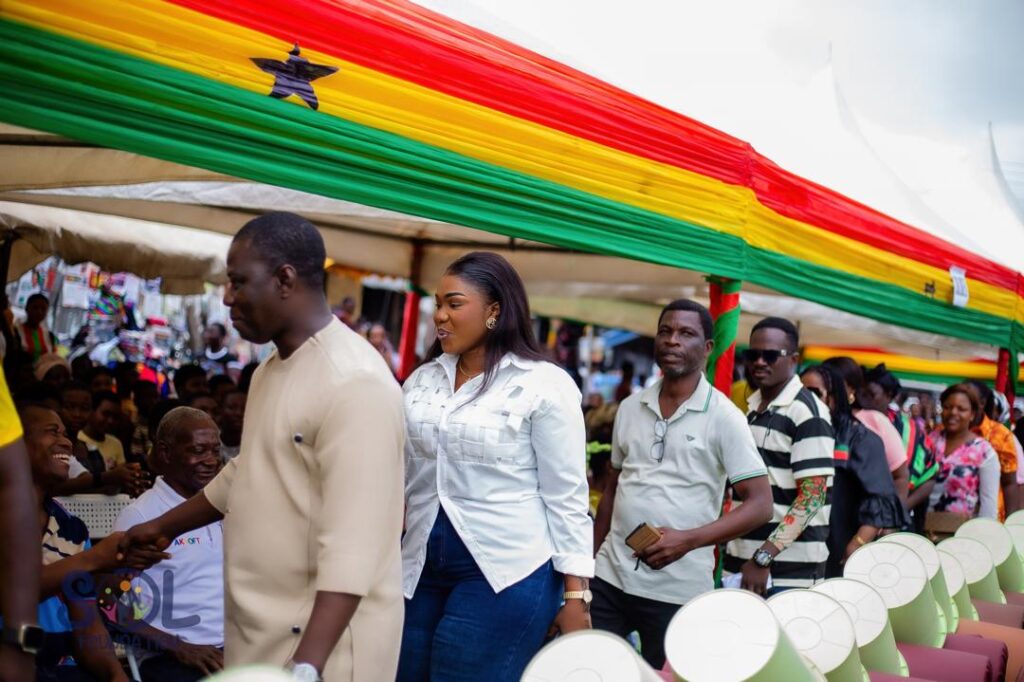
The event brought together students, parents, education stakeholders and community members to celebrate academic excellence and support learners in need.
The gesture is expected to ease the financial burden on parents and motivate the beneficiaries to strive for academic excellence.
The MCE and the SOL Foundation reaffirmed their commitment to initiatives that promote education and support disadvantaged groups.
By Edem Mensah-Tsotorme