Hot!
Of insults, team quality and the Stars


- /home/u249204778/domains/spectator.com.gh/public_html/wp-content/plugins/mvp-social-buttons/mvp-social-buttons.php on line 27
https://spectator.com.gh/wp-content/uploads/2022/01/GHANA-2.jpg&description=Of insults, team quality and the Stars', 'pinterestShare', 'width=750,height=350'); return false;" title="Pin This Post">
- Share
- Tweet /home/u249204778/domains/spectator.com.gh/public_html/wp-content/plugins/mvp-social-buttons/mvp-social-buttons.php on line 72
https://spectator.com.gh/wp-content/uploads/2022/01/GHANA-2.jpg&description=Of insults, team quality and the Stars', 'pinterestShare', 'width=750,height=350'); return false;" title="Pin This Post">
ON Tuesday night, January 18 2022, Ghana’s Black Stars shamefully crumbled 2-3 to minnows Comoros in their final African Cup of Nations (AFCON) Group C game played at the Roumdé Adjia Sports Stadium in Garoua.
The staggering result was enough to bundle the 10-man Stars out of the campaign. Skipper Andre Dede Ayew was given the marching-off orders in the 25th minute when the Stars were already down to an inconceivable fifth minute goal. Comoros doubled their lead after the recess. But the 10-man Ghana team ferociously clawed back to make it 2-2 before conceding a late strike as the players poured forward in search of another goal.
Truth is that our boys were not good enough.
It was Ghana’s darkest moment in the history of AFCON as the hunt for their first Golden Fleece since 1982 continues next year when the continent’s football festival comes around, once again.
Evidently, it was not the first time Ghana had bowed out in round one; but this is the only time the Stars had returned from a Nations Cup tournament without winning a single game.
Ahead of the must-win tie, nonetheless, many Ghanaians took to social media and other media outlets to pour out invectives on the team, the Ayew brothers, the technical handlers and the leadership of the Ghana Football Association (GFA), for superintending over the Stars supposed failure.
At a point, it got so bad that some respected football icons including former GFA boss Lepowura Alhaji MND Jawula had to intervene, appealing to Ghanaians to take the edge off the Black Stars as regards their performance in the tournament – stressing the need to encourage the players at the crucial stage of the competition and “and not to kill their moral.”
“We should open our eyes. Ghanaians should tone down on some of the issues and some of the things that we say that don’t encourage our players because people are sacrificing to play for Ghana.”
Ghana had opened its Group C campaign with a dismal 0-1 loss to Morocco before being held to a disappointing 1-1 draw game by Gabon who struck as late as the 88th minute – after the Stars had taken an 18th-minute lead through an eye-catching Dede Ayew strike. That result put Ghana in a tongue-tied position ahead of the Comoros affair.
For the fans, beating Gabon and Comoros should have been as easy as shooting fish in a barrel. Perhaps, that may not be exactly true as things have changed now and the gap between the so-called minnows and the giants has narrowed appreciably. You may have been aware of what is happening to Algeria in the tournament.
Tipped to defend their title without much sweat, the Algerians were halted in their second group game by a team you would consider as neophytes – Equatorial Guinea. Stunningly, the 29th-FIFA ranked Fennec Foxes slumped 0-1 to the 114th-ranked Equatoguineans, to put them in harm’s way against Cote d’Ivoire.
Of course, nobody is saying the Stars must not be criticised. Far from that! Criticising in order to whip the team into line when they go off-beat is the way to go; but it must be done dutifully and constructively.
But when you get so hot-and-bothered and emotional, and rather decide to extend the attacks on the players to their families; that is most unfortunate and crude. It is the most uncultured way to address an issue – no matter how niggling it is.
Cast your mind back a bit and recall the avalanche of insults that former skipper of the Black Stars, Asamoah Gyan – and the mother (now late) had to be subjected to anytime he had a stumpy performance for Ghana. Is that the way to go? Many have had their hearts in the boots after reading some of the disparaging comments on social media.
Truth, however, is that the Black Stars and Coach Milovan Rajevac hugely let the nation down with the string of lifeless performances in the AFCON. Rajevac, who took Ghana to a memorable quarter final slot at the 2010 FIFA World Cup, has been disastrous in his second stint with delayed substitutions and tactics. Losing to Morocco and ‘little’ Comoros and picking a draw against Gabon, is the worst that can happen to a side that has won the Nations Cup four times – and only in 2010 and 2015 were in the grand finale.
Ahead of the AFCON, the Stars were also crushed 3-0 by Algeria in a friendly.
The only positive bit was when Ghana managed to beat South Africa 1-0 in that controversial tie to qualify for the play-off stage of the Qatar 2022 World Cup.
How do we include injured players like Mubarak Wakaso and Mohammed Kudus into our final squad for the tournament when we had other capable ones elsewhere? This is simply scandalous! Are the players currently in the team the best we could lay hands on?
Well, it is probably time for cool heads now as we navigate the way forward, especially when we have a crucial World Cup play-off ahead of us, in less than two months.
Whatever decision we take today should be able to change things for the better. For now, our football is bleeding and the love for the Stars is increasingly vanishing – if not gone already. It is incumbent on GFA boss Kurt Okraku and his lieutenants to burn the candle at both ends to resurrect the game’s fortunes as quickly as possible.
By John Vigah


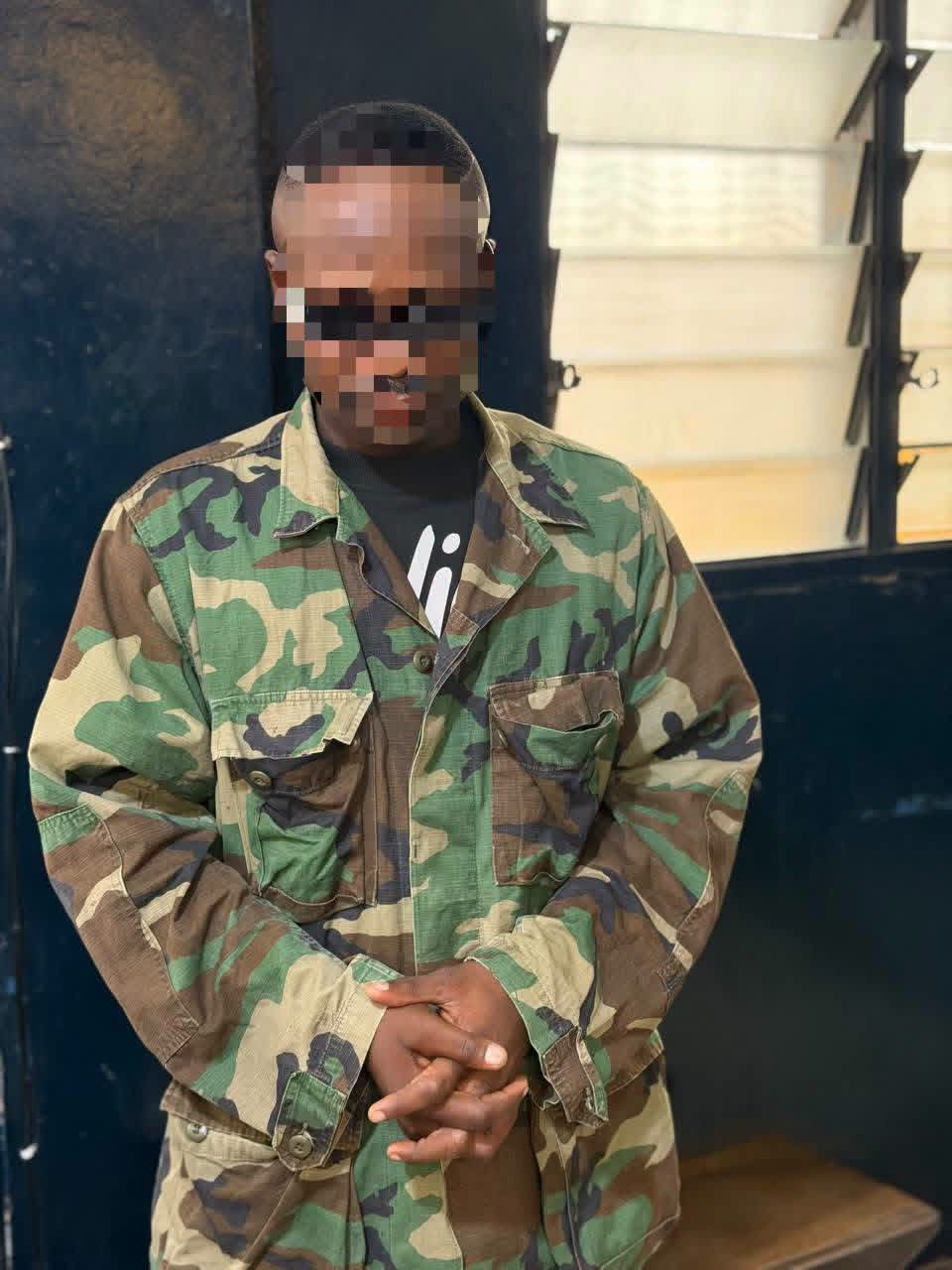
The Tema Regional Police Command has arrested a 32-year-old man for allegedly posing as a soldier and extorting money from unsuspecting members of the public at Ashaiman.
The suspect, identified as Bright Atsu Kudiabor, was arrested by the Ashaiman Police on Wednesday, September 16, 2026, at about 7:00 a.m.
According to the Police, he was arrested at an area known as “I Shall Return”, where he was allegedly parading himself as a soldier and demanding money from people.
The Police said Kudiabor, who is an ex-convict, was initially arrested by personnel of the Ghana National Fire Service in Ashaiman with assistance from other members of the public.
A search conducted on him after he was handed over to the Police reportedly led to the recovery of a set of military camouflage uniform.
The suspect is currently in Police custody and assisting with investigations.
The Tema Regional Police Command said he would be processed for court after investigations are completed.
The Police urged the public to remain vigilant and report anyone who falsely presents themselves as a soldier or a member of another security agency to deceive or extort money from the public.
By: Jacob Aggrey
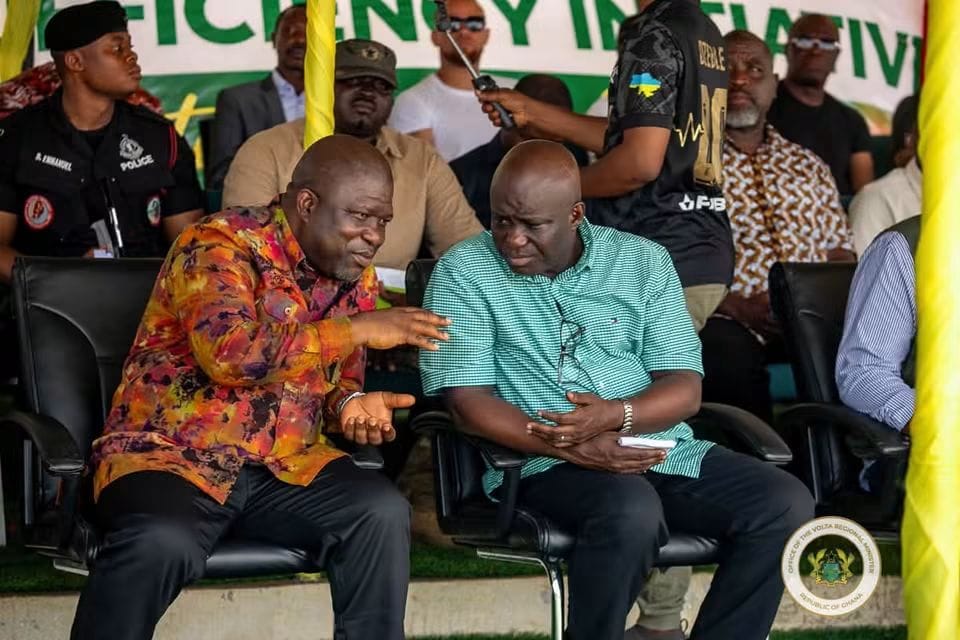
Volta Regional Minister, James Gunu, says the Volta Region holds enormous agricultural potential and efforts must be geared towards connecting farmers to the needed resources to unlock that potential.
He said focus must be on linking farmers to resources, technology, financing and markets to increase production, create jobs and build sustainable livelihoods.
Hon. Gunu made the remarks at the national launch of the Ghana Tomato Self-Sufficiency Initiative (GHATSI) held at Anloga in the Volta Region on Tuesday, September 15.
The initiative, under the theme “Produce at Home. Feed the Nation. Export the Surplus,” seeks to boost local tomato production, processing and marketing while reducing Ghana’s heavy reliance on imported tomatoes.
The launch was attended by the Minister for Food and Agriculture, Eric Opoku, his Deputy, John Setor Dumelo, Feed Ghana Coordinator, Bright Demordzi, Members of Parliament, traditional leaders, MMDCEs, farmers and other stakeholders.
Mr.Gunu expressed appreciation to the Minister for Food and Agriculture for the support announced for the region, including two excavators, 200 cartons of organic fertiliser, and GH¢200,000 for Ms. Kuatudzo Esther Dela, a tomato farmer and processor from Ziope.
He described the initiative as an important step towards making agriculture a stronger driver of food security, job creation and economic growth in the Volta Region.
By Edem Mensah-Tsotorme

 Entertainment1 week ago
Fiifi Coleman Productions adapt ‘I Told You So’ stage play into feature film
- News6 days ago
48 Engineer Regiment to be major sub-contractor on Accra-Kumasi Expressway, $2bn ready- Prez Mahama
- Entertainment5 days ago
Rhythms On Da Runway returns November 28 with 16th edition themed ‘Unbound’