/home/u249204778/domains/spectator.com.gh/public_html/wp-content/themes/zox-news/parts/post-single.php on line 153
">
Warning: Undefined array key 0 in /home/u249204778/domains/spectator.com.gh/public_html/wp-content/themes/zox-news/parts/post-single.php on line 153
Warning: Attempt to read property "cat_name" on null in /home/u249204778/domains/spectator.com.gh/public_html/wp-content/themes/zox-news/parts/post-single.php on line 153
‘Nyansapo festival and competition’ held in New Juaben

- /home/u249204778/domains/spectator.com.gh/public_html/wp-content/plugins/mvp-social-buttons/mvp-social-buttons.php on line 27
https://spectator.com.gh/wp-content/uploads/2024/07/thumbnail.jpg&description=‘Nyansapo festival and competition’ held in New Juaben', 'pinterestShare', 'width=750,height=350'); return false;" title="Pin This Post">
- Share
- Tweet /home/u249204778/domains/spectator.com.gh/public_html/wp-content/plugins/mvp-social-buttons/mvp-social-buttons.php on line 72
https://spectator.com.gh/wp-content/uploads/2024/07/thumbnail.jpg&description=‘Nyansapo festival and competition’ held in New Juaben', 'pinterestShare', 'width=750,height=350'); return false;" title="Pin This Post">
The Ghanaian local language is crucial to enhancing learning and fostering creativity in our younger generation, Mr Alexander Gasu, a Director at the Eastern Regional Coordinating Council has said.
At the celebration of this year’s Nyansapo festival and competition organised by the Centre for National Culture (CNC) in the New Juaben South Municipal Assembly, Mr Gasu highlighted the basic value of the mother tongue in connecting individuals to their heritage and identity.
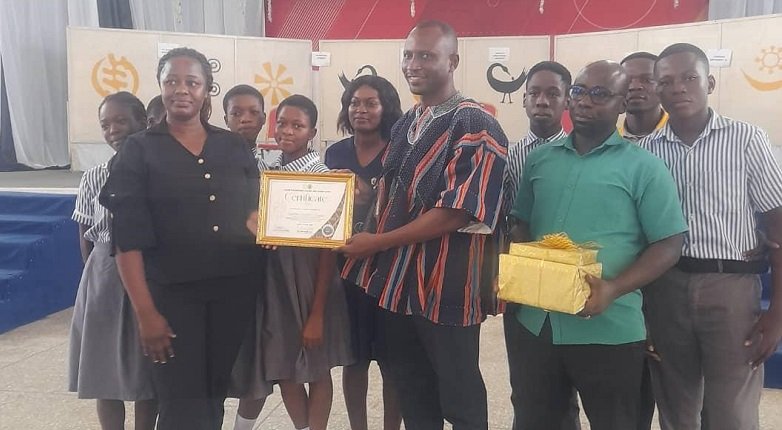
As part of the festival, a competition was held among the pupils to test their knowledge about the country’s local and traditional songs popularly called ‘Adadamu,’ (Proverbs); ‘Kasakua,’ (Names and their meanings): ‘Edin ne Mmrane’ and Abisaa.
Six schools including Freeman Methodist ‘A’, Nana Kwaku Boateng ‘D’, Samplet Educational Academy, Souls Harbour, Brendford Academy, and St Agnes RC Basic School participated in the event.
Brendford Academy emerged first, followed by St Agnes RC Basic School, second and Nana Kwaku Boateng ‘D’ placing third position.
Mr Gasu added “every artistic creation and form of creativity stem from our language. Our mother tongue connects us to ourselves on a deeper level. Even when we travel abroad, speaking our language with fellow countrymen enables emotional connection and reinforces our cultural identity. It fosters community development.”
In his welcome address, Ernest Dwomoh, an administrator underscored the festival’s purpose as one celebrated annually to teach young ones the local language, proverbs, and the meaning of names.
He said it was part of the initiatives by the Cultural Centre to protect and promote the country’s culture, and the need to raise awareness and educate people about it to enable them understand and preserve it for future generations.
Emmanuel Eddison, the New Juaben South Municipal Cultural Coordinator of the Ghana Education Service, expressed gratitude to the organisers of the festival and hoped that it would help pupils and future generations to appreciate the country’s heritage.
From Ama Tekyiwaa Ampadu Agyeman, Koforidua

Warning: Undefined array key 0 in /home/u249204778/domains/spectator.com.gh/public_html/wp-content/themes/zox-news/parts/post-single.php on line 493
Warning: Attempt to read property "cat_ID" on null in /home/u249204778/domains/spectator.com.gh/public_html/wp-content/themes/zox-news/parts/post-single.php on line 493

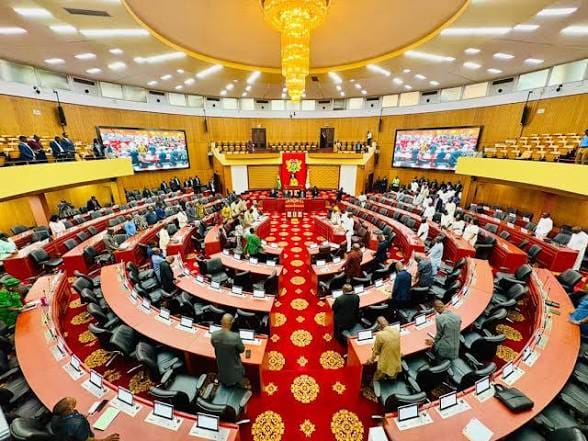
Parliament has clarified public commentary on social media regarding a notice on its notice board that read “No Vacancy for National Service Personnel 2026/2027. Kindly go for reposting.”
In a statement, signed by the Director of Media Relations, David Sebastian Damoah, Parliament said the notice has been misconstrued and was not a policy statement, a freeze on national service placements, or a change in its support for the National Service Scheme.
According to Parliament, the notice was a routine administrative message to prospective personnel who reported to the House, informing them that it has received more personnel than it can accommodate for the 2026/2027 service year and that they should seek reposting to other institutions.
It said it remains committed to the National Service Scheme and values the contribution of service personnel to its work, and regrets any confusion or inconvenience the wording may have caused.
By Edem Mensah-Tsotorme
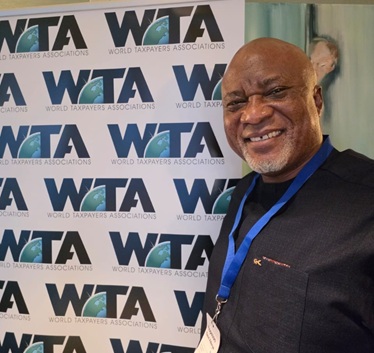
Ghanaian public advocate Hopeson Yaovi Adorye has been elected to the Board of Directors of the World Taxpayers Association (WTA).
The election took place on Sunday, October 5, 2026, during the Association’s conference in Kraków, Poland.
His election marks a significant addition to his international leadership portfolio and provides a platform for Ghanaian and African perspectives to contribute to global discussions on taxpayer rights, responsible taxation, transparency and prudent management of public resources.
Reacting to his election, Mr. Adorye expressed appreciation to the leadership and members of the WTA for the confidence reposed in him.
“I am deeply honoured by this confidence and conscious of the responsibility that comes with it. Taxpayers are at the heart of every economy, and they deserve fairness, transparency, accountability and value for the taxes they pay. I look forward to working with colleagues from across the world to strengthen the voice of taxpayers and promote responsible fiscal governance,” he said.
According to him, taxation should not be viewed solely as a mechanism for raising government revenue, but also as an important component of the social contract between citizens and the state.
Mr. Adorye said governments have a responsibility to ensure taxes are collected fairly and public resources are utilised efficiently to deliver quality infrastructure, healthcare, education, security and other essential services.
His election also creates an opportunity to bring African experiences into international conversations on taxation and public expenditure.
Mr. Adorye, who is Executive Director of Taxpayers League Ghana, has previously served as Global Board Chairman of the International Youth Network for UN Security Council Resolution 2250, an NGO associated with the United Nations Economic and Social Council (ECOSOC).
He is expected to use his new role to champion fiscal accountability, taxpayer education, good governance and stronger citizen participation in public financial management.