Sports
Numekevor’s dismissal …more questions than answers


- /home/u249204778/domains/spectator.com.gh/public_html/wp-content/plugins/mvp-social-buttons/mvp-social-buttons.php on line 27
https://spectator.com.gh/wp-content/uploads/2024/09/Dodzie-Numekevor-720x600.jpg&description=Numekevor’s dismissal …more questions than answers', 'pinterestShare', 'width=750,height=350'); return false;" title="Pin This Post">
- Share
- Tweet /home/u249204778/domains/spectator.com.gh/public_html/wp-content/plugins/mvp-social-buttons/mvp-social-buttons.php on line 72
https://spectator.com.gh/wp-content/uploads/2024/09/Dodzie-Numekevor-720x600.jpg&description=Numekevor’s dismissal …more questions than answers', 'pinterestShare', 'width=750,height=350'); return false;" title="Pin This Post">
Dodzie Numekevor
Sacking a person for obvious non-performance is an action that can be applauded by majority of people, maybe except members of the victim’s immediate family, dependents, beneficiaries and other close allies.
If it is obvious that the person is non-performing, why keep him/her there?
An example is when every opposition party in this country called for the immediate sack of then Finance Minister, Mr Ken Ofori Atta. So intense was this call that every negative thing was associated to him. Ghanaians were made to believe that his dismissal will return the country to the right path.
Government was lambasted on a daily basis until he was removed from office. But if one should ask what has changed, those that clamoured for his removal would not tell you much; his removal has come as some relief for them.
It however, becomes a bitter pill to swallow when circumstances around the sack is unclear like the case of the new Director General of the National Sports Authority (NSA), Dr Dodzie Numekevor, whose dismissal on Tuesday came with more questions than answers.
His termination letter from the Office of the President left the sports publics confused because it was silent on reasons for the decision.
Well, in cases when reasons for dismissals are obvious, letters terminating such appointments often assign those reasons as personal.
However, that scheme also leaves doors and windows open for all manner of beliefs or assertions for such an action.
Within a period when the state of football infrastructure in Ghana has dominated the media space following comments by visiting coaches that played in Ghana recently, plus anger by CAF President, Patrice Motsepe, over the absence of at least one football facility to host international football, alluding the decision to the above mentioned problems, becomes an easy thing.
It can be right or otherwise.
Having occupied this office for just six months but becomes a sacrificial lamb for some years of decay supervised by his predecessors is just unfortunate for Dr Numekevor.
Even if he was expected to fix the major infrastructural challenges facing Ghana, he could not have done that within the stipulated time he had.
He inherited Accra, Cape Coast, Tamale and to some extent the Kumasi facility which were in terrible shapes and could do nothing much about them without funding.
It presupposes that the reasons for his sack may be more than Ghana not having one good facility to host a CAF Category 3 matches under his tenure.
Views like his supervision of the hiring of the Baba Yara Stadium – then the only ground with a CAF approval to host matches – for 10 days or so for a church programme have also been expressed and believed to be one of the reasons for his dismissal.
If it was so, then it was a grievous fault and grievously did Numekevor answered it, as captured in Mark Antony’s speech in the book Julius Caesar.
Sadly, Numekevor has suffered this fate for the inefficiencies of his predecessors who stayed in office for longer periods but did nothing worthy of note to avoid the problem we face as a nation.
And as a country, this should be the time to make a policy about the direction to go regarding playing surfaces which always become topical issues when the Black Stars are assembled and pushed back after that assignment.
By Andrew Nortey





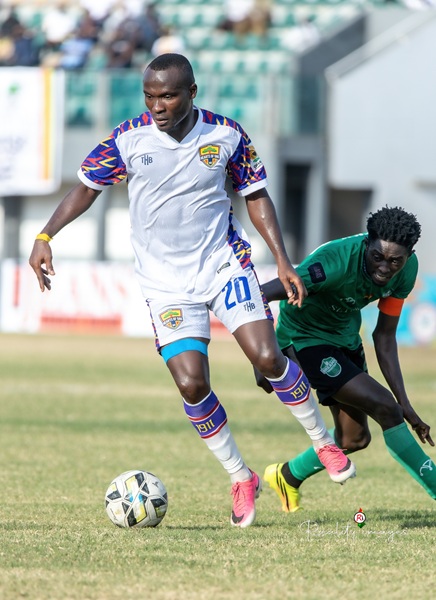
IN modern football, the final whistle doesn’t signal the end of the show; it signals the intermission.
The Top five European Leagues (Premier League, La Liga, Bundesliga, Serie A, and Ligue 1) have mastered a brutal truth of the digital age: you don’t just sell the match; you sell the marathon.
By weaponising transfer window tension, season reviews, and microscopic highlight reels, they’ve turned 90 minutes of sport into a 24/7/365 content vortex.
Meanwhile, back home, the Ghana Premier League (GPL) is haemorrhaging relevance not because the talent isn’t there but because the storytelling is dead.
The Football Association’s apathy is only rivalled by its hypocrisy.
The European Blueprint: Selling the ‘Appetite’
Why do fans tune into a random mid-table La Liga clash on a Friday night? Because they’ve been primed. Across the summer, broadcasters and clubs drip-feed ‘transfer sagas’ like high-stakes soap operas.
Will the star leave? Who is the mystery medical? This tension creates a parasocial investment that transcends the pitch.
Paired with this are season-review documentaries and hyper-curated game highlights tailored for TikTok, Instagram, and YouTube. These aren’t just goal clips; they are tactical breakdowns, sideline theatrics, and VAR controversies packaged into digestible and emotional bites.
This strategy has inflated broadcasting rights to astronomical sums (the Premier League’s recent domestic deal hit £6.7 billion).
They know that if you feed the audience year-round, they will binge-watch when it matters.
The GPL Vacuum: No Sponsor, No Story
Now, overlay this blueprint onto the Ghana Premier League. It is a stark, barren contrast.
The league is poorly run, lacking a headline sponsor to give it financial muscle or marketing prestige. Without that corporate backing, the media machine grinds to a halt.
The transfer market, which should be the peak of offseason intrigue, is a ghost town. We hear about signings, but the transfer fee is universally undisclosed.” We only get the contract length.
This kills the narrative. In Europe, a €100 million move generates weeks of debate; in Ghana, a move generates a one-line social media post, devoid of gravity. Fans cannot gauge ambition, nor can they measure a club’s financial muscle.
Most damningly, there are no reviews from the broadcasting rights holders. No glossy season-compilation DVDs. No weekly magazine shows dissecting past campaigns to build hype for the next.
The Broadcasting Right Holders (BRHs) treat the GPL as an obligation to air live, not as an IP to monetize through content. The league goes dormant the moment the trophy is lifted.
And the FA? They seem unconcerned. There is no strategic blue • A scene from the Ghana Premier League print to pump these ‘stuffs’ into the digital ecosystem. They treat the league’s media output like an afterthought, ignoring that a lack of online noise equals a lack of bums on seats.
The Black Stars Paradox: The Hypocrisy of Production
Here is the crushing irony that exposes the FA’s priorities. When the Black Stars assemble for a World Cup qualifier or an AFCON match, the narrative flips overnight.
Suddenly, the budget for proper camera operators and videographers appears from thin air. We get cinematic drone shots, multi-angle slow-motion replays, tunnel cams, and emotional post-match interviews.
Every moment, every tackle, every save, every passionate fan in the stands is captured in vivid, broadcast-ready quality. The national team gets the full ‘European treatment.’
This reveals a devastating double standard. The FA treats the Black Stars as the sole marketable asset, forgetting that the GPL is the engine room that produces these stars.
By diverting all production value to the national team while starving the domestic league of visual prestige, they are cannibalizing their own foundation.
The Verdict
You cannot build a football culture on national team fixtures alone.
Europe thrives because they understand that content is the currency of fandom.
Until the Ghana FA secures a headline sponsor, enforces transparent transfer disclosures (to fuel debate), and mandates that broadcasting partners produce engaging season reviews and highlight packages, the GPL will remain a hidden gem rather than a sparkling crown.
The players are there. The passion is there. But if the FA continues to save its best camera angles for the Black Stars while leaving the Premier League in the dark, they aren’t just failing the clubs; they are starving the very appetite they desperately need to feed
By Leslie Agyemang
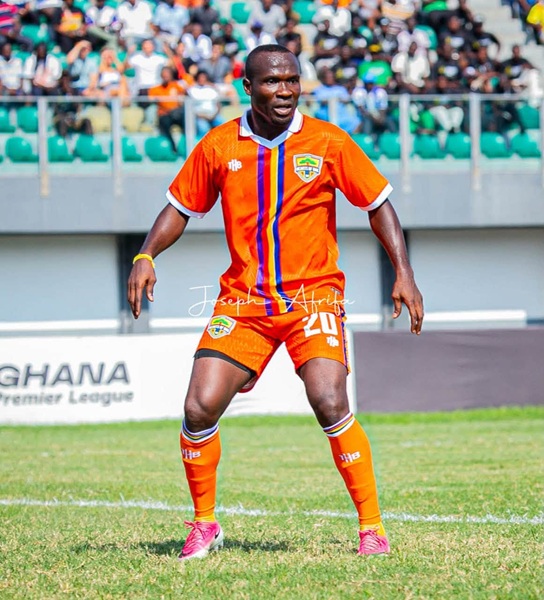
Accra Hearts of Oak and Dreams FC will headline Matchday 5 of the Ghana Premier League when the two sides meet at the University of Ghana Sports Stadium tomorrow, with both clubs seeking a result that could shape their early season campaign.
The encounter comes at a crucial moment for the two sides with the Phobians looking to recover from their first defeat of the campaign and Dreams still searching for their first victory after four matches.
The Rainbow lads started the season strongly but were beaten 1-0 by Karela United last weekend, while Dreams suffered a slim 1-0 defeat to Bechem United.
Hearts had earlier recorded impressive victories over Berekum Chelsea and Bibiani Gold Stars before drawing goalless with Bechem United, leaving the club with seven points from their opening four matches.
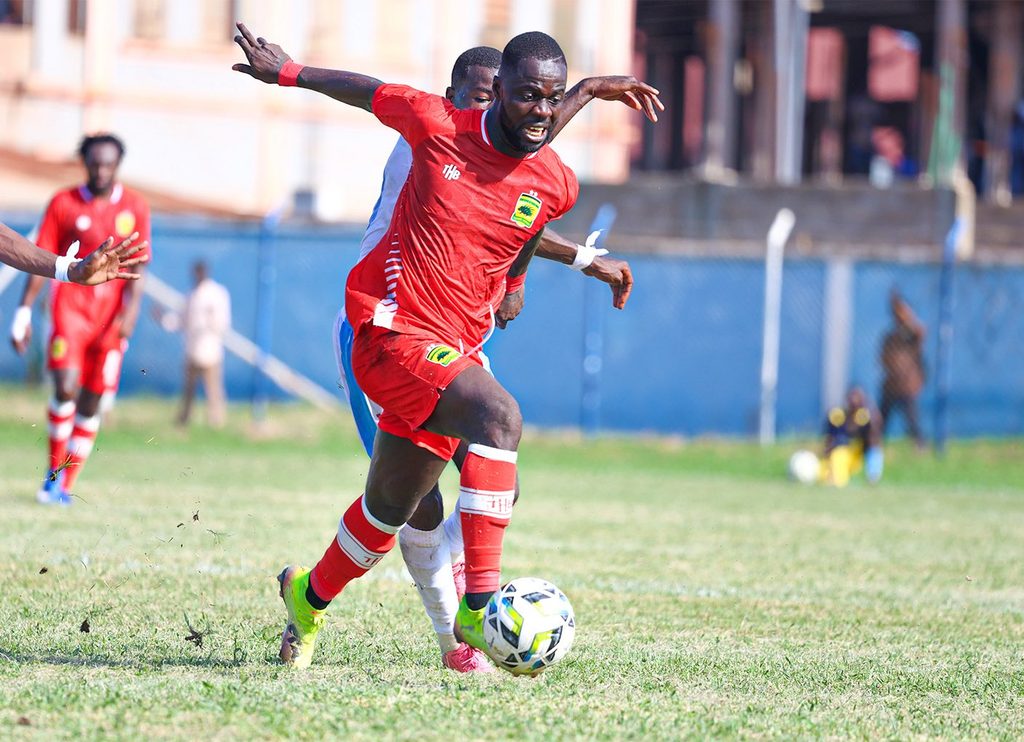
Their defeat at Karela United, however, means they will be under pressure to quickly return to winning ways against a Dreams side determined to make home advantage count.
Dreams, meanwhile, have endured a difficult beginning to the campaign and will see tomorrow’s fixture as an opportunity to change their fortunes.
The ‘Still Believe’ side have collected points from only their opening draws and are yet to register a victory, making the meeting with one of the country’s traditional giants an important test of their character.
Elsewhere, Vision FC will welcome Bibiani Gold Stars to the Nii Adjei Kraku II Sports Complex today, with both teams looking to strengthen their positions.
Vision have shown encouraging form in the early stages, while Gold Stars will be seeking a response after suffering a 2-0 home defeat to newcomers Port City FC.
At the Debibi Presby Park, newly promoted Debibi United will face defending champions Medeama SC tomorrow.
Medeama finally opened their account with a convincing 4-1 victory over Basake Holy Stars and will be hoping that the result marks the beginning of a stronger title defence.
Port City FC will continue their impressive debut campaign when they host Bechem United at the Daasebere Boamah Darko II Park.
Basake Holy Stars will attempt to recover from their heavy defeat to Medeama when they host Berekum Chelsea at the Ampain AAK II Sports Arena.
Aduana FC will welcome Swedru All Blacks to the Nana Agyemang Badu I Park after producing one of the weekend’s most notable results last Sunday.
At the Kpando Stadium, Heart of Lions will host FC AshantiGold ’04 in another meeting between sides coming off victories.
FC Samartex 1996 will meanwhile welcome Young Apostles FC to the Nsenkyire Sports Arena, with the home side seeking to maintain their unbeaten start to the campaign.
By Enoch Ntiamoah Siaw
SKIP THE QUEUE, TAP THE NEWS
You can now read the Ghanaian Times and The Spectator newspapers from the comfort of your device via TimesNewsPlus.
Join our WhatsApp Channel: https://whatsapp.com/channel/0029VbBElzjInlqHhl1aTU27