Hot!
NPP’s arrogant display of vote-buying, bad strategy backfired in Assin North – Prof. Gyampo


- /home/u249204778/domains/spectator.com.gh/public_html/wp-content/plugins/mvp-social-buttons/mvp-social-buttons.php on line 27
https://spectator.com.gh/wp-content/uploads/2023/06/f3f320f2-f0dc-43a4-be48-f1fd2a2e4edd.jpeg&description=NPP’s arrogant display of vote-buying, bad strategy backfired in Assin North – Prof. Gyampo', 'pinterestShare', 'width=750,height=350'); return false;" title="Pin This Post">
- Share
- Tweet /home/u249204778/domains/spectator.com.gh/public_html/wp-content/plugins/mvp-social-buttons/mvp-social-buttons.php on line 72
https://spectator.com.gh/wp-content/uploads/2023/06/f3f320f2-f0dc-43a4-be48-f1fd2a2e4edd.jpeg&description=NPP’s arrogant display of vote-buying, bad strategy backfired in Assin North – Prof. Gyampo', 'pinterestShare', 'width=750,height=350'); return false;" title="Pin This Post">
A political science lecturer at the University of Ghana says the discerning nature of the electorates in Assin North came to play at the just-ended by-election.
Prof Ransford Gyampo noted that the ruling New Patriotic Party (NPP) seemed to have underestimated the voters’ capacity to interpret hidden meanings and intentions behind some strategies implemented.
Prof Gyampo further elaborated that the residents comprehended the motives behind the sudden surge in developmental projects and the attempts at vote buying.
As a result, the lecturer believes they chose to “teach them [NPP] a lesson” by voting for the opposition National Democratic Congress (NDC) candidate, James Gyakye Quayson.
“The arrogant display of vote-buying; hurriedly going to construct roads, hurriedly going to commission new projects and then when you are quizzed, what you are told is that these were the projects that were already implemented and so it was already a programme that we were doing…” played a role in the decisions made by the residents.
Speaking on Joy FM’s Super Morning Show, the Professor said considering the fact that the Assin North electorates saw what ensued in Kumawu, using the same strategy was “quite insulting to the intelligence of the people of Ghana and it’s about time they change that strategy.”
“Because we know anytime there’s going to be a by-election, shoddy roads will be constructed and the moment by-elections are over, the project will be discontinued. When you go at them then they tell you that it was on our radar. We’re going to construct it anyway, it was not because of the by-election,” he said on Thursday, June 29.
“We are not daft people. The people of Assin North, too, are not dumb. They are able to read in between the lines. So if you’re a politician and you keep on resorting to this particular stomach direction, vote-buying attitude that you cannot think to vary your strategy in the light of the fact that people are now rational, then you yourself, you are more dumb than the people you are thinking are dumb”.
This was not the only reason he believed the NDC won the election. Another factor, the political scientist says, is the ongoing legal battle against James Gyakye Quayson.
On the night before the election, President Akufo-Addo, in a last-minute attempt to ramp up support for the NPP candidate, told the residents that they risk having a Member of Parliament embroiled in legal tussles by voting for Mr Gyakye Quayson.
Prof Gyampo says this was a mistake on the president’s part as far as election strategy is concerned as he rather courted more sympathy for the NDC.
“He [Akufo-Addo] made him popular, and then given what was happening to him or what is still happening to him and the fact that you have had a whole sitting President going to make a prejudicial comment that the man is already on his way to prison forgetting that Kwame Nkrumah won an election when he was already in incarceration. And I was surprised that the President didn’t know apart from the fact that the comments were too prejudicial, he didn’t know that that comment could also elicit more sympathy for the man.”
Background
James Gyakye Quayson of the National Democratic Congress (NDC) will be making a return to Parliament after his constituents kept faith with him and helped him win the keenly contested Assin North constituency by-election on Tuesday.
Officials of the Electoral Commission declared Quayson the victor, raising his hand to signal the status as NDC officials broke into their ‘Revo, Revo, has come to stay’ chorus.
Mr Quayson, ejected from Parliament last month following a Supreme Court decision to annul the 2020 constituency election, won the closely contested by-election with 17,245 votes representing 57.56% of valid votes.
His main rival, Charles Opoku of the New Patriotic Party polled 12,630 or 42.15% of valid votes to place second, while the Liberal Party of Ghana’s Bernice Enam Sefanu polled only 87 votes or 0.29%.
With a turnout of 74.23%, officials of the Electoral Commission (EC), in interviews shortly ahead of the declaration of results, indicated that the turnout was very high.
Credit:Myjoyonline.com



The Tema Regional Police Command has arrested a 32-year-old man for allegedly posing as a soldier and extorting money from unsuspecting members of the public at Ashaiman.
The suspect, identified as Bright Atsu Kudiabor, was arrested by the Ashaiman Police on Wednesday, September 16, 2026, at about 7:00 a.m.
According to the Police, he was arrested at an area known as “I Shall Return”, where he was allegedly parading himself as a soldier and demanding money from people.
The Police said Kudiabor, who is an ex-convict, was initially arrested by personnel of the Ghana National Fire Service in Ashaiman with assistance from other members of the public.
A search conducted on him after he was handed over to the Police reportedly led to the recovery of a set of military camouflage uniform.
The suspect is currently in Police custody and assisting with investigations.
The Tema Regional Police Command said he would be processed for court after investigations are completed.
The Police urged the public to remain vigilant and report anyone who falsely presents themselves as a soldier or a member of another security agency to deceive or extort money from the public.
By: Jacob Aggrey
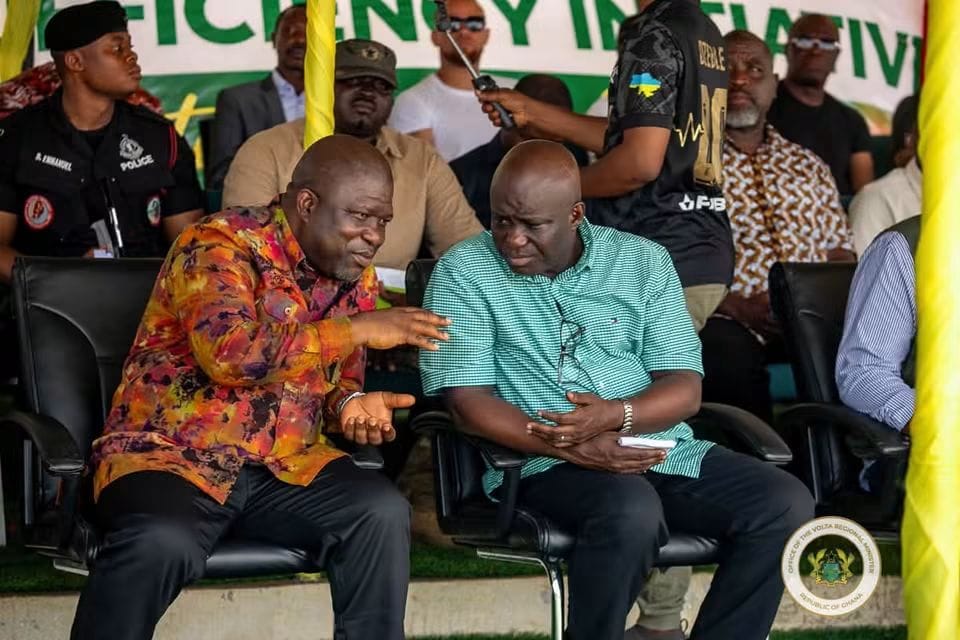
Volta Regional Minister, James Gunu, says the Volta Region holds enormous agricultural potential and efforts must be geared towards connecting farmers to the needed resources to unlock that potential.
He said focus must be on linking farmers to resources, technology, financing and markets to increase production, create jobs and build sustainable livelihoods.
Hon. Gunu made the remarks at the national launch of the Ghana Tomato Self-Sufficiency Initiative (GHATSI) held at Anloga in the Volta Region on Tuesday, September 15.
The initiative, under the theme “Produce at Home. Feed the Nation. Export the Surplus,” seeks to boost local tomato production, processing and marketing while reducing Ghana’s heavy reliance on imported tomatoes.
The launch was attended by the Minister for Food and Agriculture, Eric Opoku, his Deputy, John Setor Dumelo, Feed Ghana Coordinator, Bright Demordzi, Members of Parliament, traditional leaders, MMDCEs, farmers and other stakeholders.
Mr.Gunu expressed appreciation to the Minister for Food and Agriculture for the support announced for the region, including two excavators, 200 cartons of organic fertiliser, and GH¢200,000 for Ms. Kuatudzo Esther Dela, a tomato farmer and processor from Ziope.
He described the initiative as an important step towards making agriculture a stronger driver of food security, job creation and economic growth in the Volta Region.
By Edem Mensah-Tsotorme

 Entertainment1 week ago
Rhythms On Da Runway returns November 28 with 16th edition themed ‘Unbound’
- Entertainment1 week ago
Ohemaa Mercy’s Tehillah Experience outfit was priestly regalia, not costume – Management clarifies
 News1 week ago
Janet Asana Nabla criticises Mahama over China curriculum controversy involving Haruna Iddrisu