News
North Korea threatens reprisals as South tries to uphold peace

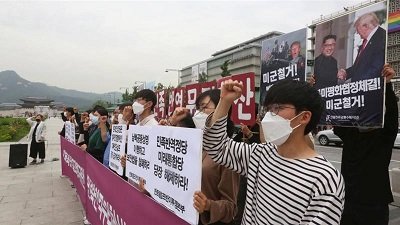
The sister of North Korea’s leader has warned of retaliatory measures against South Korea that could involve the military, in the latest escalation of tensions over North Korean defectors who have been sending back propaganda and food.
The threat comes as Seoul said on Sunday that Pyongyang should honour past agreements signed between the two countries.
“The South and the North should try to honour all inter-Korean agreements reached,” South Korea’s reunification ministry said in a statement. “The government is taking the current situation seriously.”
On Saturday, Kim Yo Jong, who serves unofficially as one of Kim Jong Un’s top aides, was quoted by state news agency KCNA as saying that the North “will soon take its next action”.
“By exercising my power authorised by the Supreme Leader, our Party and the state, I gave an instruction to the … department in charge of the affairs with [the] enemy to decisively carry out the next action,” Kim said.
“I feel it is high time to surely break with the South Korean authorities. We will soon take a next action.”
Her statement, which did not say what the next action could be, came days after South Korea took legal action against defectors who have been sending material such as rice and anti-North leaflets, usually by balloon, over the heavily fortified border or in bottles by sea.
North Korea said it has been angered by the defectors and, to mark its displeasure, it has during the past week severed inter-Korean hotlines and is threatening to close a liaison office between the two governments.
As part of the effort to improve ties with the North, South Korean President Moon Jae-in’s administration has sought to discourage the leaflet and rice campaigns, and defectors have complained of pressure to avoid criticism of North Korea.
Analysts say North Korea appears to be using the leaflet issue to increase pressure on South Korea amid stalled denuclearisation talks.
“The leaflets are an excuse or justification to raise the ante, manufacture a crisis, and bully Seoul to get what it wants,” said Duyeon Kim, a senior adviser at the International Crisis Group, a Belgium-based independent non-profit organisation.
Pyongyang feels betrayed and misled by Seoul’s prediction that the United States would lift some sanctions in exchange for North Korea closing its nuclear reactor site, and is upset that leaflets and US-South Korea military drills continue, Kim said.
“They’re upset that Seoul has done nothing to change the environment and is again telling Seoul to stay out of its nuclear talks with Washington,” the analyst added.
SOURCE: NEWS AGENCIES


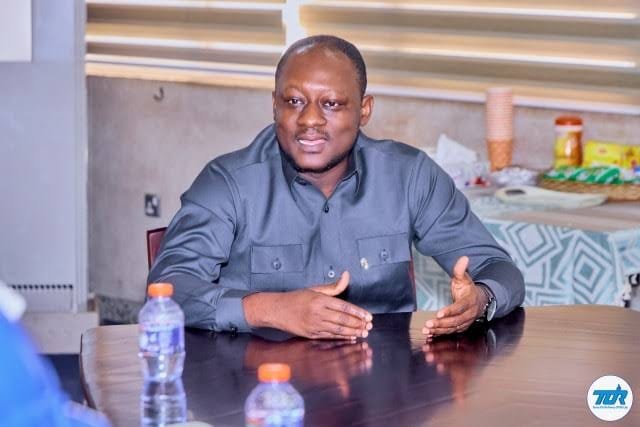
The Managing Director of Tema Oil Refinery (TOR), Edmond Kombat, has outlined a major expansion drive to restore the refinery to full commercial operation.
Speaking at the Government Accountability Series held at the Jubilee House today, Mr. Kombat said in the near term, engineers from Verga Engineering are working with TOR’s technical team to complete the tie-in and commission the F-61 this month.
He explained that this will allow the Crude Distillation Unit to move from its current throughput of about 28,000 barrels per stream day (bpsd) to its nameplate capacity of 45,000 to 55,000 bpsd.
In the medium term, TOR plans to install a new air cooler to raise capacity to 60,000 bpsd and replace the 6,500 barrel-a-day catalytic reformers with a 10,000 barrel-per-day continuous catalytic reformer.
Mr. Kombat added that the new 120-ton boiler has been installed, while work on the RFCC turnaround and SCADA system continues.
He disclosed that on August 1, 2026, President John Mahama directed the Minister for Energy and Green Transition to work with the TOR Board and management on a strategic roadmap to raise processing capacity to 100,000 barrels a day, with a further plan to increase it to 200,000 barrels per day as an end-state.
He also announced plans to restructure TOR so that it can operate on sound commercial principles without undue political interference. According to him, the Ministry of Finance is currently working with TOR to consider writing off $120 million of TOR’s legacy debt owed to the Government of Ghana or converting it into equity.
“TOR is part of a national plan. With the refinery’s expansion from 45,000 to 100,000 barrels a day, Government is targeting about 70 percent of national fuel demand from local refining by 2028,” he said.
By Edem Mensah-Tsotorme

The Managing Director of the Tema Oil Refinery (TOR), Edmond Kombat, has revealed that crude processing at the refinery has resumed after years of dormancy.
Speaking at the Government Accountability Series, Mr. Kombat said crude processing started on December 19, 2025, with all product streams going to storage for the first time in years.
He disclosed that since May 2026, TOR has received four five-million-barrel crude cargoes: Bonga, Baleine, Bonnie Light, followed on July 15 by Ghana’s Jubilee Medium Sweet crude, an indigenous crude delivered aboard MT Apache.
According to him, TOR paid for the Jubilee cargo in full, making it the refinery’s first Jubilee cargo in a decade.
Mr. Kombat added that on August 1, 2026, the President commissioned the refurbished Crude Distillation Unit.
The refinery, he said, then received another parcel of Ghanaian indigenous crude of 950,000 barrels of Sankofa crude on September 25, 2026, from its sister agency, the Ghana National Petroleum Corporation (GNPC).
By Edem Mensah-Tsotorme