News
Nkrumah’s unfinished projects: Nation’s dreams awaiting revival


- /home/u249204778/domains/spectator.com.gh/public_html/wp-content/plugins/mvp-social-buttons/mvp-social-buttons.php on line 27
https://spectator.com.gh/wp-content/uploads/2026/03/Meridian-Hotel.webp&description=Nkrumah’s unfinished projects: Nation’s dreams awaiting revival', 'pinterestShare', 'width=750,height=350'); return false;" title="Pin This Post">
- Share
- Tweet /home/u249204778/domains/spectator.com.gh/public_html/wp-content/plugins/mvp-social-buttons/mvp-social-buttons.php on line 72
https://spectator.com.gh/wp-content/uploads/2026/03/Meridian-Hotel.webp&description=Nkrumah’s unfinished projects: Nation’s dreams awaiting revival', 'pinterestShare', 'width=750,height=350'); return false;" title="Pin This Post">
AS Ghana celebrates its 69th Independence Day, the country reflects on the vision of its first President, Kwame Nkrumah. Beyond political freedom, Nkrumah dreamed of building a modern, self-reliant nation.
He launched ambitious projects aimed at industrialisation, job creation, and to position Ghana as a leader in Africa.
Many of these projects were interrupted or abandoned after the 1966 coup that removed him from power. Today, these projects remain reminders of bold ambitions and opportunities for revival.
1. The Black Star Line
One of Nkrumah’s earliest initiatives was the Black Star Line, Ghana’s first national shipping company. Established in 1957, it aimed to boost trade and reduce dependence on foreign vessels. Nkrumah envisioned a fleet of Ghanaian ships transporting goods across Africa and beyond.
The project, however, suffered from poor management, financial challenges, and political instability. After the 1966 coup, the Black Star Line collapsed, leaving a gap in Ghana’s maritime sector. Today, the country still relies heavily on foreign shipping, showing how Nkrumah’s foresight was ahead of its time.
2. Railway expansion
Perhaps Nkrumah’s most enduring domestic dream was a nationwide railway network. He wanted lines connecting northern and southern Ghana, linking agricultural zones to factories, and connecting mines to ports. Railways were to be the backbone of industrialisation, enabling efficient transport of goods and people.
Much of this vision remains unrealised. Expansion stalled after 1966, and the network has suffered decades of neglect.
- Juapong textile factory
- Tomato and fruit processing plants: Designed to add value to agricultural produce, but operations collapsed due to inconsistent supply and lack of technical expertise.
Modernisation efforts by successive governments, including the construction of the Tema–Mpakadan line and rehabilitation of parts of the Western Line, have only partially restored his vision. A fully integrated railway system, particularly linking northern regions, remains a work in progress.
3. Accra–Tema Industrial corridor
The Accra–Tema Motorway, constructed in the early 1960s, was intended to anchor an industrial corridor connecting factories, ports, and residential areas.
The motorway itself was completed and remains a key route, but many industrial zones along the corridor were never built, limiting the economic impact of the project.
4. Defunct factories and industrial ambitions
Through the Ghana Industrial Holding Corporation (GIHOC), Nkrumah established numerous state-owned factories to reduce imports, create jobs, and industrialise the country. Many of these factories, however, became defunct due to poor management, political changes, and economic challenges.
Some notable examples include:
- Textile factories: Aimed at making Ghana self-reliant in clothing production, but most shut down after Nkrumah’s overthrow.
- Brick, tile, and cement factories: Intended to supply building materials for rapid urbanisation; many closed or underperformed.
- Sugar and meat processing plants: Built to supply local demand and reduce imports, yet most never reached full capacity.
These defunct factories are a testament to the challenges of maintaining large-scale industrial projects in a changing political and economic environment. They also illustrate the potential that existed to make Ghana self-sufficient in manufacturing.
Meridian Hotel
The Meridian Hotel in Tema. Built in 1960 by Ghana’s first President, Osagyefo Dr. Kwame Nkrumah. One of the most sought-after hotels at the time, it was a popular location for dignitaries and tourists. The iconic hotel was so popular it inspired the famous Wulomei song Meridian.
Sadly, it has been abandoned for over two decades after it was closed down in the late 1990s. Meanwhile, residents in the area have called on the government to demolish the building if there are no plans to revamp it.
Lessons and way forward
These abandoned projects and defunct factories are not just stories of failure. They highlight Nkrumah’s bold vision and the importance of continuity in national development. Independence brought freedom, but building a self-reliant, industrialised Ghana requires sustained planning, political stability, and investment in infrastructure and human capital.
As Ghana marks its 69th Independence Day, revisiting these projects is both a reflection on history and a call to action. Reviving or modernising parts of these initiatives could strengthen infrastructure, create jobs, and make the country more competitive in the regional and global economy.
Nkrumah’s projects were not merely monuments of ambitions but blueprints for economic sovereignty. As Ghanaians, it is not just enough to remember past events leading to independence but completing and reviving works that began in 1957.
It reminds us that true nation-building—connecting the country, industrialising the economy, and asserting Ghana’s role in Africa—is an ongoing journey.
By Esinam Jemima Kuatsinu
Join our WhatsApp Channel now!
https://whatsapp.com/channel/0029VbBElzjInlqHhl1aTU27


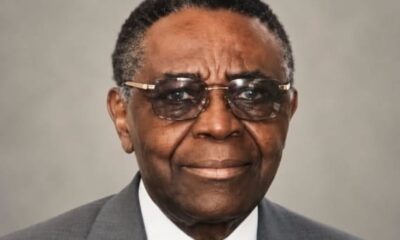





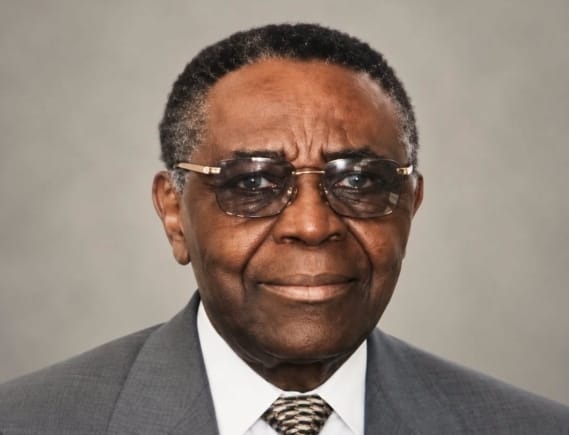
The New Patriotic Party (NPP) has announced with profound sorrow the passing of Ambassador Samuel Arthur Odoi-Sykes, describing him as an eminent statesman, distinguished patriot, and one of the founding pillars of the party.
In a statement issued by the party, Ambassador Odoi-Sykes was eulogized for dedicating several decades of his life to the service of Ghana and the cause of democratic governance.
“His constant dedication to public service, constitutional democracy, and principled political leadership earned him the admiration and respect of colleagues across the political divide,” the statement said.
Ambassador Odoi-Sykes served as Member of Parliament for Ashiedu Keteke, now Odododiodio, during the Third Republic, where he rose to become Minority Leader of Parliament. He was noted for his exemplary parliamentary leadership and advocacy for democratic ideals.
As a founding father of the NPP, he played a pivotal role in laying the institutional and ideological foundations of the party.
His leadership as National Chairman from 1998 to 2001 was instrumental in uniting and strengthening the NPP, culminating in its historic electoral victory in the year 2000 and the first democratic transfer of power between political parties under the Fourth Republic.
Following that landmark achievement, he continued his service to the Republic as Ghana’s High Commissioner to Canada from 2001 to 2006, where he represented the nation with distinction and enhanced Ghana’s diplomatic relations abroad.
The party noted that throughout his lifetime, Ambassador Odoi-Sykes served on numerous national and party committees, offering wise counsel, strategic leadership and invaluable institutional memory.
“His integrity, humility, intellect, and constant commitment to Ghana’s democratic development will remain an enduring source of inspiration for present and future generations,” the NPP said.
“His passing marks the end of an illustrious chapter in Ghana’s political history. The nation has lost a distinguished public servant, while the New Patriotic Party has lost one of its most respected elder statesmen and steadfast architects.”
The party extended its deepest condolences to his wife, children, the entire Odoi-Sykes family, friends, and associates.
“As we mourn his passing, we also celebrate a life exceptionally lived in faithful service to God, country, and the Party. Ambassador Samuel Arthur Odoi-Sykes has indeed paid his dues, and his legacy of principled leadership, patriotism, and selfless service will forever remain etched in the annals of Ghana’s democratic history.
“May his soul rest in perfect peace, and may his memory keep inspiring generations yet unborn,” the statement concluded.
By Edem Mensah-Tsotorme
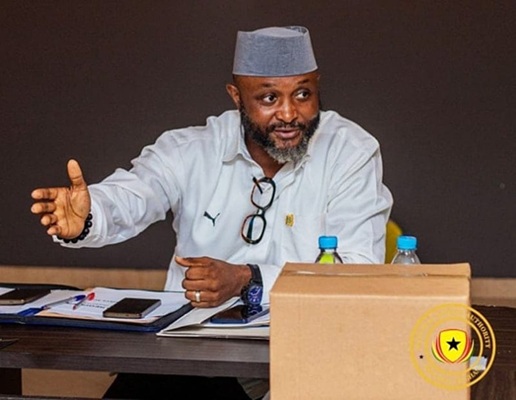
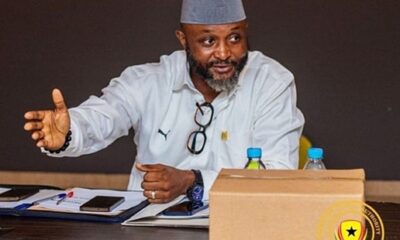
Lawyers for suspended National Sports Authority (NSA) Director-General, Yaw Ampofo Ankrah, say he will not appear before Parliament for now because matters concerning him are currently under investigation by the Criminal Investigations Department (CID) of the Ghana Police Service.
In a statement issued on behalf of Mr Ampofo Ankrah, his legal counsel, Jerry Avenorgbor of Brookman Amissah & Associates, said the sports administrator has cooperated and will continue to cooperate with the police as they work to establish the facts.
The lawyers said Mr Ampofo Ankrah and his representatives would refrain from making detailed public comments on the allegations while the investigation is ongoing.
They urged the media and the public to exercise restraint and avoid presenting allegations, speculation or unverified information as established facts.
The lawyers stressed that the existence of an investigation does not, by itself, amount to a finding of wrongdoing against Mr Ampofo Ankrah or any other person.
On calls for Mr Ampofo Ankrah to appear before Parliament, his lawyers said it would be “imprudent” for him to do so while the CID investigation remains active and he is under suspension.
According to them, appearing before Parliament at this stage could create complications for the investigation and potentially affect the process through which the facts are being established.
Mr Ampofo Ankrah has therefore decided to defer any appearance until the investigation has been concluded and the circumstances surrounding his suspension have been determined by the appropriate authorities.
His lawyers, however, stressed that the decision should not be interpreted as a refusal to submit to lawful processes or to account to Parliament or any other constitutionally mandated institution.
They explained that the position is intended to protect the integrity of the ongoing investigation and prevent any action that could potentially interfere with it.
The lawyers further indicated that if his suspension is lifted and he is restored to his position as Director-General of the NSA at the discretion of the Office of the President, he will respond appropriately to any lawful request to appear before Parliament or another competent institution.
Mr Ampofo Ankrah and his legal representatives are expected to respond to the findings of the investigation and address any issues requiring clarification once the appropriate authorities have completed their work.
They have meanwhile called for patience and respect for the ongoing investigative process.
By: Jacob Aggrey