Hot!
‘Negative attitude of hospital staff affecting Adolescent Reproductive Healthcare’

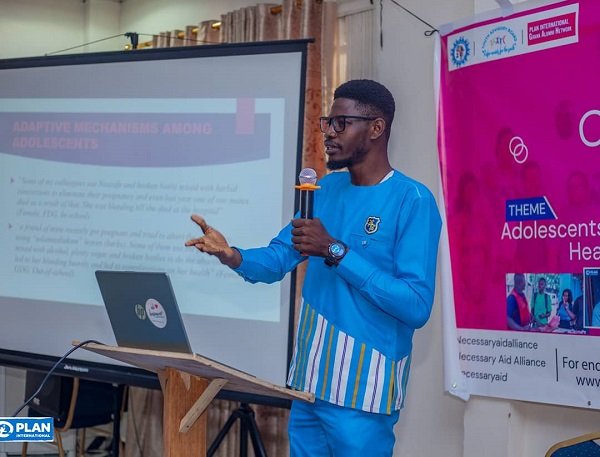
The attitude of some health staff at adolescent corners at some health centres in the Upper West Region has been identified as one of the barriers preventing adolescent girls from seeking information on reproductive health at the health centres.
The adolescents have said that they would rather speak to their peers than patronise adolescent corners to avoid jeering, insults and name calling from health workers.
This was revealed in a study by Necessary Aid Alliance, a non-governmental organisation in the Upper West Region with support from Plan International Ghana on “Access to Sexual and Reproductive Health Information and Services (SRHIS)” by adolescents.
Explaining the research findings to participants at a dissemination meeting at Wa, the Executive Director of the NGO, Mr Mulumba Songsore said the issue was a source of worry as 36 per cent of a total of 541 respondents attested to seeking for information from their peers as against 20 per cent who preferred to use the health centres and adolescent corners.
“According to our respondents, some of the nurses are impolite, especially to young clients. Apparently when they go there with issues on reproductive health, they are yelled at, insulted and called names like nasty and ‘spoilt’ and are discouraged from going there”, he said.
Mr Songsore indicated that even without the impolite attitude of health staff, it was difficult for a young person to visit a facility to seek SRHIS so if the environment was not conducive, they would choose to rather rely on friends who were as ignorant as them and were likely to provide them with unwholesome information.
“We were curious as researchers to know what exactly they discussed with their friends by way of information seeking and we identified that most of the discussion (36 per cent) centred on sex life and relationship” he said adding that it was worrying because most of their peers would share information about their mistakes.
He said the lack of professional sources of information for the adolescents had led to unprotected sex, unwanted pregnancies and unsafe abortions.
“Allow me to quote this response from a respondent: in this community, adolescents who inquire about sexual and reproductive matters are viewed as troublemakers so we are scared to go to the clinic for SRHIS”, he said.
He added that the lack of privacy and confidentiality at the health centres also discouraged the youth from seeking information at the centres such that once the adolescent visited the health facility, it became common knowledge in the community.
“Imagine a girl going to the hospital for medical abortion and the next moment everyone in the community is aware of the incident and people begin to call her names, in order to avoid a similar incident, other girls would prefer to speak to their friends for unorthodox methods instead of going to the health centre”, he said
The NGO wants civil society organsiations to support the Ghana Health Service to provide regular training for health staff at the various adolescent corners to ensure their professional conduct.
From Lydia Darlington Fordjour, Wa


Madam Sandra Seyram Kpedor, the District Chief Executive (DCE) of Anloga in the Volta Region, has emphasised the importance of parental involvement in children’s education, stating that education is free, but parents need to do more to support their children.
She said parents, teachers, and students must be involved in addressing the challenges facing the district’s education sector, particularly the poor Basic Education Certificate Examination (BECE) results.
Madam Kpedor outlined some key roles parents should play to promote their children’s education, including providing a conducive learning environment, monitoring their children’s progress, and supporting teachers.
The DCE highlighted some challenges the district faced such as inadequate infrastructure and a shortage of teachers, which have also contributed to the poor BECE results and called on well-to-do parent to help solve the situation through and other supports.
To address the issues, she also announced that plans have been taken to utilise the district’s common fund to implement educational projects, such as constructing school blocks and teachers’ bungalows at Sodzi community, and 2-unit classroom blocks each at Akplorwutorkor and Tegbi-Afedome respectively, among others.
Madam Kpedor also noted that her office had earlier notified the Ministry of Education to deploy more teachers to the area to improve teaching and learning, and encouraged students to work hard and strive for excellence, and work beyond their limit to succeed.
“To my wonderful and beautiful girls, you have to know it clear that women and girls have equal opportunities to compete with men for greater achievements,” she indicated.
The DCE cited her own achievement as a testament to the fact that women can excel in leadership positions, alongside Vice President Nana Jane Opoku-Agyemang, and stressed that girls were no longer limited to domestic roles but can pursue their dreams and become leaders.
Additionally, she mentioned that a meeting was held earlier with assembly members, and other stakeholders to address the district’s educational challenges and improve academic performance.
She promised that the district’s education oversight committee and stakeholders would work together to address the challenges and improve the district’s BECE results and called for parental involvement and support to boost the district’s education sector for children to chase their dreams to become future leaders for the success of the district and the nation.
She urged parents not to leave everything to the government but rather help in the provision of some necessary materials such as textbooks, exercise books, pens, pencils, food, and guidance to children for the successes of young learners. –GNA
Join our WhatsApp Channel now!
https://whatsapp.com/channel/0029VbBElzjInlqHhl1aTU27


The spokesperson for Dr. Bawumia, Dennis Miracles Aboagye, has criticised the implementation of the NDC government’s No Fee Stress policy, arguing that the programme has failed to deliver on its core promise.
According to him on Starr fm, the policy, which was introduced to ensure stress free payment of fees for level 100 tertiary students, has rather turned into what he described as post stress support.
He explained that students are required to pay their fees first before applying for reimbursement, a situation he believes defeats the purpose of the policy.
He questioned claims by government officials that the policy has been successful and that citizens are happy.
In his view, such claims do not reflect the lived realities of many Ghanaians. He stressed that while some people may appear satisfied, many others continue to struggle.
Dennis Miracles Aboagye pointed to the situation of trained teachers and nurses who have been picketing for nearly six months, demanding employment.
He noted that government responses suggesting it cannot accommodate all of them contradict claims of economic stability.
He further argued that economic indicators such as a stable currency mean little to people who are unable to secure jobs or access promised support.
He observed that telling an unemployed teacher or a struggling student that the cedi has strengthened does not address their immediate challenges.
On the issue of tertiary education, he maintained that no level 100 student benefited from stress free fees in 2025, despite the policy being announced.
He added that in 2026, students have already reported to school without receiving the promised support.
He insisted that asking students to pay fees first and seek reimbursement later amounts to support after hardship, not stress free education.
According to him, this approach goes against what was promised during the policy announcement.
Dennis Miracles Aboagye questioned why a government that presents the economy as strong is unable to fulfil what he described as simple and clear promises.
He added that there is a fundamental problem with the way the economy is being managed and indicated that he is prepared to explain his position further.
By: Jacob Aggrey