Hot!
NCA’s ineffectiveness delaying Ghana’s internet restoration – Sam George

- /home/u249204778/domains/spectator.com.gh/public_html/wp-content/plugins/mvp-social-buttons/mvp-social-buttons.php on line 27
https://spectator.com.gh/wp-content/uploads/2024/03/d5d458fa-a4d8-4de5-bf35-822585441651.jpeg&description=NCA’s ineffectiveness delaying Ghana’s internet restoration – Sam George', 'pinterestShare', 'width=750,height=350'); return false;" title="Pin This Post">
- Share
- Tweet /home/u249204778/domains/spectator.com.gh/public_html/wp-content/plugins/mvp-social-buttons/mvp-social-buttons.php on line 72
https://spectator.com.gh/wp-content/uploads/2024/03/d5d458fa-a4d8-4de5-bf35-822585441651.jpeg&description=NCA’s ineffectiveness delaying Ghana’s internet restoration – Sam George', 'pinterestShare', 'width=750,height=350'); return false;" title="Pin This Post">
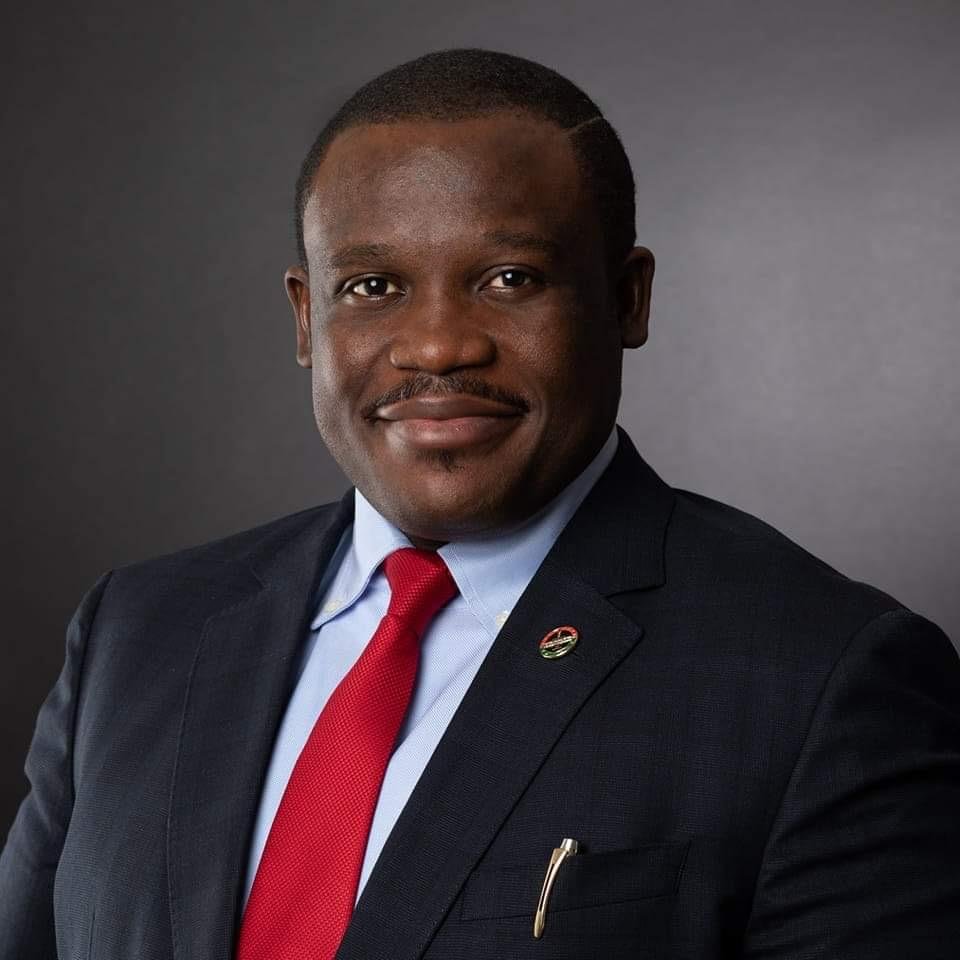
The Deputy Ranking Member on the Communications Committee of Parliament, Samuel Nartey George, has attributed the delay in fully restoring internet connectivity to the ineffectiveness of the National Communications Authority (NCA).
Since Thursday, March 14, Mobile Network Operations (MNOs) have been disrupted, leaving many Ghanaians without internet connections.
On Monday, March 18, the NCA announced that MNOs will reassess their operations and consider prioritising and allocating more data resources to key stakeholders while working with the Subsea Cable Landing Service Providers to progressively improve internet data capacity.
The stakeholders include a wide range of entities such as the Bank of Ghana (BoG), Ghana Association of Banks (GAB), Ghana Interbank Payment and Settlement Systems (GhIPSS), Ghana Stock Exchange (GSE), Central Securities Depository, Ghana Water Company Limited, Electricity Company of Ghana (ECG), MNOs, Subsea Cable Landing Service Providers, Ghana Internet Exchange (GIX), and the Accra Internet Exchange (AIX).
The Minister for Communications and Digitalisation, Ursula Owusu-Ekuful, also indicated in an update to Parliament that the government will immediately license satellite firms as a backup for network operators in the wake of the disruption in mobile network services.
Speaking in Parliament, Mr George pointed out that Cote d’Ivoire, which was the hardest hit, is faring better than Ghana because its regulator offered solutions.
Mr George argued that the NCA, as the regulator, was not living up to its task.
“Mr speaker, the cut happened off the coast of Cote d’Ivoire. Cote d’Ivoire was the most impacted country on Thursday. As we speak today, Cote d’Ivoire’s recovery is ahead of Ghana simply because their regulator had put in place the right mechanisms.
“In the case of AT, and if you ask what Cote d’Ivoire is doing, they are using MOVE. The MOVE operator cable. They immediately allowed all the other operators to pick it up on MOVE. When you speak about the success of AT, AT is simply able to carry traffic because they have redundancy using the Nigerian link. But is that not supposed to be a prerequisite for all the other operators in the country? Who is supposed to monitor that?”
“It is the regulator. So, if the regulator has slept on his job and today, we are found in this position, and then we want to raise our hands up in the air and say, oh, other countries that were affected have recovered and are recovering faster than Ghana because the regulators are proactive,” he stated.
Mr George further criticised the NCA for competing with the Ghana Chamber of Telecom instead of focusing on its task.
“Our regulator today is competing with the Ghana Chamber of Telecom. The Ghana Chamber of Telecom served the interest of the telecom companies and is their advocacy. The Ghanaian regulator is supposed to be the advocate for the rights. The NCA, the National Communications Authority, is supposed to be the advocate for the rights of Ghanaian citizens and customers.
“Therefore, updates that have been put out by the NCA are simply mirroring the statements of the chamber of Telecom. They don’t tell us what remedial actions regulatory policy are being put in place for the Ghanaian customer. They’re only telling us what the problems are. That is the language of the regulator. He’s going to tell you what the problems are. I am expecting the NCA to tell me what the solutions are, not what the problems are,” he said.
Source: Citinewsroom.com



The Tema Regional Police Command has arrested a 32-year-old man for allegedly posing as a soldier and extorting money from unsuspecting members of the public at Ashaiman.
The suspect, identified as Bright Atsu Kudiabor, was arrested by the Ashaiman Police on Wednesday, September 16, 2026, at about 7:00 a.m.
According to the Police, he was arrested at an area known as “I Shall Return”, where he was allegedly parading himself as a soldier and demanding money from people.
The Police said Kudiabor, who is an ex-convict, was initially arrested by personnel of the Ghana National Fire Service in Ashaiman with assistance from other members of the public.
A search conducted on him after he was handed over to the Police reportedly led to the recovery of a set of military camouflage uniform.
The suspect is currently in Police custody and assisting with investigations.
The Tema Regional Police Command said he would be processed for court after investigations are completed.
The Police urged the public to remain vigilant and report anyone who falsely presents themselves as a soldier or a member of another security agency to deceive or extort money from the public.
By: Jacob Aggrey
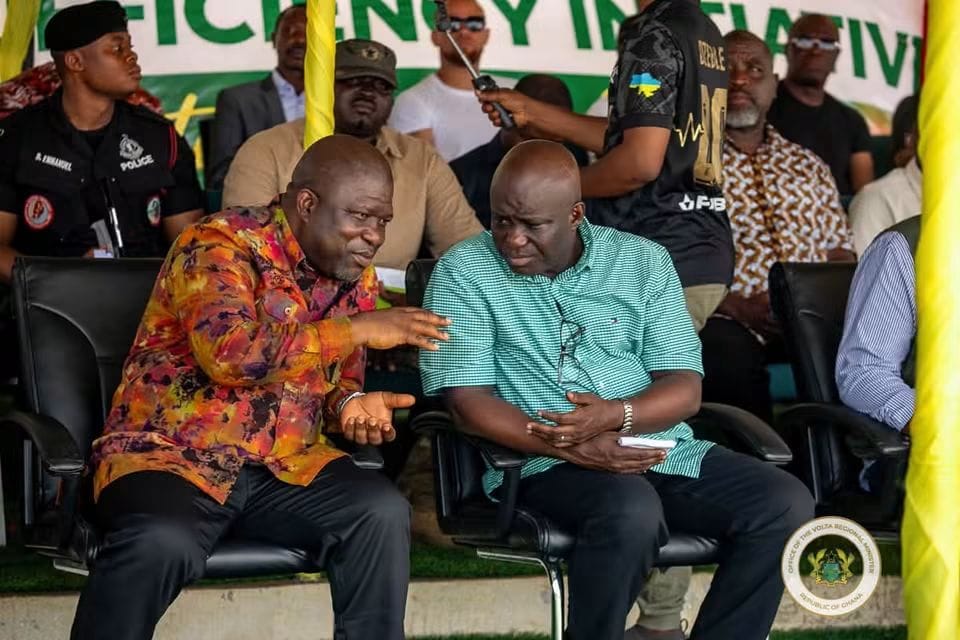
Volta Regional Minister, James Gunu, says the Volta Region holds enormous agricultural potential and efforts must be geared towards connecting farmers to the needed resources to unlock that potential.
He said focus must be on linking farmers to resources, technology, financing and markets to increase production, create jobs and build sustainable livelihoods.
Hon. Gunu made the remarks at the national launch of the Ghana Tomato Self-Sufficiency Initiative (GHATSI) held at Anloga in the Volta Region on Tuesday, September 15.
The initiative, under the theme “Produce at Home. Feed the Nation. Export the Surplus,” seeks to boost local tomato production, processing and marketing while reducing Ghana’s heavy reliance on imported tomatoes.
The launch was attended by the Minister for Food and Agriculture, Eric Opoku, his Deputy, John Setor Dumelo, Feed Ghana Coordinator, Bright Demordzi, Members of Parliament, traditional leaders, MMDCEs, farmers and other stakeholders.
Mr.Gunu expressed appreciation to the Minister for Food and Agriculture for the support announced for the region, including two excavators, 200 cartons of organic fertiliser, and GH¢200,000 for Ms. Kuatudzo Esther Dela, a tomato farmer and processor from Ziope.
He described the initiative as an important step towards making agriculture a stronger driver of food security, job creation and economic growth in the Volta Region.
By Edem Mensah-Tsotorme