Entertainment
More black books please – Voice Online

- /home/u249204778/domains/spectator.com.gh/public_html/wp-content/plugins/mvp-social-buttons/mvp-social-buttons.php on line 27
https://spectator.com.gh/wp-content/uploads/2022/10/More-black-books-please-Voice-Online.jpg&description=More black books please – Voice Online', 'pinterestShare', 'width=750,height=350'); return false;" title="Pin This Post">
- Share
- Tweet /home/u249204778/domains/spectator.com.gh/public_html/wp-content/plugins/mvp-social-buttons/mvp-social-buttons.php on line 72
https://spectator.com.gh/wp-content/uploads/2022/10/More-black-books-please-Voice-Online.jpg&description=More black books please – Voice Online', 'pinterestShare', 'width=750,height=350'); return false;" title="Pin This Post">
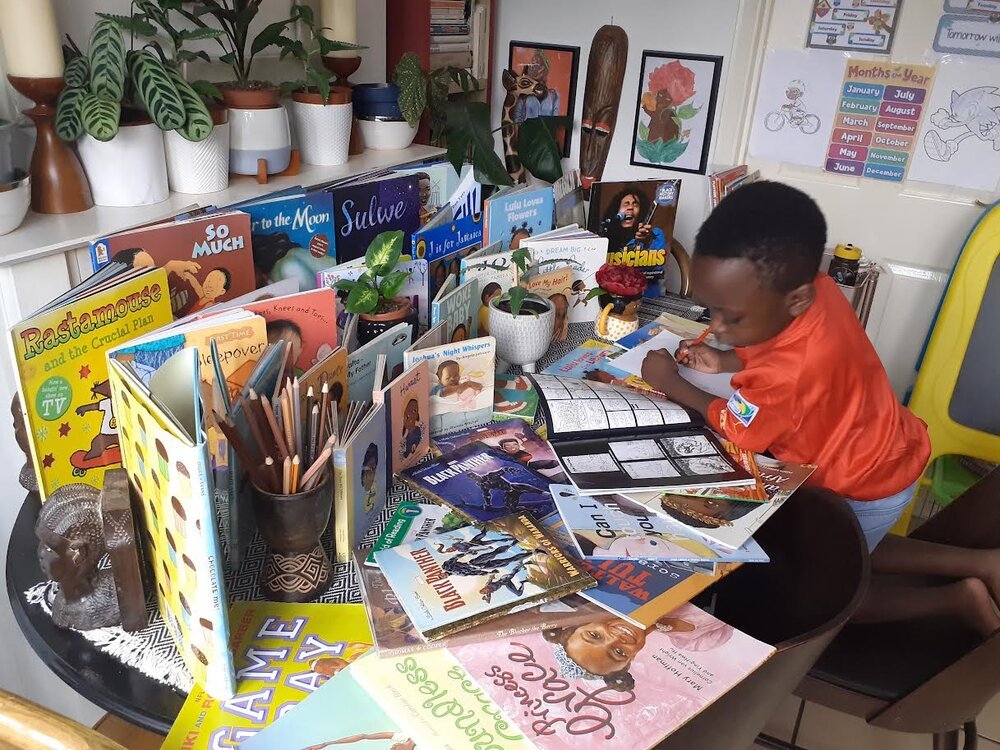
Black British parents are urging their local libraries to stock more black books to ensure their shelves are representative of multicultural Britain.
According to a poll, 38% of black people were more likely to have visited a library between 2019 and 2020, compared to 30% of their white counterparts.
Despite these numbers, many black parents say their local libraries lack books that reflect the communities they serve.
Talk to The voiceMaame Prempeh, from Shropshire in the West Midlands, said: “Black book covers tell a story, when we see the display we feel included in the fabric of that environment.
“If there are no black books in libraries, it fuels our sense of invisibility – which we have in the education system.”
The mother-of-two thinks black books should be available at all local libraries across the country and not just during Black History Month.
She said, “Diversity isn’t just for black and brown kids, it’s also for white kids, especially if we want to fight racism and discrimination.”
Ms. Prempeh knows firsthand the power of local libraries.
She grew up in Kennington, South London, and when she was just 13 she sadly lost her mother.
As a teenager, she spent a lot of time at Brandon’s library, which she says “saved” her and helped her “cultivate” her identity.
She recalls the library having a “minority section” which led her to fall in love with black literature.
“This library and these books saved me because my mother had passed away and I was a lost young woman,” she added.
Ms. Prempeh is of Ghanaian descent and works as a multicultural education consultant and helps schools embrace diversity by providing cultural resources.
She said The voice, she started her business after her six-year-old son faced racism at school last year.
She said: “It was so traumatic I had to do something, the books weren’t enough.
“I was broken as a mother because I had invested so much time in my child but I couldn’t stop her saying to me ‘mum, I want my skin to be clearer’.”
Ms Prempeh said that by working closely with the school, she has seen positive changes in her son and in the attitudes of other children.
She regularly takes her son to meet black authors, which she says has strengthened her son – who is an avid reader and dreams of becoming an astronaut.
She added: “If we give them black books then they are able to dream.”
There are 3,667 public libraries (including mobile libraries) in the UK, with 7.3 million active borrowers.
According to official data, borrowing items such as books, newspapers, music, CDs, DVDs, or audiobooks is the most popular reason people use the library.
But the lack of diversity on library shelves may reflect wider issues within the UK publishing industry.
In 2020, the Black Writers’ Guild wrote an open letter condemning the industry for “raising awareness of racial inequality without meaningfully addressing their own”.
Three years earlier, a study published by the Book Trust reported that only 6% of children’s authors published in the UK were from an ethnic minority.
A slight improvement from 4% in 2007.
These figures suggest that finding black books is not just a problem for UK libraries, but also on the high street.
Most libraries source their supplies from around six main wholesalers, which causes problems, according to a longtime black librarian based in London – who spoke to The voice, anonymously.
Stephanie Clarke (pseudonym) has ten years experience in public libraries in East London.
She revealed that the distribution companies that supply libraries “may not have the stock” to ensure black titles hit shelves.
She said: “Unless major suppliers diversify their stock, their range will always have this problem.”
Ms Clarke wants libraries to add black bookstores to their supply chain to combat the problem and also cited austerity cuts and a lack of dedicated staff as part of the problem.
She added, “If there’s no one locally to advocate for book diversity, it’s not filtered out.”
Ms. Clarke is keen to see change and stressed, “Library service does not belong to the staff, it belongs to the people.
“I believe in the ‘power of the patron’. Library users should demand black books by writing to the library department, their local councilors and MPs, schools and principals can also lobby the local library to ensure the stock is representative of the British population.
Claire Quansah, told The voiceshe regularly visits her local library in Sale, Trafford, with her two children, aged seven and 14, but thinks more can be done.
She said: “My library has a selection of books by black authors for adults and children, but I really think there could always be more, perhaps featuring lesser-known authors and titles.”
Ms Quansah applauded the creative presentations during Black History Month at her local library and said she was delighted “that they weren’t just focused on promoting books that focused on black pain, but that they also include positive stories”.
But like Ms Prempeh, she would like to see a celebration of black writers “all year round”.
Ms Quansah works as a business development manager for a communications agency and believes ‘something as simple as seeing black characters at an early age can have a positive impact on children’.
She says the problem is not just with books, but also with events held in libraries.
She said that with the story hour workshops, she would more likely hear a “story about animals than a story with black children as the protagonists.”
With the growing cost of living crisis and black parents relying more than ever on their local libraries for access to books, it’s time our library shelves reflect the culturally diverse population that makes up modern Britain.
Source: www.todaypostimes.com



Ghanaian rapper Medikal has advised musicians to focus on building financial security rather than relying mainly on awards, shows and public recognition.
According to him, the difficult situations some senior musicians face after years in the industry should serve as a lesson to younger artistes.
Medikal made the comments on TikTok while sharing his thoughts on an interview involving veteran Ghanaian musician DJ Barosky, whom he claimed is currently homeless in the United Kingdom.
He expressed surprise at the situation, noting that he grew up listening to and admiring some of the senior musicians who influenced his generation.
“Bro, right now, social media, I know if you tell which one be real or what be fake,” Medikal stated, questioning the reality of what people see online.
He argued that musicians should make money and put proper financial plans in place while they are active in the industry.
“If you be artist for this country, you for make money, collect money, put certain things in place,” he said.
Medikal stressed that awards and performances were important but should not replace financial planning.
He encouraged artistes to be careful with their relationships and to understand that the entertainment industry is largely driven by money.
According to him, even friendships can change when a person’s financial circumstances change.
He therefore urged musicians not to become discouraged by financial losses but to remain focused on creating wealth.
“Make money. If you lose money, still collect money,” he advised.
Medikal said the experiences of older artistes should encourage current musicians to take their finances seriously and prepare for life beyond their peak years in the entertainment industry.
By: Jacob Aggrey
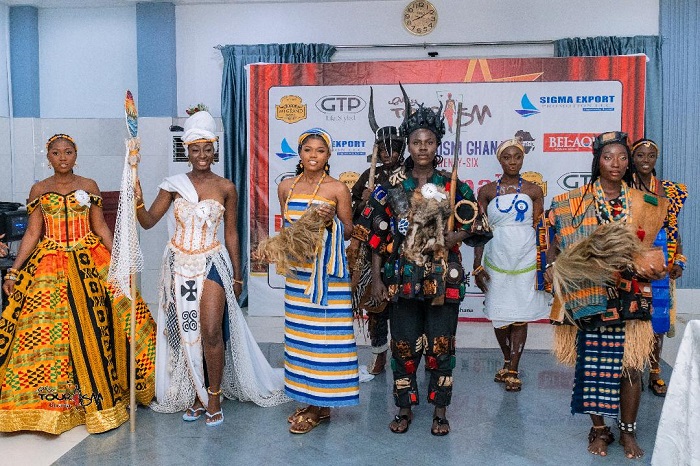
It was a night of colour, culture and creativity as Miss Tourism Ghana successfully held its Regional Costume & Talent Night in Accra.
The event drew fashion lovers, culture enthusiasts, and proud supporters who came out to witness Ghana’s beauty queens represent their regions on one grand stage.
From the moment guests stepped in, the atmosphere was electric, ushering,
Okra, Zabe, Gina, Akpe, Sela, Afia,Asher and Ajua into the auditorium to mesmerize patrons.
The blistering night, commenced with a breathtaking regional costumes rocked by contestants that told stories of Ghana’s traditions from, african print, kente, smock, batakari, beads and other indigenous fabrics.
Each outfit with beautiful local accessories to match was paired with confidence, poise, and pride.
The night then shifted gears into the talent segment. The audience was treated to powerful performances traditional dance, spoken word, fashion, singing, and drama all centered on promoting Ghana’s tourism and heritage.
The judges were stunned with the various displays and passed favorable commentaries encouraging the contestants to keep giving their all.
Patrons left with unforgettable moments, and the contestants delivered to their expectations.
Organisers of Miss Tourism Ghana congratulated all the amazing participants who took part and urged them to forged ahead strongly before the grand final.
They also, encouraged families and friends to keep their favourite in the competition through their campaigns and votes.
The search for Ghana’s next tourism ambassador is officially on, and the competition is getting tighter with each stage.
Beyond the glamour, Miss Tourism Ghana continues to use the platform to market Ghana’s tourist sites, culture and hospitality to the world.
The Regional Costume & Talent Night served as both entertainment and education, reminding Ghanaians of the beauty in our diversity.
By Edem Mensah-Tsotorme