Hot!
Military deployment not to intimidate residents Defence Minister

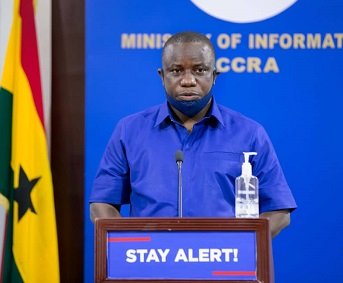
The government has denied allegations that it deployed military personnel to Ghana’s border towns to intimidate residents from participating in the voter registration exercise scheduled to commence today.
Minister of Defence, Dominic Nitiwul, addressing a press conference in Accra yesterday, said the military deployment was in support of the Ghana Immigration Service (GIS)’s efforts to stop illegal entry of foreigners through unapproved routes along the borders.
Explaining further, he noted that, the decision to deploy military personnel was informed by government’s commitment to protect the populace in the wake of the coronavirus (COVID-19) pandemic and not targeted at instilling fear or suppressing a group or tribe.
The government, he said, commenced the deployment of military personnel together with police, GIS and Ghana Revenue Authority (GRA) personnel on February 21 last year in an operation dubbed “Conquered Fist,” designed to enforce border laws in the country.
This, he noted, involved 384 soldiers, 259 police, 172 immigration officers and 70 GRA officers and were mostly stationed in the Northern, North East, Upper East, Upper West and Savannah regions.
Following the closure of Ghana’s borders amid the COVID-19, Mr Nitiwul said, the government decided to improve security along the borders due to significant increase in the use of unapproved routes by foreigners to enter the country.
During the period of lockdown alone, more than 5,000 persons were arrested for entering the country through one of the 500 illegal routes identified so far by the country’s security teams.
On March 30 and April 20 this year, the Minister said, military personnel were also deployed together with the police as part of ‘Operation Calm Life’ to ensure increased security during and after the lockdown in some parts of the country.
A further deployment was done on June 18 and 19 to all border towns to support existing teams to close all unapproved routes to deal with illegal entry, the Minister added.
In the Upper East Region, he said, 207 were deployed to eight various locations, 102 were deployed to four areas in the North East region, 110 were posted to five locations in the Northern region while 95 personnel were deployed to nine areas in the Volta Region.
At Upper West, 69 soldiers were deployed to three different locations, 21 soldiers were posted to Damango and Bole in the Savannah Region while 44 and 13 soldiers were deployed to Bono and Western regions respectively, Mr Nitiwul stated.
He noted that the Ministry was in the process of deploying some other personnel to Gyaman North and Dormaa, both in the Bono region.
He said marine security has also been tightened through increased patrols to prevent illegal entries.
He, however, noted that the Ministry would investigate allegations that some military personnel were intimidating residents in the area of deployments.
Mr Kojo Oppong Nkrumah, Minister of Information, denounced comments by some political actors that the deployment of military personnel in the Volta Region was an attack on the people of the area.
He said government was not prepared to engage in politics that borders on ethnocentrism and urged opposing political parties to refrain from stirring ethnic sentiments and focus on supporting the country’s development.
Source: Ghanaian Times


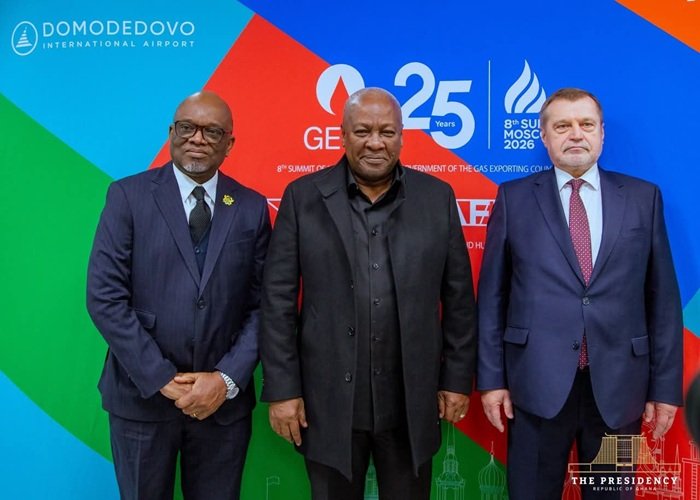
President John Mahama has arrived in Moscow, Russia, from Ethiopia to participate in the 3rd Russia-Africa Summit.
The summit is being hosted by Russian President Vladimir Putin.
During the visit, President Mahama will join fellow African leaders at the Economic and Humanitarian Forum and summit plenary sessions.
He is also scheduled to hold high-level bilateral talks with President Putin and attend a Kente exhibition organised by the Russia-Ghana Parliamentary Forum.
As part of the visit, the President will receive honorary doctorate degrees from the Russian University of Transport and the Peoples’ Friendship University of Russia.
He will also engage Russian businesses and state institutions to advance bilateral cooperation between Ghana and Russia.
By Edem Mensah-Tsotorme
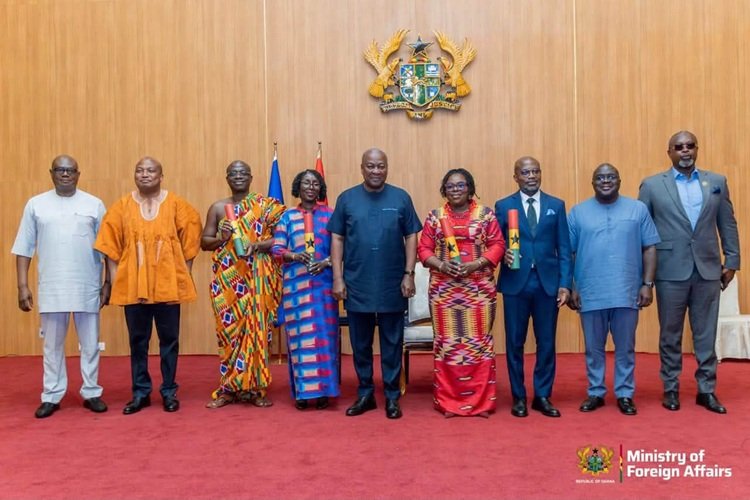
President John Dramani Mahama has commissioned four career diplomats as ambassador-designates to represent Ghana in four countries.
The commissioning ceremony took place on Friday, October 16, 2026.
The new envoys are Her Excellency Nana Antwiwaa Dodoo, Ambassador-Designate to Angola; His Excellency Louis Kwame Obeng, Ambassador-Designate to Qatar; Her Excellency Evelyn Korantemaa Ofosu-Amable, Ambassador-Designate to Israel; and His Excellency Jedidiah Reuben Adogla, Permanent Representative-Designate to Switzerland.
President Mahama charged them to advance Ghana’s national interests through strategic partnerships, economic diplomacy, investment mobilization, and expanded access to international markets.
He said Ghana’s diplomatic engagements must deliver tangible economic benefits, create jobs, and strengthen the country’s standing on the international stage.
The four envoys are career diplomats with over 27 years of experience.
On behalf of her colleagues, Her Excellency Nana Antwiwaa Dodoo thanked the President for the confidence reposed in them and pledged their commitment to emulate his leadership and deliver on the mandate given to them.
By Edem Mensah-Tsotorme