Features
Maternal mortality is a women’s empowerment emergency


- /home/u249204778/domains/spectator.com.gh/public_html/wp-content/plugins/mvp-social-buttons/mvp-social-buttons.php on line 27
https://spectator.com.gh/wp-content/uploads/2026/09/Ms-Raissa-Sambou-1000x600.jpg&description=Maternal mortality is a women’s empowerment emergency', 'pinterestShare', 'width=750,height=350'); return false;" title="Pin This Post">
- Share
- Tweet /home/u249204778/domains/spectator.com.gh/public_html/wp-content/plugins/mvp-social-buttons/mvp-social-buttons.php on line 72
https://spectator.com.gh/wp-content/uploads/2026/09/Ms-Raissa-Sambou-1000x600.jpg&description=Maternal mortality is a women’s empowerment emergency', 'pinterestShare', 'width=750,height=350'); return false;" title="Pin This Post">
A woman who dies in childbirth does not only lose her life. She loses every plan she was still building. It could be plans to grow her business, achieve higher education or create a brighter future for her children.
Maternal mortality is a direct blow to women’s empowerment because empowerment and potential mean little if a woman cannot survive the act of giving life.
The baby survives. Sometimes the baby does not. Either way, a family is left asking the same unbearable question: why should a woman go to a health facility to give life and never return home?
Recent national data presented by the Ghana Health Service (GHS) revealed that 955 maternal deaths were recorded in 2025, up from 779 in 2016.
The figures were disclosed by the Director of the GHS Family Health Division, Dr Kennedy Brightson, at a February 2026 workshop on pre-eclampsia and maternal anaemia, where he noted that hypertensive disorders remain a leading cause.
Separate concerns raised at a national dialogue in late 2025 had already painted a disturbing picture of the maternal health crisis. The Minister for Gender, Children and Social Protection, Dr Agnes Naa Momo Lartey, and Deputy Chief of Staff, Oye Bampoe Addo during the dialogue called for urgent and coordinated national action to address the problem.
Successive governments have introduced measures to protect mothers and reduce preventable deaths, but the numbers tell us that far more must be done.
The time for incremental action is over. Ghana must act with greater urgency, stronger commitment and sustained investment to ensure that no woman pays with her life for the privilege of bringing another life into the world.
Maternal death must be treated with the urgency of a national emergency because that is exactly what it is!
This deadly menace is not only a health problem, but a gender equality and development crisis.
A woman’s life should not be the price of motherhood
The World Health Organisation (WHO) has repeatedly stressed that most maternal deaths are preventable. Major causes, according to the WHO include severe bleeding, infections, high blood pressure disorders, complications during delivery and unsafe abortion. Prevention requires more than telling women to attend hospital. Care must be available, affordable, timely and good, backed by skilled personnel, working emergency services, reliable supplies and faster ambulances.
Antenatal care is not optional
Women must be empowered with information. Pregnancy is not a condition to be managed with rumours or myths. Regular antenatal care matters because dangerous complications, especially pre-eclampsia, can be detected early through warning signs such as severe headaches, visual disturbances and swelling of the hands and face.
In some communities, swollen feet are dismissed as normal or explained through myths, including the belief that it signals a woman is carrying a boy. Such beliefs delay care, and a pregnant woman should never gamble with her life because a symptom has been explained away by tradition.
A caesarean section is not a curse
One of the most dangerous misconceptions in childbirth, among some rural women especially, is the belief that a caesarean section represents failure, weakness or a spiritual problem. It does not. It is a medical procedure that can save the life of a mother, her baby or both, and no woman should reject one out of fear of ridicule or religious condemnation. The goal of childbirth is for mother and baby to survive, not to prove a woman can endure labour.
Religious leaders carry real responsibility here. Faith should support medical care, not stand in opposition to it. A woman who undergoes a medically necessary caesarean has not failed, she has been helped to protect her life and her child’s.
Referral should not become a death sentence in people’s minds
There is troubling fear surrounding referral to major hospitals. Some families hear stories of people dying after referral and conclude that referral itself signals impending death, which creates dangerous delay. Referral is often necessary precisely because a woman needs specialised care. This does not excuse the health system from scrutiny, but fear and misinformation must not stop women from reaching the care they urgently need.
Maternal mortality is not a problem affecting only poor, rural or uneducated women. Poverty raises risk, but educated and financially stable women also face severe complications. Every woman deserves quality maternal healthcare.
Ghana must move from mourning to more action
According to the WHO, more than 700 women globally died every day in 2023 from preventable causes related to pregnancy and childbirth, with sub-Saharan Africa and southern Asia accounting for the overwhelming majority. Ghana should not treat each maternal death as unfortunate but inevitable. Every death must raise questions: was the woman monitored, did she seek care early, was referral timely, did the facility have adequate staff, blood and medicine? The answers must lead to action.
A society cannot claim to empower women while accepting preventable deaths in pregnancy and childbirth as “normal.” The health system must be strengthened and communities educated, so that families stop pressuring women to reject medical intervention.
Every maternal death is a devastating failure that demands immediate action, accountability and results!
A call to Africa’s leaders
Leadership is measured by whose lives are protected, not just whose economies grow. Every maternal death recorded on a ministry’s desk represents a woman who trusted her country with her life and was let down. Budgets must reach the last clinic, not just the capital. Policies mean nothing if a rural mother still bleeds to death waiting for an ambulance that never comes. Africa cannot rise while burying the women who carry its future. Let this be the generation of leaders who choose accountability and decisive action over anything else!
By Raissa Sambou
The writer is a children’s rights advocate and the founder of The Raissa Child Protection Initiative.
SKIP THE QUEUE, TAP THE NEWS
You can now read the Ghanaian Times and The Spectator newspapers from the comfort of your device via TimesNewsPlus.
Join our WhatsApp Channel: https://whatsapp.com/channel/0029VbBElzjInlqHhl1aTU27

The emotional lives of women are deep and complex. They are shaped by biology, the brain, and how women interact with the world around them. While everyone feels emotions, science shows unique patterns in how women process and express them.
1. How the brain and body work
Emotions are not just feelings in the mind. They are physical processes controlled by the brain and body:
Connected brain halves: Studies show that women often have strong connections between the left and right sides of the brain. This helps women link logic with intuition and feelings very quickly.
Strong memories: The brain’s emotional centre helps women remember emotional events with vivid detail. This builds strong gut feelings and helps women learn from past experiences.
Hormone changes: Hormones like estrogen and progesterone change throughout the month. Estrogen can boost good moods and energy, while progesterone can cause calmness or quiet reflection. These shifts are natural physical responses.
2. Empathy and connection
Women often show high levels of empathy and social skill:
Mirror neurons: People have brain cells called mirror neurons that let us feel what others feel. Research suggests these networks help women deeply sense and understand the emotions of people around them.
The “Tend-and-Befriend” Response: When stressed, men often react with fight or flight. Women often use a “tend-and-befriend” response. Driven by bonding hormones, women are wired to care for others and seek support from friends and community during hard times.
3. Society and expectations
Society also shapes how women express their feelings:
Different rules: Girls are often taught to be nurturing and expressive. However, society sometimes judges women harshly if they show anger or act too assertive at work. This forces women to balance their true feelings with outside expectations.
Emotional labor: Women often carry the weight of keeping families and workplaces happy. While this builds strong bonds, it can also lead to tiredness if they do not take time for themselves.
4. Resilience and Intuition
These biological and social factors give women great emotional strength:
The Power of Sharing: Many women are good at processing sadness, joy, and love by talking with others. This helps them heal and grow.
Listening to intuition: “Woman’s intuition” is real. It is not magic; it is the brain quickly putting together past experiences, physical clues, and deep observations into a clear gut feeling.
Conclusion
Women’s emotions are a powerful and sophisticated system. They are driven by brain science, body chemistry, and deep empathy. Understanding these systems helps us see the vital role women play in building strong relationships and communities.
By Robert Ekow Grimmond-Thompson
Features
Confronting newborn abandonment in Ghana: When a cry for help is heard in a dustbin – Part 2
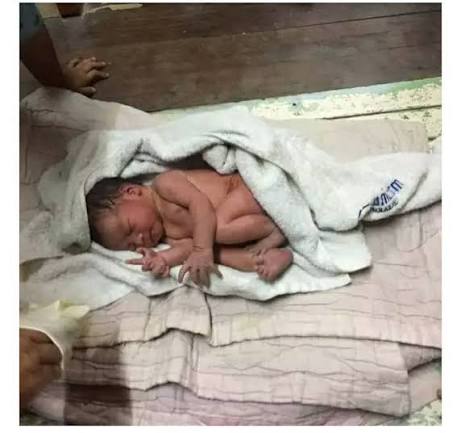
The root causes: It is never just one reason
My years of counselling at CPAC show me abandonment is rarely an act of malice. It is the tragic endpoint of seven overwhelming distresses:
1. Severe maternal mental illness —The hidden emergency
a) Clinical Postpartum Depression (PPD): This is far beyond “baby blues.” It is a severe mood disorder that can appear weeks to months after birth. Due to a massive drop in hormones, extreme sleep deprivation, and emotional exhaustion, the mother feels deep sadness, worthlessness, and complete emotional numbness towards her baby. Picture: A new mother sits by her bed all day, staring blankly. Her baby cries for hours, but she cannot lift her hands to carry the baby. She whispers, “This baby would be better off without me.” She does not hate the baby; she feels she has completely failed as a mother.
b) Peripartum Psychosis (Postpartum Psychosis): This is a psychiatric emergency. Rare but extremely dangerous, appearing suddenly within the first 2-3 weeks after delivery. The mother completely loses touch with reality. She hears commanding voices telling her to abandon the baby, or believes the baby is possessed by an evil spirit or is a “spirit child” who will bring a curse. Picture: A mother genuinely believes she heard a voice saying, “Leave this child at the crossroads at midnight or your family will die.” She abandons the baby not out of hatred, but because her broken mind believes she is obeying a higher spiritual order to save her family.
c) Pre-existing untreated Schizophrenia: This is a chronic, severe mental disorder that existed before the pregnancy. The stress of pregnancy and labour shatters her fragile coping. She suffers from paranoid delusions — believing people want to poison her and the baby — flat affect (zero facial expression), and grossly disorganised thinking, making it impossible to plan how to feed or clean a baby. Picture: A young woman whose family called her illness “spiritual attack” instead of taking her for medication wanders away after delivery, completely forgetting she even gave birth, leaving the infant behind.
2. Extreme socio-economic deprivation: For many girls in some parts of Ghana such as Kasoa, Madina, or Bekwai, poverty is not a statistic; it is a daily panic. No money for antenatal care, no money for hospital delivery, no money for baby diapers or formula. When a mother cannot feed herself, the thought of feeding another mouth feels impossible. Some mothers say, “I left her where someone richer would find her, because I could not watch her starve to death in my hands.” It is a distorted act of survival.
3. Intense societal stigma and shame: In Ghana, pregnancy outside marriage, teenage pregnancy, or pregnancy from rape can bring extreme family rejection. The girl is called “spoilt,” beaten, banned from church, or sacked from school. The fear of bringing shame to the family name is heavier than the fear of police. So she hides the pregnancy for 9 months, delivers alone, and abandons in secret to protect her family’s “honour.”
4. Paternal abandonment — The Man Who Ran Away: Behind almost every abandoned baby is a man who vanished. He says, “It is not mine,” or “Abort it,” and switches off his phone. The mother is left utterly isolated — no emotional, financial, or social support. She is criminalised alone, but the abandonment started with him. Psychological research shows paternal denial is one of the strongest predictors of maternal panic and newborn abandonment.
5. Substance abuse disorders: Alcohol, tramadol, and other drug addiction impair the brain’s executive functioning — the ability to plan, judge consequences, and process emotions. A mother struggling with addiction may give birth in a highly intoxicated or withdrawal state, unable to comprehend the needs of the newborn, leading to neglect and eventual abandonment.
6. The spirit child cultural phenomenon and superstition: In some remote pockets of Northern Ghana and even in few parts of Central and Ashanti regions, public health research shows babies born with congenital deformities, severe disabilities, or whose mothers die in childbirth are branded as “spirit children” or cursed. In extreme instances, families, under cultural pressure, mandate that such babies be exposed or abandoned at shrines or bushes. This is not mental illness, but a harmful cultural belief system that still kills.
The invisible wounds
On the baby: Risk of death from hypothermia, sepsis, and infection. Survivors suffer Anaclitic Depression and Failure to Thrive due to lack of touch. As adults, they battle Reactive Attachment Disorder, chronic mistrust, and identity crisis — “Why did my mother leave me in a dustbin?”
On the mother: Lifelong hidden grief, intense guilt, chronic PTSD, depression, and elevated suicide risk. A prison cell does not heal this.
On the nation: Overburdened orphanages like Osu Children’s Home, draining health budgets, and overworked Social Welfare officers.
SKIP THE QUEUE, TAP THE NEWS
You can now read the Ghanaian Times and The Spectator newspapers from the comfort of your device via TimesNewsPlus.
Join our WhatsApp Channel: https://whatsapp.com/channel/0029VbBElzjInlqHhl1aTU27