News
Damba Festival, a living tradition across northern Ghana

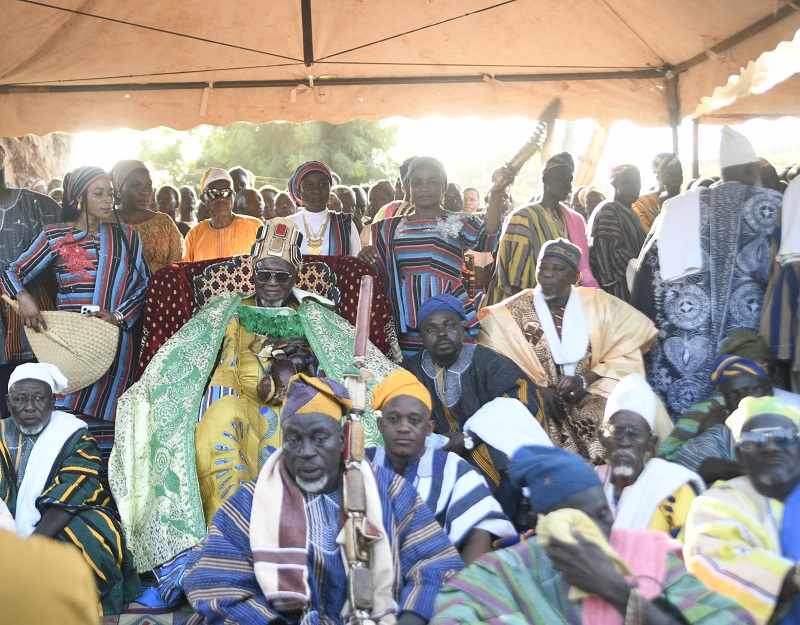
Damba, one of Northern Ghana’s major traditional festivals, has once again brought chiefs, elders, families, young people and visitors together in a celebration of culture and tradition.
This year, the celebrations were observed across several communities in Yendi, Bimbilla, Kumbungu and Lamashegu and Tamale.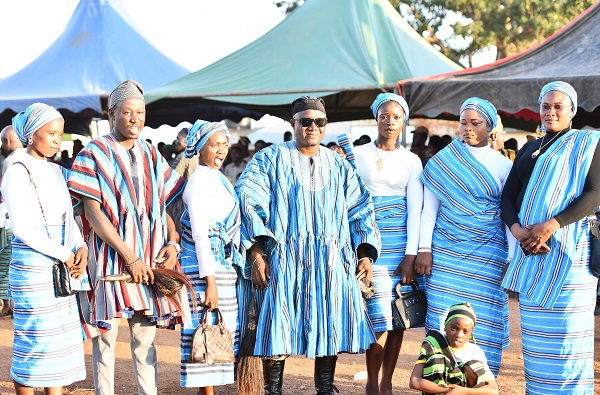
Although each community had its own character and way of celebrating, traditional music, dancing, colourful regalia and community participation remained common features.
In Yendi, the traditional capital of Dagbon, this year’s Damba was marked by the absence of the late Ya-Na Abukari Mahama II, who passed away earlier this year.
It was the first Damba in seven years to be celebrated in Yendi without the late King.
His absence was felt at the Gbewaa Palace, where the festival had been celebrated under his leadership in previous years.
The late Ya-Na’s eldest son, Kampakuya-Naa Yakubu Abukari, Regent of Dagbon, led the traditional observance during the transition period.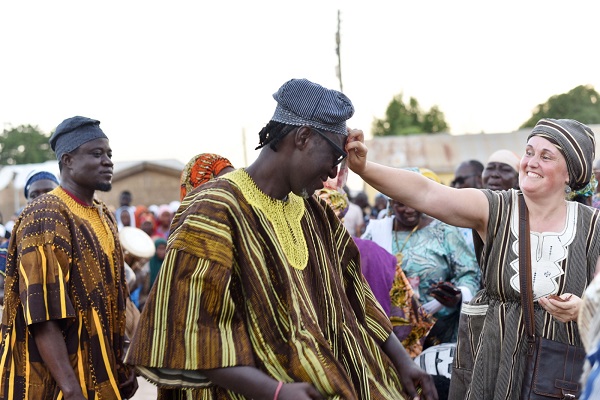
Despite the mixed emotions among celebrants, the sound of drums and traditional musical instruments soon drew crowds to the palace.
Within a short time, the palace grounds were filled with chiefs, elders, families, young people and children.
Children took part in traditional performances as drummers and musicians provided the rhythm for the celebration.
One of the notable scenes was the appearance of the “truck-pusher chief,” who arrived on a decorated truck accompanied by young followers.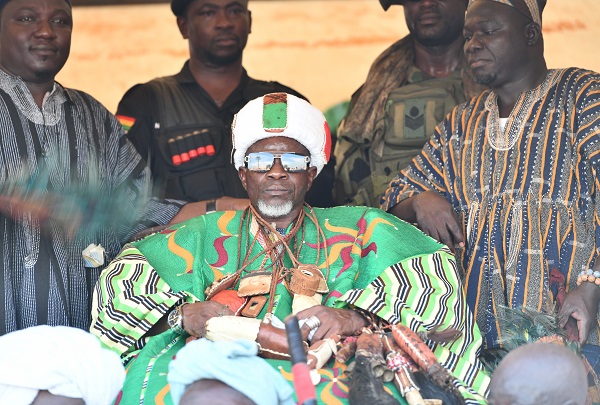
His appearance became one of the memorable moments of the celebration and demonstrated the community character of the festival.
In Bimbilla, the traditional capital of the Nanung Traditional Area, Damba brought traditional authorities, elders, families and young people together.
The celebration was led by the Regent of the Nanumba Kingdom, Nyalinbolgu Naa Yakubu Andani Dasana.
The activities combined traditional celebration with community events, including a health walk and rice picking.
Traditional clothing, music and dancing formed part of the celebrations as different generations participated.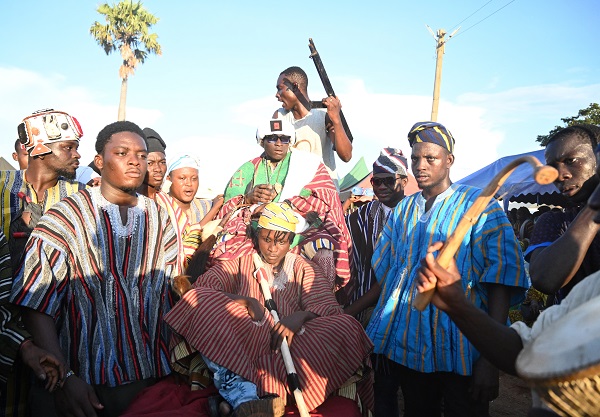
Children watched and joined activities, while young people used mobile phones and cameras to document the festival.
In Kumbungu, the Kumbungu Na, Naa Yab Kumbung Naa Yiri II, led the community’s Damba celebration.
Traditional clothing, drumming, dancing and communal gatherings formed part of the activities.
Elders and traditional authorities provided a link to the customs of the past, while young people and children participated in the celebrations.
For many residents, Damba remains an important occasion to reconnect with their cultural heritage and pass traditions on to the next generation.
In Lamashegu, within the Tamale metropolis, Damba was celebrated under the leadership of Lamashe-Naa Alhaji Mahama Iddrisu.
The celebration brought together traditional authorities, elders, families and residents.
Young people featured prominently in the activities, participating in traditional performances and documenting the occasion with mobile phones and cameras.
The celebrations reflected the ability of traditional culture to remain relevant within a rapidly changing urban environment.
Ending the day in Tamale captured moments thousands of people celebrating at the Tamale Jubilee Park with displays on horses which was one of the highlights of the celebration.
Truck pusher’s chief which is becoming a very important part of the celebration stole the show which attracted much attention.
The celebrations in the four communities demonstrated the diversity of Damba across Northern Ghana.
While the settings and expressions differed, the celebrations shared a common purpose bringing people together and keeping cultural traditions visible.
One of the clearest features of this year’s celebrations was the participation of children and young people.
They danced, watched traditional performances, joined community activities and documented the celebrations.
Their participation points to the important role of younger generations in sustaining Northern Ghana’s cultural heritage.
For many communities, Damba is therefore not simply an annual festival, but is an opportunity for cultural knowledge to be transferred from elders to young people through participation and observation.
It is also increasingly becoming a visual record, as photographers, journalists and young people use cameras and smartphones to document traditional ceremonies.
The festival continues to bring together traditional authority, families and different generations.
From Geoffrey Asiome Kwame Buta, Yendi
SKIP THE QUEUE, TAP THE NEWS
You can now read the Ghanaian Times and The Spectator newspapers from the comfort of your device via TimesNewsPlus.
Join our WhatsApp Channel: https://whatsapp.com/channel/0029VbBElzjInlqHhl1aTU27









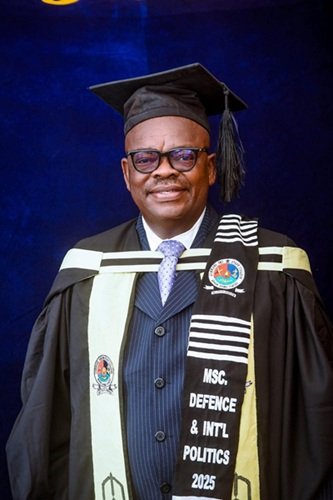
Management and staff of Owass FM have announced the passing of media personality, comedian and politician Seth Kwame Dzokoto following a medical emergency during a live morning show discussion at the station earlier today.
According to the station, Dzokoto was participating in a panel discussion on its morning show “Oman Nkoso” when he suddenly took ill and collapsed.
A statement from the station said its team immediately rushed him to the hospital for medical attention, but he was pronounced dead by the attending medical doctor upon arrival.
“We are deeply saddened by this unfortunate incident, which occurred in the course of our regular programming. Our thoughts and prayers are with his family, loved ones, colleagues, and all those who have been affected by his passing,” the statement said.
Management acknowledged that information about the incident is already circulating in the public domain, but appealed to the public and colleague media houses to respect the privacy of the bereaved family and refrain from circulating unverified information or speculation regarding the circumstances of his death.
Owass FM extended its heartfelt condolences to the family of Seth Kwame Dzokoto.
By Edem Mensah-Tsotorme

The State through the Attorney General (AG) has filed an appeal at the Supreme Court challenging the suspension of the trial in the case of The Republic v Hanan Aludiba and Faiza Seidu.
On Monday, the Court of Appeal suspended the trial in the case. But the prosecution says it has filed an appeal against the suspension order.
According to the update, the law does not allow a criminal trial to be suspended simply because an accused person has complained about some of the charges on the charge sheet, particularly when those complaints were dismissed as meritless.
It argues that if the Court of Appeal’s decision is allowed to stand, no prosecution will ever be possible, since all it would take for a trial to be suspended is an accused person complaining about anything on the charge sheet.
By Edem Mensah-Tsotorme