News
Make family planning centres, antenatal clinics adolescent friendly

- /home/u249204778/domains/spectator.com.gh/public_html/wp-content/plugins/mvp-social-buttons/mvp-social-buttons.php on line 27
https://spectator.com.gh/wp-content/uploads/2025/09/Mr-Evans-Sinkari-addressing-the-audience.jpg&description=Make family planning centres, antenatal clinics adolescent friendly', 'pinterestShare', 'width=750,height=350'); return false;" title="Pin This Post">
- Share
- Tweet /home/u249204778/domains/spectator.com.gh/public_html/wp-content/plugins/mvp-social-buttons/mvp-social-buttons.php on line 72
https://spectator.com.gh/wp-content/uploads/2025/09/Mr-Evans-Sinkari-addressing-the-audience.jpg&description=Make family planning centres, antenatal clinics adolescent friendly', 'pinterestShare', 'width=750,height=350'); return false;" title="Pin This Post">
Stigmatisation and judgmental attitudes from some health workers have been identified as some of the factors that discourages young people from accessing care.
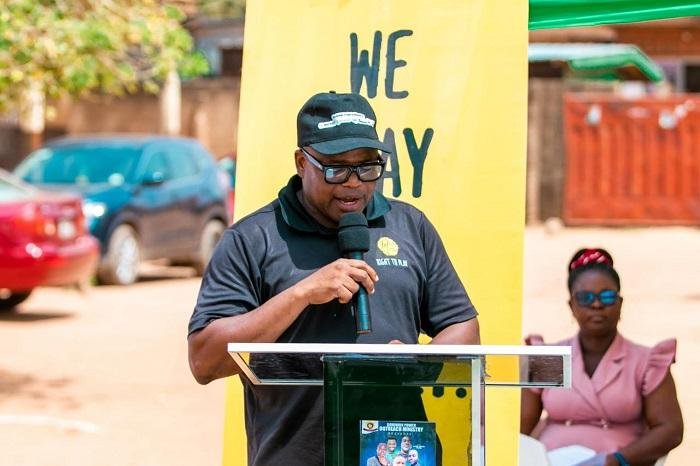
The interim Country Director of Right to Play Ghana, Mr Evans Sinkari, has, therefore, urged family planning centres to be more welcoming and inclusive to adolescents seeking reproductive health services.
“Young people are among the most vulnerable when it comes to reproductive health, yet they face the greatest barriers to accessing services,” he said.
In an interview with The Spectator, Mr Sinkari explained that adolescents, aged 10 to 19, were at risk of unintended pregnancies, unsafe abortions, and sexually transmitted infections due to limited access to information and services.
He stated that many were sexually active, whether by choice, coercion, or early marriage—yet often lacked adequate knowledge of, or access to contraception.
He emphasised that health workers’ judgmental attitudes, coupled with lack of privacy and confidentiality, often shame adolescents, deterring them from seeking contraceptives.
The fear that parents or community members may discover their choices further discourages them, he noted, and added that unfriendly environments at health facilities largely designed for adults, created feelings of intimidation, while financial and social barriers limit adolescents’ decision-making power and ability to pay for care.
According to Mr Sinkari, accessible and youth-friendly family planning centres would help reduce adolescent pregnancies and associated risks.
Contraceptive access, he stressed, prevents unsafe abortions, a leading cause of maternal mortality among adolescents.
He noted that promoting health and education would also reduce unintended pregnancies, allowing young people to remain in school and realise their potential.
On adolescent pregnancy, he noted that some health workers stigmatised young mothers when they sought antenatal care.
He emphasised the need for compassion, dignity, and professionalism in treating adolescent pregnant girls, arguing that stigmatisation undermined their rights and Ghana’s public health goals.
“It is not right for health workers in Ghana or anywhere to undermine adolescent girls,” he indicated, warning that such attitudes discouraged antenatal visits, skilled delivery, and postnatal care.
Some young mothers, fearing mistreatment, turn to unsafe abortions or unqualified traditional attendants, putting their lives at risk.
“These psychological harms lead to poor maternal and child outcomes, including preterm births, low birth weight, neonatal complications, and reduced uptake of postnatal services such as child immunisation and nutrition,” he explained.
Additionally, he cautioned that negative attitudes by health professionals perpetuate a cycle of harm, discouraging care-seeking, worsening health outcomes, increasing stigma, and undermining Ghana’s health and development goals.
Citing the 1992 Constitution and international agreements ratified by Ghana, such as the UN Convention on the Rights of the Child and the African Charter on the Rights and Welfare of the Child, he stressed that all adolescents have the right to quality, non-discriminatory healthcare.
Moreover, Mr Sinkari called for full implementation of Ghana’s Adolescent Health Services Policy and the National Reproductive Health Services Policy, which emphasise creating safe, supportive, and youth-friendly health services.
He said adolescent reproductive health must be a national priority, urging the establishment of more adolescent-friendly clinics across the country to provide education, reduce stigma, and help Ghana achieve SDG 3 on health and SDG 5 on gender equality.
From Ama Tekyiwaa Ampadu Agyeman, Koforidua
Join our WhatsApp Channel now!
https://whatsapp.com/channel/0029VbBElzjInlqHhl1aTU27







The Parliamentary Select Committee on Energy has appealed to the Ministry of Finance to release GH¢5.6 million to the Petroleum Commission to enable it to establish and operate a world-class data centre.
According to the Committee, access to the funds will strengthen the Commission’s capacity to manage critical upstream petroleum data and improve its operations.
Speaking during the appeal, Chairman of the Committee, Emmanuel Kwasi Bedzrah, said the move was crucial to efforts to revitalise Ghana’s upstream petroleum industry and increase oil production.
He noted that although investment and hydrocarbon production had declined in recent years, Parliament’s approval of an extension of the petroleum agreement to 2030 had attracted additional funding and contributed to an increase in production from about 80,000 to 120,000 barrels per day.
Meanwhile, concerns have been raised over repeated budget allocations for oil exploration in the Voltaian Basin.
Mr. Bedzrah stressed that funds approved for exploration must produce tangible results, adding that the Committee would require clear evidence of progress before supporting future budget allocations for the programme.
The appeal was made during a working visit to the Petroleum Commission as part of the Committee’s oversight activities to assess its operations and management procedures.
During the engagement, the Chief Executive Officer of the Petroleum Commission, Emeafa Hardcastle, took the Committee through the Commission’s working procedures and mandate, which includes regulating, managing and coordinating upstream petroleum activities.
She disclosed that since assuming office in 2025, government had pursued measures to reverse the decline in crude oil production, sustain output and reposition Ghana as an attractive destination for investment in Africa’s increasingly competitive petroleum sector.
In addition, she said government had secured fresh commitments of about US$35 billion to help revitalise the sector.
As part of the oversight exercise, the Committee is expected to conclude its monitoring visit with engagements at the National Petroleum Authority (NPA) and the Ghana Oil Company Limited (GOIL).
By Edem Mensah-Tsotorme
News
“No civilisation deserves to be annihilated” – Mahama calls for dialogue on global conflicts at UNGA 81
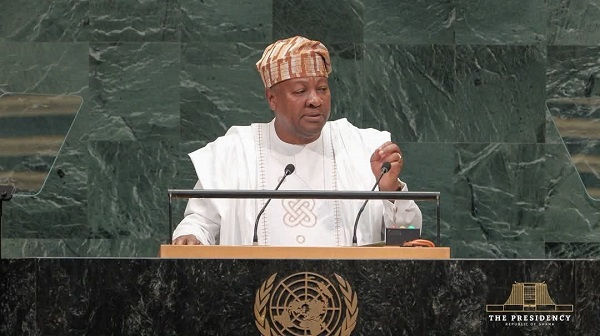
President John Dramani Mahama has called for solidarity and dialogue in resolving global conflicts, insisting that no civilisation deserves to be wiped out.
“No human civilisation deserves to be annihilated, certainly not a member state of the United Nations,” President Mahama stated in his address at the 81st United Nations General Assembly in New York.
He called for solidarity with nations facing terrorism, especially the Alliance of Sahel States (AES), and for a uniform approach to conflicts in Europe, the Middle East and Africa.
On the Middle East, the President called for a return to negotiations, saying “The current Middle East crisis is having a deleterious effect on the world economy.”
“I believe that dialogue can resolve even the most intractable of problems,” he added.
By Edem Mensah-Tsotorme

 Entertainment1 week ago
Rhythms On Da Runway returns November 28 with 16th edition themed ‘Unbound’
- Entertainment1 week ago
Ohemaa Mercy’s Tehillah Experience outfit was priestly regalia, not costume – Management clarifies
 News1 week ago
Janet Asana Nabla criticises Mahama over China curriculum controversy involving Haruna Iddrisu