Hot!
Make coup unattractive in reportage …Media told


- /home/u249204778/domains/spectator.com.gh/public_html/wp-content/plugins/mvp-social-buttons/mvp-social-buttons.php on line 27
https://spectator.com.gh/wp-content/uploads/2024/04/Ms-Virgina-in-group-picture-with-dignitaries-after-the-event.jpg&description=Make coup unattractive in reportage …Media told', 'pinterestShare', 'width=750,height=350'); return false;" title="Pin This Post">
- Share
- Tweet /home/u249204778/domains/spectator.com.gh/public_html/wp-content/plugins/mvp-social-buttons/mvp-social-buttons.php on line 72
https://spectator.com.gh/wp-content/uploads/2024/04/Ms-Virgina-in-group-picture-with-dignitaries-after-the-event.jpg&description=Make coup unattractive in reportage …Media told', 'pinterestShare', 'width=750,height=350'); return false;" title="Pin This Post">
The United States (US) Ambassador to Ghana, Ms Virginia Palmer has advised the media to make coups unattractive in their reportage as the country gets closer towards its general election.
She said one of the effective means to do so was to target persons who have experienced coups and have been deprived of their rights to tell their own stories.
She was of the view that this would go a long way to discourage others who might be tempted to think that the use of coups was the suitable solution to challenges faced by a country.
Ms Palmer made the comment at the Ghana Journalists Association (GJA) and the United States (US) Embassy workshop on ‘Peaceful Journalistic Discourse’ at the International Press Centre for 20 Journalists from the Greater Accra Region.
“When a democratic government fails to live up to expectation, the solution is actually more democracy, not less. We see it in the Sahel where human rights violations by security forces can drive individuals to violent extremism. We also see it where the failure to equitably share economic dividends drives people to seek change” she said.
She observed that coups that install military junta in place of democratically elected governments were the antithesis of democracy because they take power from the people and put it squarely in the hands of a few, usually the military.
“Even when a coup initially has a popular support, it normally takes only a few months and sometimes just a few hours for the people to realise that an authoritarian regime is not the answer to security threats and economic malaise” she said.
The Ambassador said the change that was needed was to share the resources of a country equitably and to structure the economies to ensure that economic prosperity was shared across classes, regions, and sub regions.
She stressed that the solution to corruption was a more democratic governance, more rule of law and more accountability and not less of it.
“Ghana has long been a regional example of stability and democratic success but, as we’ve seen across the region, democracy is under threat and we need to work together to protect it” she told the media.
Ms Palmer noted that, enthusiasm for coups and authoritarianism among the people was often split among age groups.
“Those that remember authoritarian regimes know very well that coups must be avoided at all costs. Young people, on the other hand, without firsthand knowledge of authoritarianism, seems to think coups are the answer to corruption and economic challenges” she said.
She said there was the need for the media to highlight the need for democracy to be upheld as this year was an election year.
She commended the media for their efforts to ensure free and fair election while assuring that the US Embassy would support the sharing of best practices for elections and elections reporting.
She was hopeful that this would be done through a well-educated electorate that is aware of their rights, understand issues and effectively use their voting power in the upcoming elections.
The event which was launched in November last year in Accra had so far taken the workshops to the Volta, Northern and Ashanti regions.
The President for the GJA, Mr Albert Kwabena Dwumfour stated that the theme for the GJA/US Embassy Ghana Project ‘Promoting Peaceful Journalistic Media Platforms ahead of Election 2024’ was appropriate given the tension that invariably characterises the elections in Ghana.
Mr. Dwumfour said the GJA believes that freedom of expression did not only mean allowing people to speak, but also ensuring responsibility, adding that it was important to protect the space for free speech.
The project which brought journalists from various media houses from the Tema, and Accra regions constituted the print, on-line, radio and television.
The aim was to offer among others professional development to Online Editors/Producers/On Air Personalities/Talk Show Hosts.
The GJA/ US Embassy training programme is also to encourage information sharing with Election related entities to better inform the work of the Electoral Commission and related entities with the view to promoting freedom of expression for violent free and credible polls.
From Dzifa Tetteh Tay, Tema


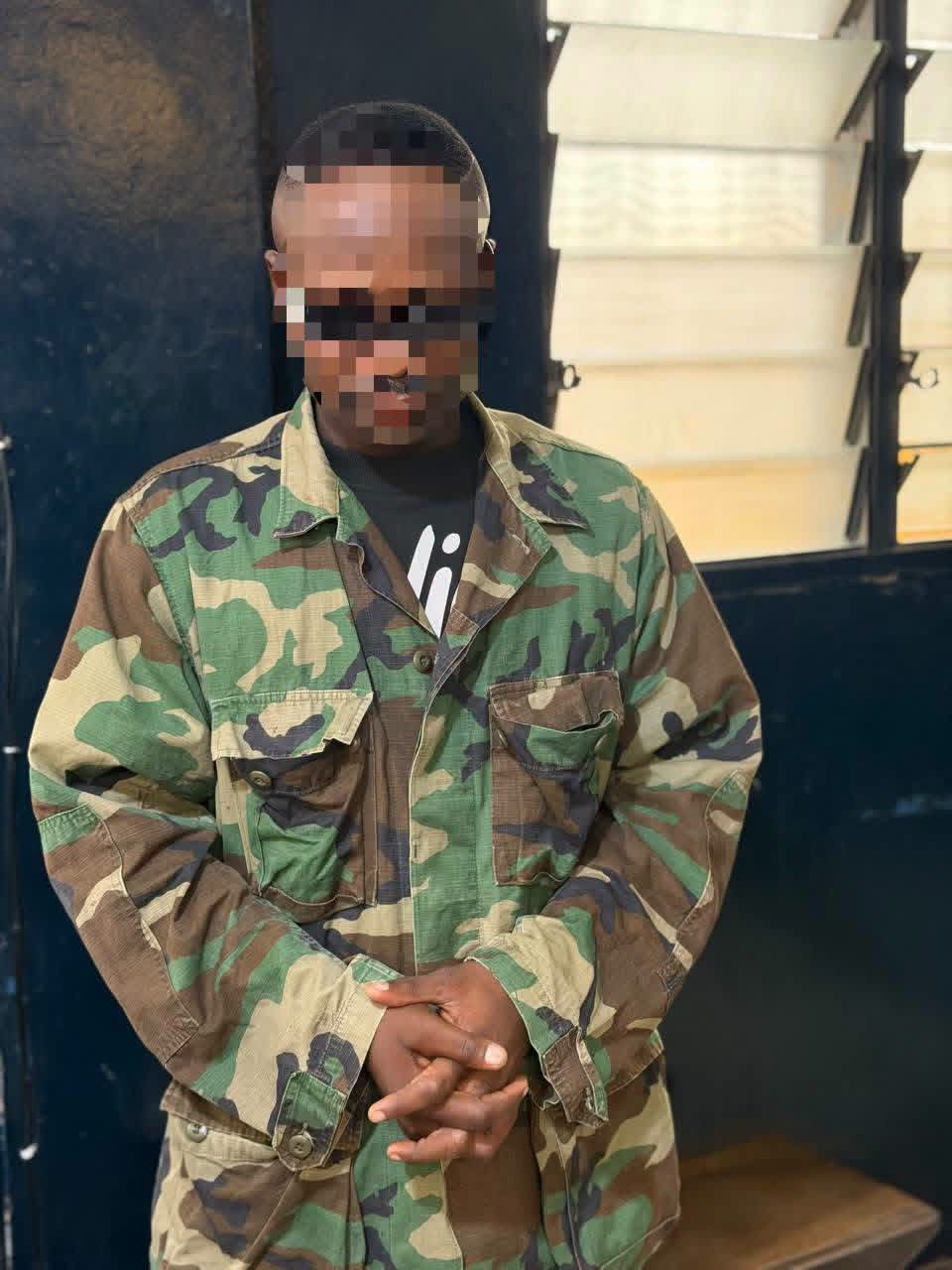
The Tema Regional Police Command has arrested a 32-year-old man for allegedly posing as a soldier and extorting money from unsuspecting members of the public at Ashaiman.
The suspect, identified as Bright Atsu Kudiabor, was arrested by the Ashaiman Police on Wednesday, September 16, 2026, at about 7:00 a.m.
According to the Police, he was arrested at an area known as “I Shall Return”, where he was allegedly parading himself as a soldier and demanding money from people.
The Police said Kudiabor, who is an ex-convict, was initially arrested by personnel of the Ghana National Fire Service in Ashaiman with assistance from other members of the public.
A search conducted on him after he was handed over to the Police reportedly led to the recovery of a set of military camouflage uniform.
The suspect is currently in Police custody and assisting with investigations.
The Tema Regional Police Command said he would be processed for court after investigations are completed.
The Police urged the public to remain vigilant and report anyone who falsely presents themselves as a soldier or a member of another security agency to deceive or extort money from the public.
By: Jacob Aggrey
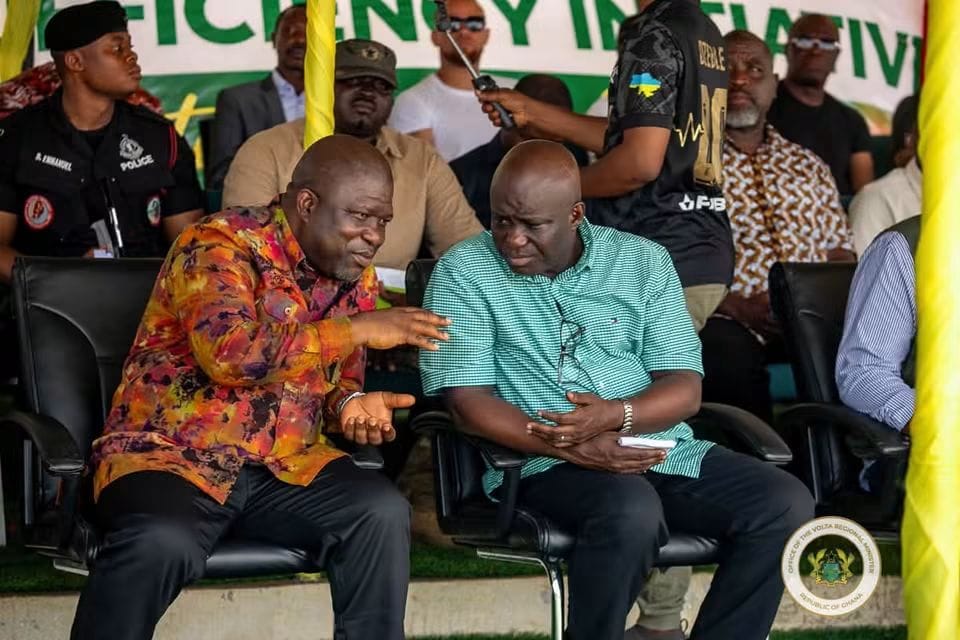
Volta Regional Minister, James Gunu, says the Volta Region holds enormous agricultural potential and efforts must be geared towards connecting farmers to the needed resources to unlock that potential.
He said focus must be on linking farmers to resources, technology, financing and markets to increase production, create jobs and build sustainable livelihoods.
Hon. Gunu made the remarks at the national launch of the Ghana Tomato Self-Sufficiency Initiative (GHATSI) held at Anloga in the Volta Region on Tuesday, September 15.
The initiative, under the theme “Produce at Home. Feed the Nation. Export the Surplus,” seeks to boost local tomato production, processing and marketing while reducing Ghana’s heavy reliance on imported tomatoes.
The launch was attended by the Minister for Food and Agriculture, Eric Opoku, his Deputy, John Setor Dumelo, Feed Ghana Coordinator, Bright Demordzi, Members of Parliament, traditional leaders, MMDCEs, farmers and other stakeholders.
Mr.Gunu expressed appreciation to the Minister for Food and Agriculture for the support announced for the region, including two excavators, 200 cartons of organic fertiliser, and GH¢200,000 for Ms. Kuatudzo Esther Dela, a tomato farmer and processor from Ziope.
He described the initiative as an important step towards making agriculture a stronger driver of food security, job creation and economic growth in the Volta Region.
By Edem Mensah-Tsotorme

 News1 week ago
48 Engineer Regiment to be major sub-contractor on Accra-Kumasi Expressway, $2bn ready- Prez Mahama
- Entertainment7 days ago
Rhythms On Da Runway returns November 28 with 16th edition themed ‘Unbound’
- Entertainment7 days ago
Ohemaa Mercy’s Tehillah Experience outfit was priestly regalia, not costume – Management clarifies