Fruitful Living
Letters from God – (part II): be faithful unto death


“Do not be afraid of what you are about to suffer. I tell you, the devil will put some of you in prison to test you, and you will suffer persecution for ten days. Be faithful, even to the point of death, and I will give you life as your victor’s crown. Revelation 2:10
INTRODUCTION
This is the second part of the series on God’s messages to the churches. In the first part, we saw clear evidence of how God loves us too much to leave us as sheep without direction. He watches over us and checks out our intentions and actions and calls us to order when He sees us going astray.
Through a series of letters, God sent messages to seven of the first generation Christian churches.
His letters were divided into three parts. The first gave a diagnosis of their spiritual condition. The second gave a description of the symptoms of their spiritual ailments as well as its causes, effects, and progression.
And the third gave the prescription made for ailment to address what was described. All the letters were to give clarity to the situation the churches were passing through at the time, and to ensure that He, as the All-knowing, Alpha and Omega God, was aware of everything that happened to them, including the choices they make in response.
But here’s the beauty of the letters. Each letter was addressed to a church, and concluded with a warning to “whoever has ears.”
It is that conclusion which makes the letter applicable to the church in these latter days. In fact, not the church as an entity, but the church as each believer – you, me, and every single person that professes the name of Christ.
In this edition, we come to the second letter, addressed to the second church SMYRNA. As has been stated in the preceding paragraph, the message of this letter is for every believer. You might not have gone through the experience described, but it will surely come to pass.
For Jesus said “Remember what I told you: ‘A servant is not greater than his master.’ If they persecuted me, they will persecute you also. If they obeyed my teaching, they will obey yours also” – John 15:20.
Jesus went through the Smyrna experience, and so must we who are His followers today. Therefore, take this letter for clarification: if this experience is already in your past, or for preparation if the experience lies in your future.
The warning is that “whoever has ears let them hear what the Spirit says to the churches.” – Revelation 2:11. And as the Bible emphasises: “My son, – or my daughter, pay attention to what I say; turn your ear to my words.” – Proverbs 4:20
SPIRITUAL CONDITION
History tells us that Smyrna was a commercial and wealthy city. It played host to visitors from different parts of the world who were there along trade routes and engaged in an endless stream of buying and selling.
The busy commerce also rubbed off on the entertainment, academic, social, cultural, and spiritual landscape of the city.
New drama, dance, philosophy, fashion, worship style, and many other new things found their way to other towns and cities through Smyrna. We can relate to that can’t we?
TO BE CONTINUED!
For further inquiries please contact us on Tel Nos. 0243588467 or 0268130615
Email: saltnlightministries@gmail. com
Website: saltandlightministriesgh.org
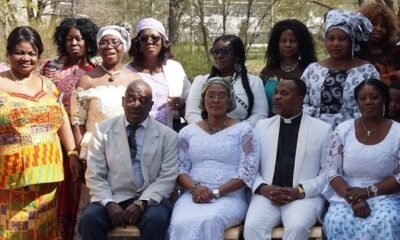
By Dr. Joyce Aryee, the author


The internationally accepted definition (from the UN Palermo Protocol, 2000) identifies three elements:
ACT (What is done), which includes:
• Recruitment, transportation, transfer harbouring, or receipt of persons. How it is Applied:
In Ghana, traffickers recruit children from rural areas under false promises of education or employment.
MEANS (How it is done), which includes:
• Threats
• Coercion
• Deception
• Abuse of vulnerability
How it is applied:
Parents may be deceived into releasing children, or victims may be threatened into silence.
PURPOSE (Why it is done), which includes:
• Sexual exploitation
• Forced labour
• Slavery
• Organ harvesting
Key Insight:
Even if a victim appears to “consent,” such consent is legally irrelevant if coercion or deception is involved.
Islamic legal principles align with this framework by prohibiting exploitation (ẓulm) and unjust enrichment, rendering trafficking morally and legally impermissible (Bawono & Huda, 2025).
Forms and impacts of human trafficking
Human trafficking manifests in several forms:
• Child trafficking → educational deprivation, psychological trauma
• Forced labour → economic exploitation, health risks
• Sexual exploitation → severe physical and emotional harm
• Organ trafficking → life-threatening and ethically egregious
Human trafficking manifests in diverse and interconnected forms. Child trafficking leads to loss of education, long-term psychological trauma, and entrenched poverty.
Forced labour subjects victims to severe economic exploitation and hazardous working conditions, often resulting in deteriorating health. Sexual exploitation inflicts profound physical abuse and emotional damage, alongside social stigma.
Organ trafficking poses life-threatening risks and represents a grave ethical violation. Collectively, these practices undermine human capital, weaken social structures, and hinder sustainable development. These forms collectively erode human capital and social stability.
Legal and Institutional Frameworks
International Legal Instruments
Universal Declaration of Human Rights (UDHR, 1948)
The UDHR provides the normative foundation for global human rights law:
• Article 1: Affirms equality and freedom of all humans
• Article 4: Explicitly prohibits slavery and servitude
• Article 5: Prohibits torture and degrading treatment
Analytical Insight:
Human trafficking violates all three provisions simultaneously. Victims are deprived of freedom (Article 1), subjected to forced labour (Article 4), and exposed to degrading conditions (Article 5).
These align closely with Islamic prohibitions against oppression and injustice.
Palermo Protocol (2000)
This is the primary international legal instrument addressing trafficking:
• Provides the AMP definition (Act–Means–Purpose)
• Emphasises the 3Ps framework: Prevention, protection, prosecution
• Recognises victim rights and state obligations
Analytical insight:
The Protocol’s emphasis on protection and dignity parallels Islamic legal objectives, particularly the preservation of life and honour. Comparative studies show strong convergence between Islamic law and international anti-trafficking norms (Jamal, 2025).
Regional framework
African charter on human and peoples’ rights
• Article 5: Protects human dignity and prohibits exploitation
• Article 15: Guarantees equitable working conditions
Analytical insight:
The Charter contextualises human rights within African socio-cultural realities, reinforcing communal responsibility an idea that resonates with Islamic communal ethics (ummah).
National framework: Ghana 1992 Constitution of Ghana
• Article 15: Guarantees the dignity of all persons and prohibits torture or degrading treatment
• Article 16: Explicitly prohibits slavery, servitude, and forced labour
• Article 21: Guarantees fundamental human rights and freedoms, including personal liberty, freedom of movement, and constitutional safeguard against human trafficking. In particular, Article 21 affirms the right of individuals to move freely, make autonomous decisions, and live without coercion.
Human trafficking directly contravenes these rights by restricting victims’ movement, subjecting them to confinement, and denying their personal liberty through deception and force. Victims are often transported against their will and held in exploitative conditions, thereby violating their constitutional freedoms.
Consequently, trafficking not only breaches specific prohibitions under Articles 15 and 16 but also fundamentally undermines the broader human rights guarantees freedom from arbitrary restraint.
Human Trafficking Act (Act 694, as amended)
• Criminalises all forms of human trafficking, including recruitment, transportation, harbouring, and exploitation
• Provides for victim protection, rehabilitation, and reintegration through state-supported mechanisms
• Establishes institutional frameworks for investigation, prosecution, and inter-agency collaboration
Critical and normative insight:
The Act reflects Ghana’s commitment to safeguarding human dignity and aligns with international standards. However, enforcement challenges persist due to limited funding, weak institutional coordination, and low public awareness, which hinder effective implementation.
From an Islamic perspective, the provisions of Act 694 resonate strongly with core Sharīʿah principles. Islam unequivocally prohibits all forms of exploitation (ẓulm), coercion, and the commodification of human beings. Human trafficking violates the divinely ordained dignity (karāmah) of individuals, undermines justice (‘adl), and disrupts social balance. By criminalising trafficking and promoting victim protection, the Act indirectly advances the higher objectives of
Islamic law (Maqāṣid al-Sharīʿah), particularly the preservation of life, dignity, and wealth. Thus, both Islamic teachings and Ghanaian law converge in condemning trafficking as a grave moral and legal injustice.
Page | 8
Children’s Act (Act 560)
• Protects children from exploitative labour and harmful practices
• Promotes access to education, welfare, and holistic development
Domestic Violence Act (Act 732)
• Addresses physical, emotional, and psychological abuse often associated with trafficking
• Provides legal remedies, protection orders, and support systems for victims
By Imam Alhaji Saeed Abdulai, Kpone
Katamanso Municipal Chief Imam, Certified
Counsellor and Governance Expert
Jesus teaches, “Neither do people light a lamp and put it under a basket, but on a stand, and it gives light to all in the house.”
Light is not meant to be hidden. In Ephesians 5:8, the Bible says, “For you were once darkness, but now you are light in the Lord. Walk as children of light.”
This means our faith should be visible in the way we live. Not in a loud or forceful way, but in a consistent and genuine way.
When we choose honesty, kindness, patience, and love, we are shining our light. People may not always listen to what we say, but they will see how we live.
Your Life Should Point Others to God
Jesus says, “Let your light so shine before men, that they may see your good works and glorify your Father in heaven.”
This is the purpose of being salt and light. It is not about drawing attention to ourselves, but about pointing people to God.
In 1 Peter 2:12, we are encouraged to live such good lives that others may see our actions and glorify God.
Our lives become a testimony. The way we treat people, the way we handle challenges, and the way we walk in love all speak loudly.Through us, others can begin to see the goodness and grace of God.
6. Being Salt and Light Requires a Living Relationship with God
We cannot live this life in our own strength.
In John 15:5, Jesus says, “Without me you can do nothing.” This reminds us that our ability to influence the world comes from our connection with Him.
As we spend time in prayer, study His Word, and walk in obedience, our lives are transformed. From that place, we begin to reflect Him naturally.
It is not about striving. It is about abiding in Him.
A Simple Reflection
To be salt and light means:
² To influence the world with Godly character
² To live differently according to God’s Word
² To shine through your daily actions
² To point others to Christ
² To remain connected to Him at all times
Conclusion
Jesus has already declared who you are. You are the salt of the earth. You are the light of the world. The question is whether you are living out that identity.
The world needs your influence. The world needs your light. In your home, your workplace, your church, and your community, God has placed you there for a reason.
As you walk with Him, your life will naturally make an impact. Shine your light,
stay true to His Word and let your life bring glory to God.
By Rev. Dr Joyce Aryee