Features
Let’s treat our pensioners with respect and dignity!

- /home/u249204778/domains/spectator.com.gh/public_html/wp-content/plugins/mvp-social-buttons/mvp-social-buttons.php on line 27
Warning: Trying to access array offset on false in /home/u249204778/domains/spectator.com.gh/public_html/wp-content/plugins/mvp-social-buttons/mvp-social-buttons.php on line 27
&description=Let’s treat our pensioners with respect and dignity!', 'pinterestShare', 'width=750,height=350'); return false;" title="Pin This Post">
- Share
- Tweet /home/u249204778/domains/spectator.com.gh/public_html/wp-content/plugins/mvp-social-buttons/mvp-social-buttons.php on line 72
Warning: Trying to access array offset on false in /home/u249204778/domains/spectator.com.gh/public_html/wp-content/plugins/mvp-social-buttons/mvp-social-buttons.php on line 72
&description=Let’s treat our pensioners with respect and dignity!', 'pinterestShare', 'width=750,height=350'); return false;" title="Pin This Post">
A 72-year-old pensioner, using a walking stick, once walked to a bank in Accra which was quite a distance from his house in an anticipation of withdrawing his meagre pension allowance. The old man was acting on a payment scheduled calendar prepared by the Social Security and National Insurance Trust (SSNIT) on the monthly pension allowance to beneficiaries of the National Pension Scheme.
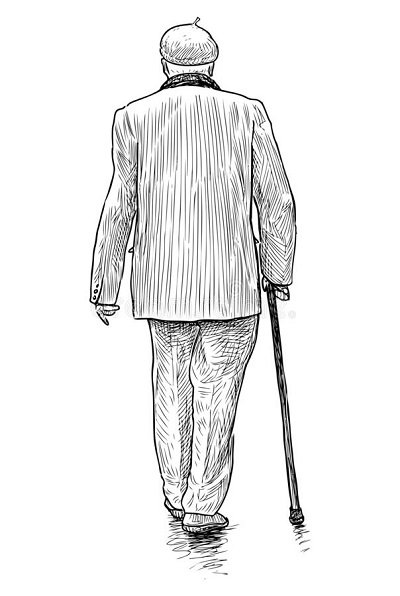
Looking tired, weak and frail, the fairly old man got to the bank only to be told that SSNIT had not forwarded the monthly pension to the bank to enable them to authorize payment of his allowance and, therefore, he could not withdraw his money. Visibly confused and dejected, the man nearly collapsed. Just imagine the terrible and harrowing condition in which the old man found himself in at that particular moment.He was disappointed and disturbed, especially in a situation where he had to walk a long distance to the bank. But for some good Samaritans at the banking hall who mobilised some funds to give to the old man, the situation would have been dangerous and the worse could have happened.
DELAYS IN PAYMENT OF PENSIONS
There are other negative instances across the country in which SSNIT, managers of the Pension Scheme, has not lived up to expectation and delayed in the payment of pension to beneficiaries and has failed to communicate or explained to them the reason behind the delay in sending their money to the various banks and as a result some of these old men were placed in a very tight corner because for some of them, their monthly pension allowance has been their only source of revenue for their livelihood since they don’t have any dependants to fall on in times of financial difficulties. In very few occasions, messages are sent on mobile phones in an anticipation that beneficiaries will read and be informed about further delay in the processing of entitlements, but not everyone owns some of these android phones, more so, how many of such old men can access, use or manipulate these phones?
A typical example of the delay in payment of the pension was in the month of February where it delayed for a couple of days. Per the payment calendar issued by SSNIT at the beginning of the year, the pension is paid and routed to the various banks every third Thursday of each month. This arrangement has been duly communicated to the beneficiaries and, therefore, they are aware of the date and have obviously, budgeted for the money. It is that prior notice, that inspires and entices the beneficiaries to go to their respective banks to withdraw their entitlements. If payments are not made at the stipulated date and no communication or proper explanation is given by SSNIT, it disorganises and dampens their spirit. One would expect SSNIT to use the mass media especially, the electronic and print to communicate to them about the change of date and the reason behind it to alleviate any potential problems and sufferings by beneficiaries not to keep them in the dark.
SSNIT MUST SIT UP AND SHOW ADEQUATE FAITH TO PENSIONERS
For goodness sake, it is very important and necessary for SSNIT to show adequate faith to the beneficiaries of the scheme and also keep to whatever promise and assurance in the payment of the pension allowance to deserving pensioners. If for any circumstance beyond its control that tends to affect the date of the payment as stipulated on the calendar, it is wise and necessary for SSNIT to publish it for the beneficiaries to be aware of the new date but that should not even be stretched to the discomfort of the beneficiaries of the scheme. Once this is done, the thousands of old men who troop to their banks which are the only sources of receiving their entitlements, will take precaution and minimise the resultant stress involved.
We need to accord pensioners the highest and greatest respect and treat them with dignity in view of their greatest sacrifices and immense contribution to society and the country in general. Treating them with kit gloves means you are disrespecting them and that amounts to cursing oneself.
WHO QUALIFIES FOR PENSION?
For the sake of my readers let me throw a little light on the pension age in Ghana and who is entitled to pension. Until the debate of the new retirement age of 65 years currently in progress is concluded and adopted in the country, the current retirement age is 60 years in accordance with the National Pension Act 2008 (Act 766) as amended by the National Pensions (Amendment Act 2014) Act 883.
For full pension, a worker must have attained 60 years of age (55 years if working under hazardous conditions) with at least 180 months (15 years) of contributions. An early pension is also available to workers from age 55 years with at least 18 months (15 years) of contributions. There are three main types of pension, the state pension paid by the government, occupational pension (your pension through work) and private personal payment.
The Social Security and National Insurance Trust (SSNIT) has been mandated by law to administer the pension scheme in the country. Percentage of monthly salaries of public sector workers is paid to SSNIT which holds the money in trust for workers as retirement benefits. The scheme is opened to the private sector workers also.
HOW IS THE YEARLY PERCENTAGE INCREASE CALCULATED?
One particular issue that needs to be clarified by SSNIT is how the yearly percentage increase to pensioners is calculated. At times, one sees the percentage going up to as far as 18 per cent increase while in some instances, it comes down to as low as 10 per cent. This situation creates a bit of doubt and anxiety among beneficiaries, thus making them to assign political connotations to the payment procedures. It was time SSNIT came out to educate pensioners about the method used in calculating yearly percentage adjustments in order to set the records straight.
TREATMENT GIVING TO PENSIONERS IN ADVANCED COUNTRIES
It is important to state that in some foreign jurisdictions across the globe, it is the pensioner who enjoys most. Everything is subsidised for them to enjoy because they are considered people who have sacrificed for the betterment of their countries. They enjoy tax rebates when they visit various shopping centres malls to purchase commodities. Pensioners are held in high esteem, in the United States of America (USA), United Kingdom (UK), Germany, China and many other advanced nations across the globe. However, in Africa especially our own country, Ghana, pensioners are looked down upon and treated with disdain. This does not augur well for our democratic advancement.
PENSIONERS ASSOCIATION MUST BE PROACTVE
The leadership of the Pensioners Association of Ghana needs to be proactive and fight for the interest of its members not to sit aloof while pensioners are taken for a ride and giving a raw deal by SSNIT and its collaborators, otherwise that confidence reposed in them by members will be lost. There are a number of pensioners who are yet to join the association because they don’t see the vibrancy of the association in coercing SSNIT for that matter the government to address the problems of members.
We need to know that pension is something that nobody can avoid as far as public sector worker is concerned. That is why it is important to provide the needed comfort to pensioners as they relax in the comfort of their homes to enjoy the fruits of their labour. It is equally important for public sector institutions to provide their workers with good and better salaries because pensions are worked on individual monthly salaries of workers. Pensioners in this country deserve better than what exists now!
Contact email/WhatsApp of author: ataani2000@yahoo.com
0277753946/0248933366


There is a culture that permeates all aspects of leadership in the advanced countries which I believe has contributed to the success in all aspects of their national lives. Citizens strive to excel so that they will not find themselves in a situation where they would have failed, to necessitate a decision to resign.
Countries where failure is frowned upon, it pushes the citizens to strive for success. In our part of the world, failure and mediocrity has become an accepted norm and therefore, there is no shame in failing in a particular position of leadership.
A head of an organisation mismanages the place and he does not see the need for him to resign. The appointing authority does not also see the need to sack him and so the merry go round continues.
It becomes friends and family as usual and if care is not taken, the rest of the world will leave us far, far behind.
The practice of resignation in parts of the world for failure in some parts of the world has to be institutionalised in our country too. It encourages the principle of accountability which is good for any organisation, sector of an economy or a country.
It promotes good governance, a necessary ingredient in the growth of the economy of any country.
When this practice becomes a culture, every individual, privileged to hold a position of trust, gives his or her full attention to the job assigned him or her, to ensure that objectives are achieved.
This trickles down to every individual down the chain of command and there are no rooms for errors.
That is how efficient systems are built over time and this is the difference between advanced nations and third world countries.
Where systems are designed such that people take responsibility for things that go wrong under their supervision or ultimate responsibility, there is evidence of development.
There are a few people that I admire in Ghana as far as this culture of resignation based on principled stance. One of them is the late Mrs Emma Mitchell. She was a cabinet member but chose to resign after the confrontation between late President Jerry Rawlings and late Vice President Kow Akaah.
She was not prepared to be part of a cabinet which was lying to the general public that Rawlings did not assault Akaah.
She was of the conviction that telling the truth is more honourable than telling lies and that if she was bound by confidentiality oaths to tell a lie, then she would resign and she did exactly that.
That is how we build a culture of truth and accountability. We have people in positions who have not lived up to expectation but are still holding on to their positions not prepared to let go of it.
This is a clear case of display of selfishness, trying to be a Boss instead of a Servant to serve the people, which leadership is all about.
The ineffectiveness of some leaders, often result in waste of resources which could have been channeled to other sectors of the economy which could have been more productive. A culture of voluntary resignation must be advocated for by all stakeholders, especially the CSOs, traditional leaders and the clergy.
This is the only way the needed growth in every sector of our national life would manifest.
Presidents, Prime Ministers, heads of reputable organisations have voluntarily resigned by taking ultimate responsibility and it is about time, we started seeing it manifest in our country.
The people in charge of our sports especially our soccer, can initiate this long desired culture and resign in view of the embarrassment witnessed from the defeat of the Black Stars by Gambia. God bless.
BY LAUD KISS-MENSAH
SKIP THE QUEUE, TAP THE NEWS
You can now read the Ghanaian Times and The Spectator newspapers from the comfort of your device via TimesNewsPlus.
Join our WhatsApp Channel: https://whatsapp.com/channel/0029VbBElzjInlqHhl1aTU27
THE QUR’AN FORBIDS RELIGIOUS PROVOCATION
There is a remarkable verse in the Qur’an which every Muslim preacher should memorise.
Allah says:
“And do not insult those they invoke besides Allah, lest they insult Allah in hostility without knowledge.” (Qur’an 6:108).
Think about this carefully.
Allah knows that the unbelievers worship false gods.
Yet Allah tells Muslims: Do not insult their objects of worship.
Why?
Because your speech may provoke an even greater offence.
This establishes a profound principle:
A Muslim must not fight religious provocation with religious provocation.
If someone insults what we hold sacred, we do not respond by insulting what they hold sacred.
If someone attacks Islam, we defend Islam with knowledge.
If someone misrepresents Muhammad (pbuh), we explain who is Muhammad to him.
If someone lies about Islam, we answer with truth and knowledge.
We do not allow another person’s bad behaviour to dictate our own morality.
LOOK AT MUHAMMAD (PBUH) — HE WAS INSULTED BEFORE WE WERE
Servant of Allah,
Sometimes we speak as though the Prophet (pbuh) lived in a world where everyone respected him.
No.
He was mocked and insulted. Quran 37:36, Quran 15:6
He was called a liar, magician, and a mad man. Quran 51:52, Quran 17:47
He was ridiculed. Quran 6:10
His followers were tortured, and some were killed. Quran 85:8-10
He himself was persecuted, leading to his migration to Madina.
Yet he remained the Messenger of Allah.
Allah said:
“Indeed, we know that your heart is distressed by what they say.” (Qur’an 15:97)
Allah acknowledged the Prophet’s pain.
Islam does not say that insults do not hurt. They hurt.
But the question is: What do you do with the pain?
THE DAY OF TA’IF: WHEN THE PROPHET (PBUH) COULD HAVE CHOSEN
REVENGE
One of the most powerful examples is the journey of the Prophet (pbuh) to Ta’if.
He went seeking support for his message.
Instead, the people rejected him and incited their children and others against him.
He was chased.
He was insulted.
He was struck with stones until his feet bled.
He was physically and emotionally exhausted.
Then the Angel of the Mountains came to him.
The two angels offered to crush the people of Ta’if between the mountains.
The Prophet (pbuh) could have said: “Do it.”
But he did not.
Instead, he hoped that Allah would bring from their descendants people who would worship Him.
This account is recorded in the authentic hadith literature, including Sahih Muslim (Muslim, 1795).
What a lesson!
The Prophet (pbuh) had suffered injustice.
But he did not turn his pain into indiscriminate revenge.
He saw beyond the offender.
He saw the possibility of tomorrow.
And this is one of the greatest characteristics of prophetic leadership:
The Prophet (pbuh) did not merely ask, “What punishment does this person deserve?”
He also asked, in effect: “What can this person become?”
THE PROPHET IN MADINAH: LEADER OF A DIVERSE SOCIETY
When Muhammad (pbuh) migrated to Madinah, he did not enter an empty city.
Madinah contained different communities, including Muslims and Jews, and there were also Christians who interacted with the Muslim community.
The Prophet became the political and communal leader of Madinah.
The Sahifah (A Covenant) of Madinah, preserved in the early sīrah (Prophet’s biography) tradition, established arrangements concerning mutual obligations, security, justice and relations among the communities of the city.
This is important:
The Prophet did not build Madinah by teaching Muslims to hate everyone who was not Muslim.
He built a society governed by covenant, responsibility and justice.
Allah says:
“Allah does not forbid you from being kind and just to those who have neither fought you because of your religion nor driven you from your homes. Indeed, Allah loves those who act justly.” (Qur’an 60:8)
This is not weakness.
This is Islam.
THE PROPHET DEALT WITH JEWS IN MADINAH
‘A’ishah (Wife of the Prophet) narrated that the Prophet (pbuh) bought food from a Jewish man on credit and gave him his iron armour as collateral.
“The Prophet purchased food from a Jew on credit and mortgaged his iron armour to him.” (Sahih al-Bukhari, 2068)
Think about it.
This was Muhammad.
The Messenger of Allah.
Yet he conducted lawful commercial dealings with a Jewish citizen.
He did not say: “He is not a Muslim, therefore I cannot deal with him.”
No.
Islam gave him a relationship governed by justice and trust.
Jabir رضيهللاعنه narrated:
“A funeral procession passed before us and the Prophet (pbuh) stood up, and we stood with him. We said, ‘O Messenger of Allah, it is the funeral of a Jew.’ He said: ‘When you see a funeral procession, stand.’” (Sahih al-Bukhari, 1311)
Another narration records his response: “Is it not a soul?” (Sahih al-Bukhari, 1312–1313)
What kind of heart did Muhammad (pbuh) possess?
A heart that recognised human dignity even in death.
THE PROPHET AND THE CHRISTIANS OF NAJRAN
The Prophet also received the Christian delegation of Najran.
They disagreed with him theologically.
Yet when they requested a trustworthy person, he did not choose someone because of hatred.
He selected Abu ‘Ubaydah ibn al-Jarrah.
The Prophet said:
“I shall send with you a man who is truly trustworthy.”
He then appointed Abu ‘Ubaydah.
This is authentically reported in Sahih al-Bukhari 4380–4381.
Notice something profound:
The Prophet could disagree with people without becoming dishonest toward them.
That is the standard we need today.
The author is the chief Imam of Katamanso Municipal and Certified Counsellor and Governance Expert.