/home/u249204778/domains/spectator.com.gh/public_html/wp-content/themes/zox-news/parts/post-single.php on line 153
">
Warning: Undefined array key 0 in /home/u249204778/domains/spectator.com.gh/public_html/wp-content/themes/zox-news/parts/post-single.php on line 153
Warning: Attempt to read property "cat_name" on null in /home/u249204778/domains/spectator.com.gh/public_html/wp-content/themes/zox-news/parts/post-single.php on line 153
Let’s encourage use of mobile libraries to teach children to read

- /home/u249204778/domains/spectator.com.gh/public_html/wp-content/plugins/mvp-social-buttons/mvp-social-buttons.php on line 27
Warning: Trying to access array offset on false in /home/u249204778/domains/spectator.com.gh/public_html/wp-content/plugins/mvp-social-buttons/mvp-social-buttons.php on line 27
&description=Let’s encourage use of mobile libraries to teach children to read', 'pinterestShare', 'width=750,height=350'); return false;" title="Pin This Post">
- Share
- Tweet /home/u249204778/domains/spectator.com.gh/public_html/wp-content/plugins/mvp-social-buttons/mvp-social-buttons.php on line 72
Warning: Trying to access array offset on false in /home/u249204778/domains/spectator.com.gh/public_html/wp-content/plugins/mvp-social-buttons/mvp-social-buttons.php on line 72
&description=Let’s encourage use of mobile libraries to teach children to read', 'pinterestShare', 'width=750,height=350'); return false;" title="Pin This Post">
In the current technology era, mobile libraries are becoming increasingly important because youngsters are moving away from reading books in favour of simply looking at displays on their phones and the internet.
Libraries used to be so important that children would go there frequently, sometimes with their parents or friends, to read books and other materials, then they would borrow books to read at home.
Due to social media’s dominance, library visits are on the decline in modern society.
Although using the internet or social media in general is not a terrible thing, some children abuse it and use it for a variety of purposes that are not in their best interests.
The Spectator is happy that the newly inaugurated “National Children and Mobile Library” has been stocked with over 23,500 books on various age group classifications to support early child development and reading skills in children.
According to the Ghana Library Authority (GLA), the library, currently located at the Airport residential area, is fully stocked with 22,000 books, 24 tablets, and free WiFi. Its auxiliary mobile library is also stocked with about 1,500 books and 20 laptops for children in remote areas who might not be able to access the National Children’s Library at its current location.
It is particularly reassuring to learn that the comprehensive facility was also planned with a training centre and conference rooms for the training of librarians for schools, as well as with assistive equipment for those with vision and hearing issues.
We think this programme is a fantastic opportunity to help children build the habit of reading so they can learn new things, hone their literary skills across a range of subjects, excel in school, expand their vocabulary, and even read for enjoyment.
Even when reading is not particularly related to a subject, research shows that reading improves students’ performance in a variety of subjects.
This means that by utilising the mobile library effectively, children will also be able to advance their academic skills rather than relying solely on social media.
It is vital to emphasise that using a library is still useful today, even if users of libraries today tend to use computers instead of book shelves to find knowledge to solve problems.
So, it is essential that children read books, and parents should be urged to read to their children from an early age in order to provide them a strong foundation in literacy.
As a nation, we must instill a love of reading in young children since reading helps people increase their vocabulary and makes it easier for them to pronounce and comprehend complex words in context.
Spelling bee competitions for schools have been organised by several organisations, and the victors have benefitted from financial assistance to travel abroad to compete against pupils internationally, bringing honour to the country.
Such programmes should be made available in local areas as this will motivate more children to take part and compete.
Children should be allowed to visit the Logos Ship Library anytime it docks in Tema, as well as the Ghana Library Authority, British Council, George Padmore Research Library, Balme Library, and other libraries.
We hope that the mobile library will be made available to more localities so that children in isolated locations can easily reach it and take advantage of the resource.
The Spectator appeals to charitable individuals, Non-Governmental Organisations (NGOs), private institutions, school administrators, parents, and all other interested parties to fund this mobile library facility in order to guarantee that library services and resources are accessible around-the-clock.
Let’s encourage the use of mobile libraries to teach children to read and help them expand their vocabulary.

Warning: Undefined array key 0 in /home/u249204778/domains/spectator.com.gh/public_html/wp-content/themes/zox-news/parts/post-single.php on line 493
Warning: Attempt to read property "cat_ID" on null in /home/u249204778/domains/spectator.com.gh/public_html/wp-content/themes/zox-news/parts/post-single.php on line 493

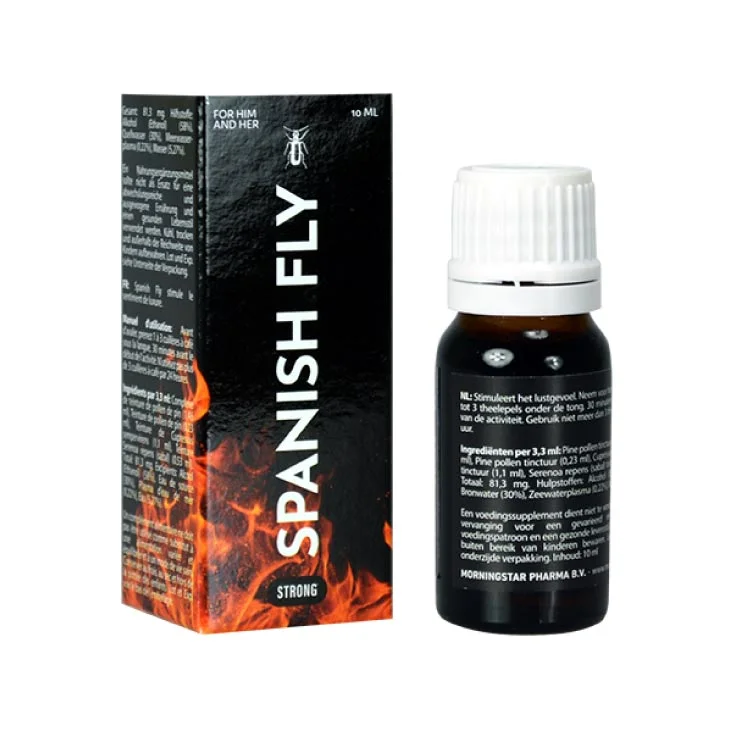
THE Spanish fly liquid can be described as the female version of Viagra or its local counterpart, the popular AK 47 bitters. Spanish fly can induce sexual feeling in the most frigid of women, sending them on a wild romantic trip, so long and lasting, invariably intense and unforgettable.
The use of Spanish fly in Sikaman is not a recent phenomenon. In the early 1970s, foreign seamen brought the substance from the whiteman’s land to seduce girls who visited the cargo vessels that docked at the Tema port. The girls were fascinated by the foreign vessels and went aboard to sight-see.
They were invited into the cabins by the crew for coffee and biscuits, canned minerals and beer. Whatever some of the girls took was laced with a little something.
In twenty minutes time, they were transformed from innocent sight-seeing dames into hot sex-pots. They simply melted under the influence of the drug and begged for sex. Needless to say, they stripped themselves naked before they were asked to.
They were abused in all sorts of ways, offered a few gifts like watches and told to come back, next time, for more coffee and biscuits. When they came to their senses, they felt bruised and ravaged and could never fathom what made them behave the way they did.
The little something that was often introduced into each cup of coffee was the legendary SPANISH FLY. Sikaman port workers later got wind of the female Viagra stuff and solicited for some from foreign seamen. They brought the liquid into town and employed it in the seduction of girls who would normally not condescend to having sex no matter how persuasive you were.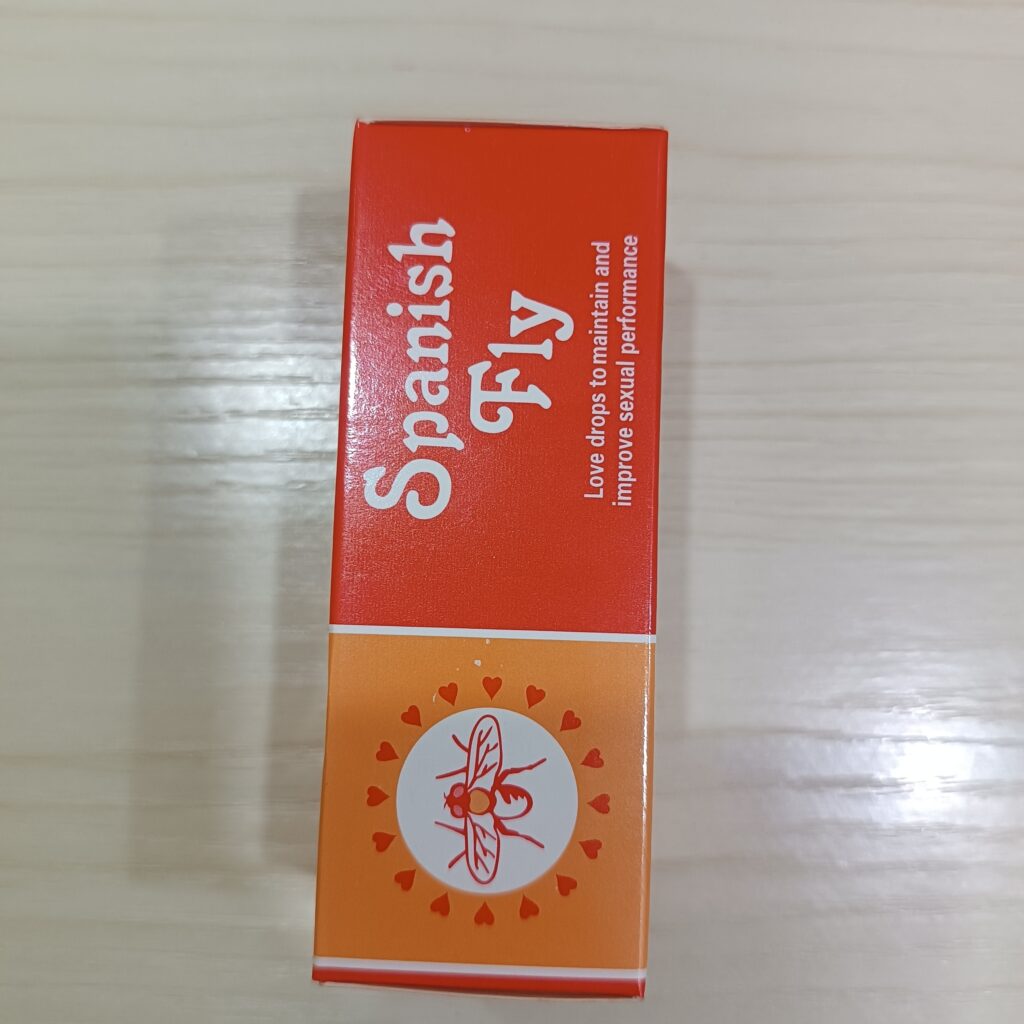
SOLUTION
A friend once told me how he used Spanish fly on a girl he had been courting for ages without success. He said it was Spanish fly which solved the problem for him in a very definitive way, more than he could ever bargain for.
He said he obtained the liquid from a French sailor but had no intention of using it on any girl. But there was this girl next-door who always taunted him, teased him and refused his proposals for love. She was a provocatively shaped madonna who perpetually excited his libido.
According to him, he was taking his breakfast of tea and bread when the girl came to his home and said she was washing her clothes but was tired. She had come to relax a bit, but could do with a cup of tea with or without bread.
My friend said presence of mind made him realise that he could try the Spanish fly idea. If it worked, all the better. If it didn’t, there was nothing to lose. He obliged and went into his room to the girl the cup of tea, but not before he poured a small quantity of Spanish fly into cup.
The girl drank it and was satisfied. She wanted to leave to complete her washing but my friend asked her to relax a bit, hoping she would elicit a response to the drug. She refused and left. He was disillusioned. What a waste, he said to himself.
Upon second thoughts, he decided to stroll to the girl’s home next-door and when he got there he was awed by the sight. The girl washing alright, but he realised that she was not only washing, but also dancing in the process
She was twisting and wriggling her body while washing, a scene he had never encountered. He had never seen anyone washing and dancing at the same time.
The girl, upon seeing him, promptly left what she was doing and walked over and kissed him. He was surprised. Luckily or unluckily, she was alone the home, and without much ado he mounted her.
After satisfying himself, he wanted to go home but the girl was not done yet. She grabbed him and forced him to go three more ’rounds’. After the fourth ‘rounder’ he said he was completely exhausted panted like a tired dog.
The girl wanted a fifth round and he had to run away after disentangling himself from her grip. If he hadn’t shown a clean pair of heels, he would have died on the job.
Recently, someone also told me he used Spanish fly on his girlfriend who had left him. He put it into her cola drink. After a while she started grabbing at his huge phallus, whereupon he told her not to misbehave. But she wouldn’t listen. She was bent on unzipping his trousers and drawing out his organ right there at the beer bar.
Bewildered, he started protesting vehemently. He virtually had to drag her to a hotel to work on her to save the situation.
So Spanish fly really is in town and I hear it is being sold in certain selected drug and chemical stores off the counter.
A little Palava research has revealed that the drug used to be made from the dried bodies of beetles which have aphrodisiac properties, hence the name Spanish Fly. The beetle is a fly. The substance is used medicinally and on pigs to make them go on heat so that they can mate enthusiastically and increase production.
Now the Federation of African Women Education (FAWE) has urged the authorities to investigate how a substance (Spanish Fly Liquid) found its way into the country.
They say the substance is being used to stimulate women and girls sexually without their consent to make them demand sex. They add that research has also revealed that the substance is used in tertiary institutions and is well known and widely used at the JSS and SSS levels. I don’t doubt it.
Well, the drug is actually in use and I guess rapists are using it subtly so they can’t be accused of rape. In other words, the substance induces the girls to ask the men to rape them, which seemingly cannot be interpreted as rape. At best it could be described as ‘chemical rape’.
I guess, the way out is public education on the issue. If the population at large is made adequately aware that Spanish fly is being used, women and girls would be careful about what they imbibe or accept to drink from men.
This article was first published on Saturday November 28, 1988
SKIP THE QUEUE, TAP THE NEWS
You can now read the Ghanaian Times and The Spectator newspapers from the comfort of your device via TimesNewsPlus.
Join our WhatsApp Channel: https://whatsapp.com/channel/0029VbBElzjInlqHhl1aTU27

Frequent hand washing has been identified as the cheapest, easiest, most important and effective way to stay clean and safe from bacteria and viruses driven diseases.
Between soap and hand sanitisers, many are, however, left confused over which one serves a better purpose in dealing with bacteria or virus.
Addressing this concern, a Public Health Practitioner, Mr William Anku, says in general, both hand washing with soap and water and hand sanitisers, when done correctly, can be effective at killing most germs and pathogens.
Speaking with The Spectator in an interview, Mr Anku, who also doubles as a Technical Support Officer with the Ghana AIDS Commission, Ho Technical Support Unit, said among the two, sanitisers can be less effective against some microorganisms and do not physically remove dirt, grease or certain chemicals.
He said while alcohol based hand sanitisers were useful when soap and water were not readily available, they should not be considered a complete replacement for proper hand washing.
Mr Anku said a sanitiser containing at least 60 per cent alcohol could rapidly reduce many types of harmful microorganisms on the hand.
He, however, elaborated that people with visibly dirty or greasy hands should wash them with soap and running water because sanitiser could not physically remove the dirt or grease.
“When hands are visibly dirty or greasy, soap and water are preferable,” he mentioned.
Mr Anku advised people using sanitisers to apply enough to cover all surfaces of the hands and rub them together until completely dry, stressing that soap helped loosen dirt, oils, microorganisms and other contaminants from the skin so they could be rinsed away.
“Water alone can remove some visible dirt and a portion of microorganisms, but it is considerably less effective than washing with soap,” heunderlined.
He urged the public to wash hands with soap and running water after using the toilet, before preparing or eating food, after coughing or sneezing, after caring for a sick person and whenever the hands were visibly dirty.
Mr Anku also drew attention to the importance of drying hands after washing, saying wet hands could transfer microorganisms easily than dry hands.
He recommended clean, disposable paper towels, particularly in healthcare facilities and public settings. Where reusable cloth towels were used, he said they should be clean and changed regularly.
He added that properly maintained air dryers could also be used.
On whether warm water was better than cold water for hand washing, Mr Anku noted that the temperature of the water was not the most important factor.
He explained that cold, lukewarm or warm running water could all be used, stressing that using soap, rubbing adequately, rinsing thoroughly and drying properly were more important.
He cautioned against using excessively hot water because it could irritate or damage the skin.
Again, Mr Anku mentioned that people should scrub all surfaces of their hands with soap for at least 20 seconds before rinsing thoroughly with running water.
He said rushing through the process could result in some areas of the hands being missed.
He suggested that people could sing “Happy Birthday” twice at a normal pace while scrubbing to help achieve the recommended duration, noting that the choice of song was not important but the time spent rubbing was.
He also cautioned that frequent hand washing, repeated use of alcohol based sanitisers, harsh soaps and very hot water could cause dryness, irritation, cracking or dermatitis, particularly among people with sensitive skin.
He advised the public to use mild soaps, avoid excessively hot water and apply moisturising hand cream or lotion regularly, especially after washing.
Mr Anku says washing hands for too short a time was one of the common mistakes people made.
Others included failing to cover the entire hand with soap, forgetting the backs of the hands, spaces between the fingers, thumbs and underneath the fingernails.
Furthermore, he mentioned rinsing immediately without adequate rubbing, failing to dry the hands properly, touching contaminated surfaces immediately after washing and using too little sanitiser.
“Effective hand hygiene is not simply about putting soap or sanitiser on the hands; the technique matters,” he stressed.
Mr Anku urged the public to make hand hygiene part of everyday life, saying the seemingly small action could have a significant impact on public health.
“Hand hygiene may seem like a small action, but collectively it can prevent a significant amount of illness and protect entire communities,” he indicated.