Bussiness
Let’s bear with policies introduced in the budget

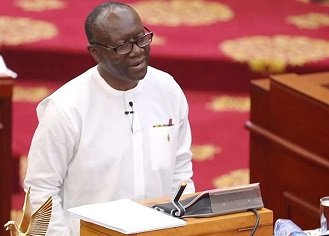
Finance Minister, Ken Ofori-Atta on November 17, 2021, presented the 2022 budget statement and economic policy of government to Parliament.
The exercise is in accordance with Article 179 of the 1992 Constitution and Public Financial Management Act 2016 (Act 921), which enjoins the Minister of Finance to present the budget to the August House.
The public waited with bated breath to see the policies the government would come out with to revive and restore confidence in the economy in view of the COVID-19 pandemic which has affected growth, impacted negatively on businesses and exacerbated the country’s public debt which currently stands at GHc341 billion as of the end of September this year.
As usual, the budget drew public discussions, debates while experts proffered divergent views on it.
Particularly, the opposition National Democratic Congress, said the budget did not respond to the hardship of the citizenry and would worsen the plight of individuals and businesses.
But the government, on the other hand, contends the 2022 budget is best in recent times and has been carefully crafted to bring relief to the people in this nation and prop up businesses and bring the economy back on the track.
The 2022 budget dubbed ‘Agyenkwa Budget,’ to wit ‘The Saviour Budget’ is on the theme, “Building a Sustainable Entrepreneurial Nation: Fiscal Consolidation and Job Creation.”
This year’s budget is focused on entrepreneurship, job creation and the “need to raise more domestic resources to develop our country.”
“This budget outlines our plan to sustain the recovery efforts from the socio-economic impact of the pandemic and get us quickly back to our pre-pandemic growth trajectory and a sustainable debt path. It outlines also the strategies to address one of the major problems of our time, which is youth unemployment.” Mr Ofori-Atta, said.
Anchored on the new Medium-Term National Development Policy Framework (2022-2025), which is a successor to the current Medium-Term National Development Policy Framework (MTNDPF) – An Agenda for Jobs: Creating Prosperity and Equal Opportunity for All (2018-2021), the budget outlines government’s efforts at improving the quality of living standards while ensuring peace and security.
Broadly, the 2022 budget is hinged on “ensuring restoration and sustained macroeconomic stability with a focus on debt sustainability,” “providing a supportive private sector environment (including promoting entrepreneurship) for domestic businesses and for Foreign Direct Investment (FDI) to thrive,” “building a robust financial sector to support growth and development,” and “particular, implementing reforms to increase revenue mobilisation and the efficiency of public expenditure.”
The government envisaged to raise GHc100, 517 million equivalent to 20 per cent of Gross Domestic Product (GDP), which domestic revenue was estimated at GHc99, 547 million.
Total foreign financing and exception financing such as the use of International Monetary Fund Special Drawing Right allocation would amount to GHc9, 091 million, equivalent to 1.8 per cent of GDP.
In 2022, government projects to achieve a Primary Surplus (that is generate more than it will spend) of GHc435 million, equivalent to 0.1 per cent of GDP.
The new Electronic Transaction Levy (E-Levy) which is envisaged to generate GHc6.9 billion would play a huge role in the government revenue generation agenda next year.
On expenditure, government projects to spend GHc137, 529 million (equivalent to 27.4 per cent) of GDP, for the 2022 fiscal year.
Government would spend on wages and interest payment, flagship programmes such as the including the Ghana CARES ‘Obaatan Pa’ programme, and capital expenditure, including roads, next year.
Compensation of employees is projected at GHc35, 841 million, equivalent to 7.1 per cent of GDP and constitutes 26.1 per cent of the total expenditure (including arrears clearance), while interest payment is projected at GH37, 447 million equivalent to 7.5 per cent of GDP.
“Mr Speaker, Capital Expenditure (CAPEX) is projected at GHc16, 396 million equivalent to 3.3 per cent of GDP, representing a growth of 28.8 per cent over the projected 2021 out turn. Of this amount, domestically financed CAPEX and this will be funded by a combination of project grants and loans,” Mr Ofori-Atta said.
Other expenditure mainly comprising Energy Sector levy transfers, starting from 2022 and also payment to Independent Power Producers and Financial Sector costs were estimated at GHc9, 967 million.
Ghana’s economy in 2022 is projected to grow at 5.8 per cent, which is below the pre-pandemic levels, against the 4.4 per cent of 2021.
The COVID-19 pandemic has weighed down on growth of the country since the outbreak of the disease late 2019.
Growing at an average of seven per cent since 2017, the country’s growth plummeted to 0.4 per cent in 2020. From a revised target of 4.4 in 2021, as of the third quarter this year, the economy has grown by 3.9 per cent.
The 2022 budget is ‘light’ on debt as the country is described by International Monetary Fund as “at high risk of debt distress.” Hence, there is the need for the government to rein in the growing public debt, and as a result tame its borrowing next year and focus on domestic revenue mobilisation.
“Mr Speaker, the medium-term fiscal framework is anchored on debt sustainability. The outcome of Ghana’s Debt Sustainability Analysis indicates a sustainable debt trajectory, albeit at high risk of debt distress. This is largely on account of financial and energy sector bailout costs, and the one-off fiscal costs of measures to boost economic activity following the impact of the COVID-19 pandemic,” the Finance Minister said.
With the objective to reduce the rate of debt accumulation, Mr Ofori-Atta said the total limits set for concessional and non-concessional external borrowing had been scaled down from US$2,500 billion to US$2,000 billion.
Also, the budget deficit which was pegged at 11.7 per cent in 2021 is projected to shrink to 7.4 per cent in 2022.
Promisingly, the 2022 budget has introduced new initiatives such as the abolishment of road tolls, establishment of National Housing Fund, introduction of the 1.75 per cent levy on electronic transactions, and review of the benchmark values.
The new initiatives announced in the 2022 budget incude the YouStart Programme to provide the youth with training and entrepreneurial support, business advisory services, and access to competitive credit to start their own businesses, and the abolishment of road tolls.
The budget said more efforts would be put to the collection of property rates to generate more revenue to fund developmental projects.
As the government, led by the Ministry of Finance holds post-budget workshop and consultations, it is hoped the concerns of the private sector and business, would be addressed before, Parliament passes the Appropriations Act on the budget before it is implemented next year.
While at it, we also pray the private sector, businesses and the citizenry would bear with the policies introduced by the government in the budget, as we “are not in normal times.”
Writer’s email: gbetomenyo81@gmail.com
(0246943864)
By Kingsley Asare


Ghanaian dancehall artiste Charles Nii Armah Mensah, known as Shatta Wale, has won two awards at the 43rd International Reggae and World Music Awards (IRAWMA) held in Florida over the weekend.
He picked up the Best African Dancehall Entertainer award as well as Concert of the Year for ShattaFest.
In a statement, Shatta Wale’s management expressed appreciation to the organisers and supporters of the awards.
“Management would like to sincerely appreciate the organisers of the IRAWMA awards for the recognition and continuous support for African music on the global stage.
“We also extend our deepest gratitude to fans across the world, especially the Shatta Movement fraternity, for their unwavering support, votes, and dedication throughout the years,” the statement said.
The statement added that the latest wins reaffirm the artiste’s position as one of Africa’s leading musical exports and a prominent figure in global dancehall culture.
The awards bring Shatta Wale’s total haul at the IRAWMA to 11, highlighting his continued presence on the international reggae and dancehall scene.
At last year’s edition, he won three awards: Best African Dancehall Entertainer, Best Music Video for “Killa Ji Mi”, and Best Crossover Song for “Commando” featuring Bounty Killer. -GNA
Bussiness
Global Market Volatility: Gov’t absorb GH¢2.00 per litre on diesel and GH¢0.36 per litre on petrol

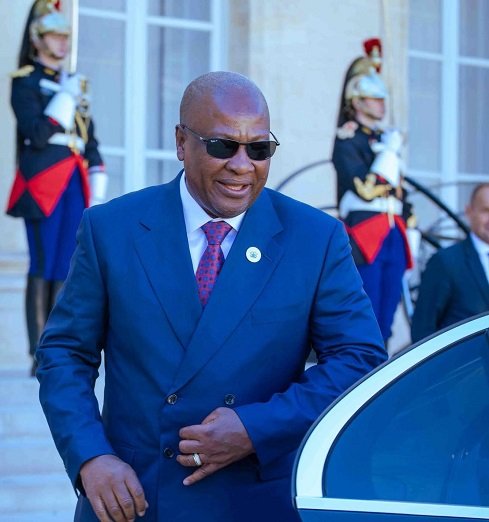
Effective Thursday, April 16, 2026, which is the next pricing window, the Government will absorb GH¢2.00 per litre on diesel and GH¢ 0.36 per litre on petrol.
This intervention is intended to cushion customers and ease the cost burden on households, transport operators, and businesses.
The measure, approved by Cabinet, is in response to rising prices of petroleum products on the international market, which have significantly impacted ex-pump prices in Ghana.
This temporary intervention will remain in force for a period of one (1) month.
During this period government will continue to closely monitor developments in the global oil market and assess the need for further policy adjustments.
A statement signed by Minister of Government Communications, Felix Ofosu Kwakye noted that they remain commited to maintaining price stability, protecting livelihoods, and supporting Ghana’s economic recovery in the face of external shocks.