Bussiness
Let’s address revenue leakages to reduce borrowing

- /home/u249204778/domains/spectator.com.gh/public_html/wp-content/plugins/mvp-social-buttons/mvp-social-buttons.php on line 27
https://spectator.com.gh/wp-content/uploads/2021/08/GRA-Pix.jpg&description=Let’s address revenue leakages to reduce borrowing', 'pinterestShare', 'width=750,height=350'); return false;" title="Pin This Post">
- Share
- Tweet /home/u249204778/domains/spectator.com.gh/public_html/wp-content/plugins/mvp-social-buttons/mvp-social-buttons.php on line 72
https://spectator.com.gh/wp-content/uploads/2021/08/GRA-Pix.jpg&description=Let’s address revenue leakages to reduce borrowing', 'pinterestShare', 'width=750,height=350'); return false;" title="Pin This Post">
The Twi proverb, “Wo ko nsuo s3n gu k3nten mu a, enye ma da,” to wit, “no matter the amount of water you fetch into a basket, it will never get full,” reflects the current situation in which Ghana finds itself in relation to its revenue mobilisation drive.
Over the years, the country has complained about the gap existing between revenue mobilisation and expenditure.
It appears successive governments have failed to win the fight against the growing revenue leakages bedeviling the country, as millions of state revenue go down the drain through corruption and illicit financial acts.
Some political appointees, civil and public servants continue to milk the country dry and the state annually loses millions of revenue to graft, corruption and pilfering at work as highlighted by the Auditor General’s Report.
In view of the inability of the country to generate enough revenue, the government has to continue to borrow to fund the budget in order to provide development programmes.
Every year, in the face of the growing unemployment, new civil and public servants such as teachers, police, soldiers, nurses have to be recruited and brought onto the government payroll, which means government has to look for more revenue sources to pay this workforce.
Aside the need to pay the growing workforce, the government has to look for financial resources to service maturing debts and finance the provision of amenitie such as roads, schools and hospitals.
It is estimated, for example, that a chunk of Ghana’s tax revenue is spent on wages, and debt servicing, leaving a little to finance development needs of the country.
No wonder the country is still underdeveloped and after more than 60 years of independence, it is grappling with deplorable roads and other social amenities as well as growing unemployment.
Unimpressively, Ghana is unable to generate enough revenue through taxes as only workers in the formal sector and few businesses pay tax. The country’s tax to Gross Domestic Product (GDP) currently stands around 13 per cent, far below the Middle Income average of 20 per cent and Sub-Saharan average of 25 per cent.
A lot of factors can be attributed to the low tax-GDP, including inadequate businesses in the country, large informal sector businesses, low economic growth, and poor address system.
The COVID-19 pandemic has exacerbated the low revenue mobilisation agenda of the country.
While the state revenue continues to plummet due, among other factors, to the outbreak of the COVID-19, which has ravaged businesses, and the difficulty of the Ghana Revenue Authority (GRA) to reach informal sector workers for tax purposes, government expenditure continues to increase.
This is due, in part, to demand for better conditions of service, and the need by the government to fix the deplorable roads across the country and fund social services and amenities.
The country continues to depend on loans to fund the budget and service its debts. From a debt position of GH¢ 9 billion in 2008, after the country enjoyed the Heavily Indebted Poor Country (HIPC) initiative when most of its debt was cancelled by creditors, in less than two decades, the country’s debt has ballooned to more than GH¢300 billion.
Ghana’s debt has crossed the international threshold and currently stands around 76.6 per cent of Gross Domestic Product.
Many believe Ghana appears to be heading for (HIPC), but the country cannot enjoy that debt forgiveness initiative again.
Ghana’s growing debt is drawing the ire of sections of the citizenry as only a few public and civil servants, less than one million of the entire population of at least 30 million and the Article 71 holders, are consuming the financial resources of the country.
Indeed, financial, economic and political stakeholders and the country’s development partners and stakeholders have raised concerns about the increasing debt and called for consensus building and collaboration to adopt measures to curb the trend.
But while the country is wallowing in debt, the Auditor General’s Report on annual basis chronicles a lot of infractions involving state institutions, political appointees, civil and public servants making the state to lose millions of cedis in revenue.
It is estimated that Ghana loses about GH¢13.8 billion (3 billion dollars) annually through corruption-related activities.
The media is rife with stories of such financial impropriety that continues to make the country lose the badly needed revenue.
The irony is that the government continues to borrow to finance the operations of state organisations whose officials milk the country dry.
For example, The Finder, an independent newspaper, in its Monday, August 16, 2021 edition, was a story on the 2018 Auditor General’s Report that at a time the ECG was reporting 24.3 per cent system losses in 2018, ECG paid GH¢182.5 million capacity charges to Cenit Energy for power which the latter did not supply.
The Finder said the 2018 Auditor General’s Report revealed that GH¢95 million of the District Assemblies Common Fund was used to build a private entity.
Similarly, a Ghanaian Times story of Thursday, August 12, 2021, based on the 2019 Auditor General’s Report revealed that the Driver and Vehicle Licensing Authority (DVLA) failed to collect GH¢1.3 million tax from 19 private test stations and remit it to the Ghana Revenue Authority.
Also, the Ghanaian Times, in its issue of Saturday, August 14, 2021, reported that the 2019 Auditor General Report ordered the Buffer Stock Company to recover GH¢1.9 million paid without approval.
For lack of space, the infractions captured by the Auditor General’s annual report in contravention of the Public Financial Management Act, 2016 (Act 921), which, among other things, outlines how public funds must be utilised and accounted for, will be a subject for another day.
Worried with the growing financial infractions, the Internal Audit Agency (IAA) has said it would name and shame defaulters of the Public Financial Management Act, 2016 (Act 921).
The IAA said it would partner with prosecutorial institutions like the Economic and Organised Crime Office and the Office of the Special Prosecutor to prosecute persons indicted in reports of various financial infractions.
Ghana’s debt is rising to alarming levels, which must be of concern to public servants, whose actions, inactions, omissions and commission continue to cause financial loss to the state.
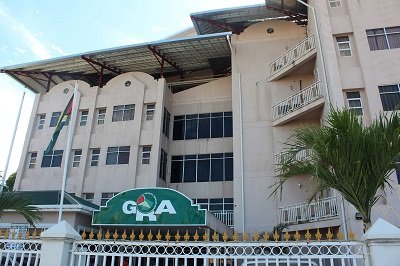
Thus, the GRA’s digital initiative which all taxes can be paid or collected electronically is commendable.
Under the Ghana.gov.gh initiative, taxpayers, among others, can file and pay their taxes in the comfort of their offices.
The GRA’s electronic tax payment programme should be extended to all Ministries, Department and Agencies so that there will be no human intervention in accessing and paying for government services to help address the revenue leakages the state is suffering from.
It is unacceptable for the country that the government largely has to depend on loans, to fund the budget due to plummeting state revenue, while millions of state revenues are allegedly stolen through corruption.
Kingsley Asare
Writer’s email: gbetomenyo81@gmail.com
(0246943864)


Ghanaian dancehall artiste Charles Nii Armah Mensah, known as Shatta Wale, has won two awards at the 43rd International Reggae and World Music Awards (IRAWMA) held in Florida over the weekend.
He picked up the Best African Dancehall Entertainer award as well as Concert of the Year for ShattaFest.
In a statement, Shatta Wale’s management expressed appreciation to the organisers and supporters of the awards.
“Management would like to sincerely appreciate the organisers of the IRAWMA awards for the recognition and continuous support for African music on the global stage.
“We also extend our deepest gratitude to fans across the world, especially the Shatta Movement fraternity, for their unwavering support, votes, and dedication throughout the years,” the statement said.
The statement added that the latest wins reaffirm the artiste’s position as one of Africa’s leading musical exports and a prominent figure in global dancehall culture.
The awards bring Shatta Wale’s total haul at the IRAWMA to 11, highlighting his continued presence on the international reggae and dancehall scene.
At last year’s edition, he won three awards: Best African Dancehall Entertainer, Best Music Video for “Killa Ji Mi”, and Best Crossover Song for “Commando” featuring Bounty Killer. -GNA
Bussiness
Global Market Volatility: Gov’t absorb GH¢2.00 per litre on diesel and GH¢0.36 per litre on petrol

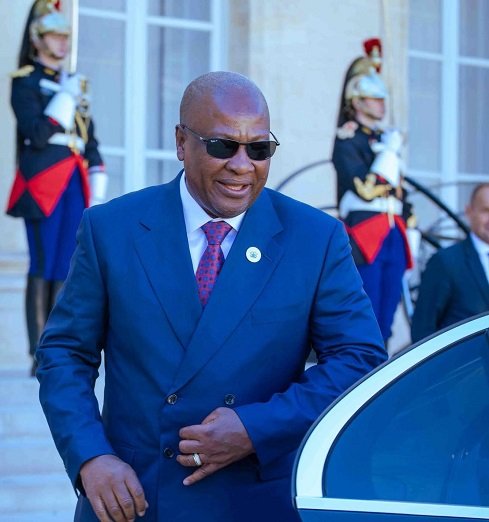
Effective Thursday, April 16, 2026, which is the next pricing window, the Government will absorb GH¢2.00 per litre on diesel and GH¢ 0.36 per litre on petrol.
This intervention is intended to cushion customers and ease the cost burden on households, transport operators, and businesses.
The measure, approved by Cabinet, is in response to rising prices of petroleum products on the international market, which have significantly impacted ex-pump prices in Ghana.
This temporary intervention will remain in force for a period of one (1) month.
During this period government will continue to closely monitor developments in the global oil market and assess the need for further policy adjustments.
A statement signed by Minister of Government Communications, Felix Ofosu Kwakye noted that they remain commited to maintaining price stability, protecting livelihoods, and supporting Ghana’s economic recovery in the face of external shocks.