Editorial
Let us learn to use good and decent language

The way we speak as a people tells a lot about us because if we speak and insult other people, we end up setting bad examples to the young ones that are coming up.
For this reason, we need to behave ourselves in a manner that will make it possible for every member of society to realise that discipline and decency of behaviour is what is required by each and every member of society. Without this, we will be creating chaos and indiscipline for the young ones who are coming up.
Not long ago, we heard the General Secretary of the National Democratic Congress (NDC) making a point that amounted to insult. We are of the view that such pronouncements are not good for us as a country. He went on to say that he supported the fight that occurre in parliament and that he would keep encouraging them to keep fighting or engaging in brawl, if the need arose.
Such pronouncements are very unpalatable, so The Spectator appeals to all political leaders to desist from making them because they end up destroying the society which we are trying to build for the young people we are training to enable them become good citizens in this country.
Society is built not only by the leaders who are given the mandate to govern the country. A lot will depend on parents and friends who also serve as role models in society.
In addition to all this, leaders of all political parties in the country also have a great role to play in ensuring that the youth are given proper training to behave well in society, so that the country we are trying to build is constructed on discipline, integrity and respect for one another.
We cannot insult our opponents today and expect their followers to sit unconcerned. These followers are also likely to respond in the same manner and when this happens the end result will be chaos, indiscipline, insecurity and disorder, among others.
It is in the light of this that we expect every individual or group of people, wherever they find themselves, to play the role expected of them. This role, if played well, will help to build a decent society full of good behaviour, positive culture and decent language.
Why should we encourage our people to engage in indiscipline and fighting, especially in parliament?
Or how different will young people who engage in fighting using cutlasses and other gadgets to hurt one another as happened recently between the youth of Nima and Mamobi be?
If we engage in such indecent acts and go back to the church or mosque to worship, then we do not know what the worship of God is all about. God must be worshipped in truth and in decency.
The time has come for each and every one to put our heads together in condemning what is wrong while praising those who engage in what is good and set the right examples for others to follow.
We do not want to encourage fighting in parliament, especially when these parliamentarians are people who are referred to as honourable members. If they are honourable members then they need to set good examples for the rest of society to follow.
On the other hand, if they do not want to set good examples for people to follow in society, then they do not deserve to be referred to as honourable members of parliament. This is why an elder statesman, Mr. Kwame Pianim has said that he would not refer to our parliamentarians as honourable members unless they change their ways of doing things and act in positive light.
Any political figure or follower of a political party, be it in opposition or government, who encourages disorder in parliament or in any part of the country should, therefore, not be respected by anybody in this country.
The time has come for us to exhibit a life of discipline and keep away from negative attitudes that will not encourage this country to move forward as expected. We are, therefore, appealing to every person to engage in discipline and speak in a manner that will promote discipline, orderliness and respect for one another.
We need to learn our lessons and tell the rest of the world that we have not just come of age but also are disciplined in all aspects of our lives. Ghana is over 60 years and will soon hit 70.
It is time for each and every one of us to contribute our quota and help the country to move into the world of discipline. This is how we can set good examples for our children to emulate and for the rest of the world to also follow.


Dear Editor,
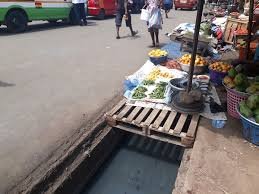
It is often said that a healthy nation is a wealthy nation. However, this saying becomes worrying when the health of citizens is threatened by the conditions under which the food they consume daily is sold.
In Ghana, the conditions under which food is sold is quite disturbing. Over the years, I have observed that the environments where food is prepared and sold are often unhygienic.
In many cases, containers holding food such as rice and waakye are left uncovered or not properly covered, exposing them to contamination.
While many Ghanaians paid little attention in the past to the conditions under which food was sold, the narrative seems to be changing in recent years.
I recall an incident during my days in Senior High School (S.H.S.) when my friends and I went out to buy food. At one location, some of us chose not to buy because we assumed the food would be expensive due to how neat the place looked.
Unfortunately, we ended up purchasing food from a different place that was somewhat unhygienic. We overlooked the poor conditions because we believed the quantity offered was better than at the cleaner location.
However, I am certain that my friends and I would not repeat such a mistake today, as we now understand the health implications of that decision.
While public education is important in addressing this issue, I believe it is time for regulatory and law enforcement agencies, such as the Food and Drug Authority (FDA), to crack the whip on food sellers and vendors who operate in unhygienic environments and conditions.
As citizens, we must also be mindful of where we buy our food to protect ourselves and our families from diseases and illnesses. We should choose ‘quality’ over ‘quantity’ and prioritize our health.
From Syram
Oyarifa
Dear Editor,
I write to express concern and call for improved security measures before and after every football match.
The recent robbery attack that led to the tragic death of a player, on their return from a Match day 29 game against Samartex, is both shocking and heartbreaking.
The incident, which reportedly occurred around 10:30 p.m., highlights the growing risks faced by players and team officials while traveling.
Football is meant to unite and entertain, not to expose lives to danger. It is therefore imperative that authorities, the Ghana Football Association, and security agencies put in place adequate protection for teams, especially during late-night travels.
I strongly urge all stakeholders to treat this matter with urgency to prevent such unfortunate incidents from recurring.
From Eugene Ampiaw
Accra